Règlement FFPJP · 11 August 2026
Knockout pétanque bracket: rules and checks to watch
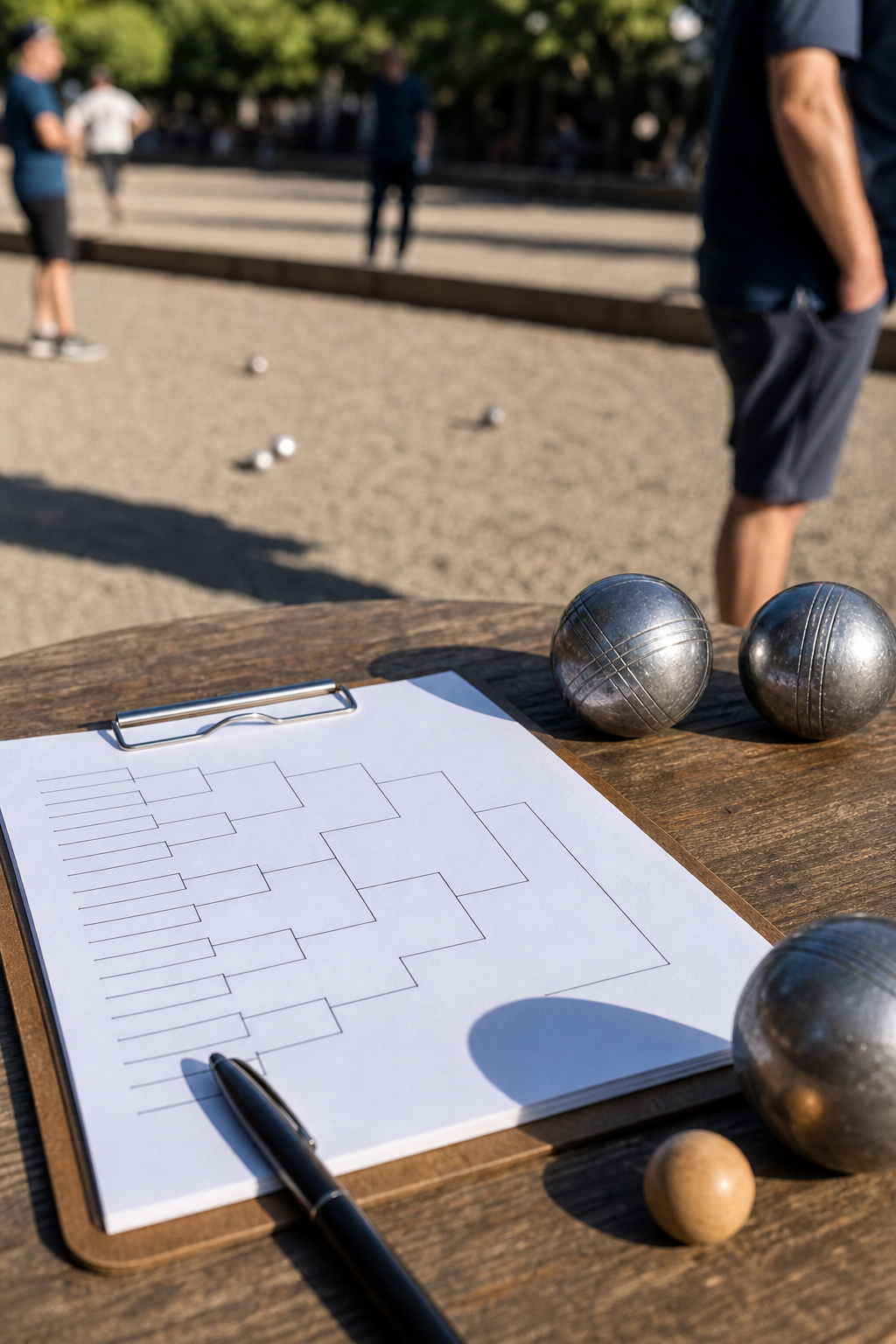
For a knockout pétanque bracket, check the draw, call, score and terrain before each match to prevent disputes and protect the next round.A knockout draw seems simple: one team wins and goes on; one team loses and is out. Yet disputes often arise before the first boule is played: a number is called incorrectly, a terrain changes without explanation, or a score is confirmed too quickly. In a competition, the team must check its allocation, listen for the call, use the assigned terrain and report any mistake before the next round.
1.Why knockout play leaves no room for error
A knockout draw removes any margin for error. In a pool, a team may sometimes recover; in the bracket, an administrative mistake can send it to the wrong terrain, cause a delay or lock in a disputed score. Rules are not there to rescue an inattentive team: they organise the competition so that everyone progresses within the same framework.
The right habit is therefore to separate the sporting and administrative sides. On the sporting side, you must win the match. Administratively, you must be sure you are playing the right opponent, in the right round, on the assigned terrain. This double check avoids needless arguments at the control table.
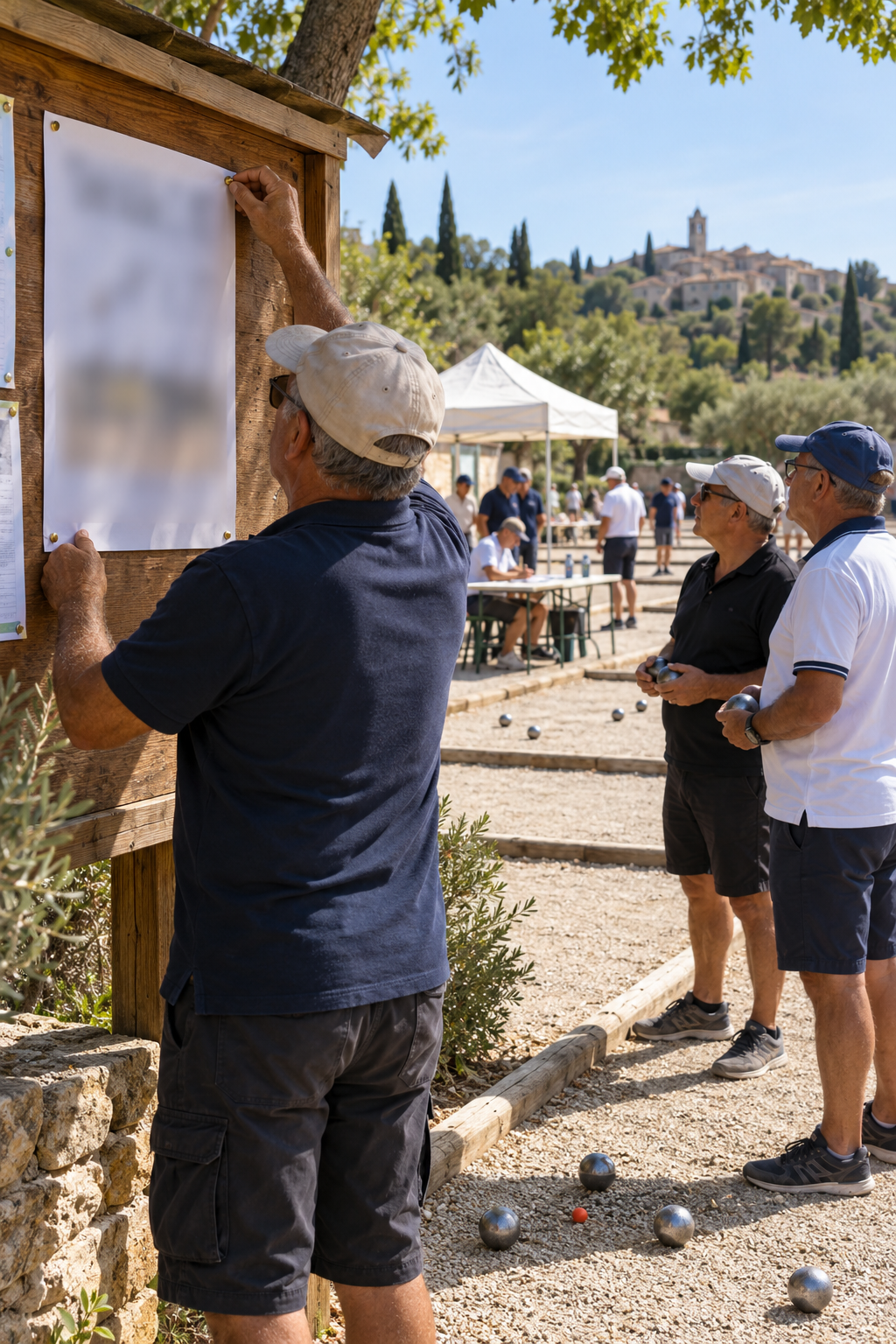
When the bracket is displayed or announced, one member of the team listens while another checks it. This simple division prevents most misunderstandings.
2.Calling the teams: the first serious check
A call that is misheard can be enough to create a conflict. If two names sound alike, a team uses an abbreviated club name, or the noise drowns out the table, ask for confirmation immediately. A team that goes to play without understanding its number takes an unnecessary risk.
In practice, check three things: the team name or number, the opponent and the terrain. If the information is displayed, compare it with what is announced. If it is only called out, ask calmly for it to be repeated. Asking for clarification before leaving is not a dispute, it is a matter of good order.
| Time | What to check | Common mistake |
|---|---|---|
| Bracket displayed | Number, opponent, round | Reading only your own name |
| Microphone or table call | Terrain and immediate time | Leaving without confirmation |
| Before the first end | Correct team opposite | Discovering the error at 6–4 |
3.Assigned terrain, changed terrain: what must stay clear
In a bracket, the organiser may allocate matches according to the available terrains. What matters to players is that the information is clear and identical for both teams. If a terrain is occupied, unplayable or changed by the organiser, do not choose a solution yourselves in a corner of the boulodrome.
The common trap is to make a private arrangement between teams. It may seem practical, but it can disrupt the order of the bracket, refereeing or event tracking. In an official competition, tell the control table instead: it retains the overall view of matches remaining, available referees and time constraints.
Never argue over a terrain before you understand why it changed. Ask for the information, then play promptly and properly.
4.Confirmed score: the point at which many doors close
The score is the most sensitive part of the bracket. One winning team says 13–8, the other has 13–9, the table enters it too quickly and the next round begins. The further the competition advances, the harder it is to go back, because the result has already had consequences.
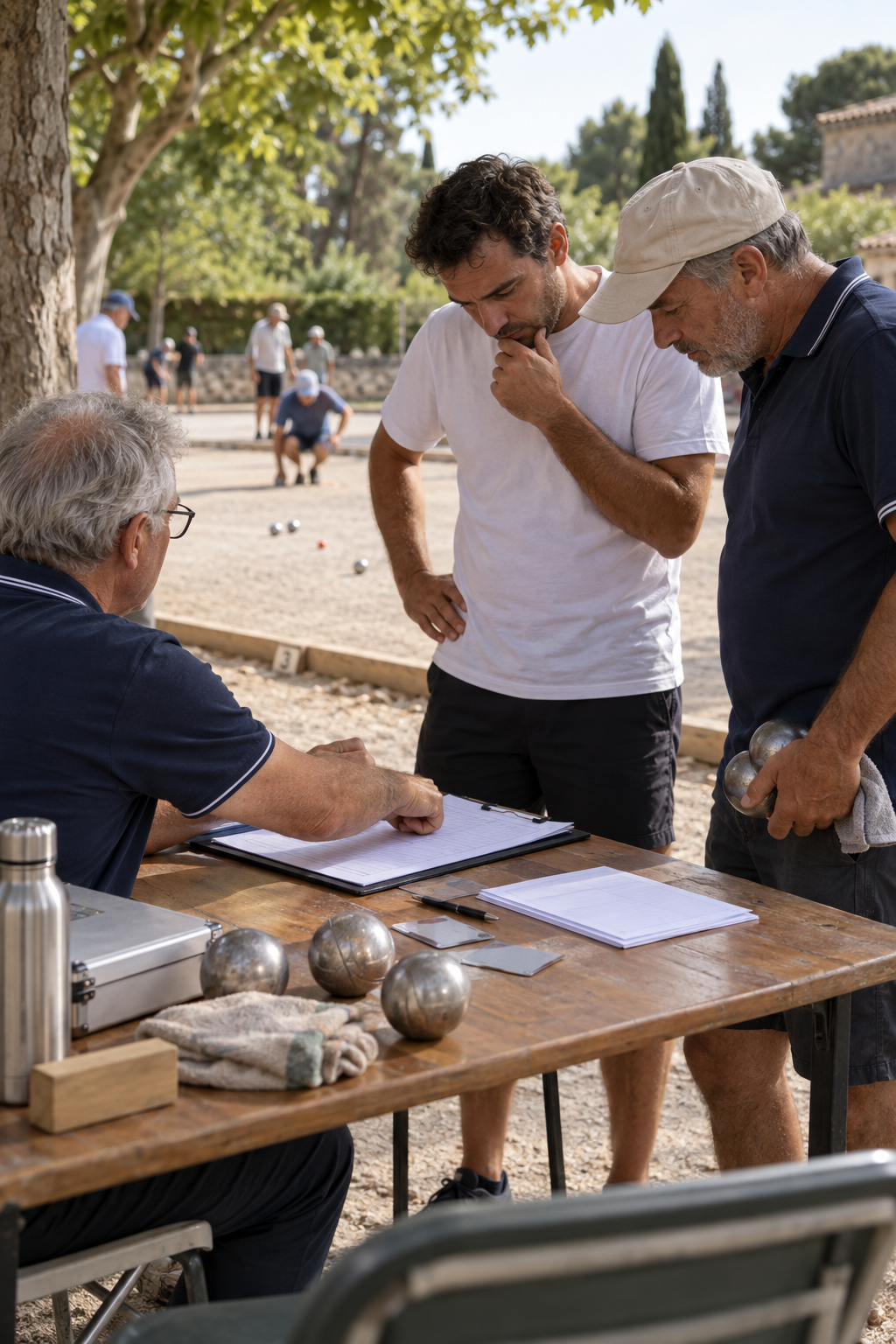
The sound method is simple: state the score aloud, have the opponent confirm it, and only then validate it at the table. If there is a score sheet, read it again before signing. A signature or verbal confirmation binds the team : it must never be given automatically.
| Situation | Practical decision | What it protects |
|---|---|---|
| Same score for both teams | Immediate confirmation | Smooth running of the bracket |
| Disagreement before entry | Return to the known ends; call the referee if needed | Correct result |
| Error spotted after display | Tell the control table without delay | Next round |
5.Protest: when to act and what to bring
A useful protest is made at the right time and with facts. Saying 'this is not normal' is not enough. Explain what is challenged: wrong opponent, non-compliant terrain, incorrectly recorded score, team not called, or winner reversed. The more precise the request, the faster the referee or organiser can decide.
The worst habit is to wait until the next match to protest. By then, the error has often affected other teams. In knockout play, reaction time is part of practical admissibility : report it before the bracket moves on.
Win a match, go for a drink, then return once the bracket is already under way to correct a score. In many competitions, that is too late.
6.The team routine before every round
Before every bracket match, establish a thirty-second routine: listen to the call, look at the display, confirm the opponent, go to the terrain and clearly announce the start. This also applies to events run with software or digital displays: a tool does not replace human attention.
Organisers can help by displaying readable brackets, keeping the control table reachable and avoiding contradictory instructions. Players, for their part, must remain available near the calling area. To explore the competition framework further, see the hub for pétanque officials, club tools and reminders about pétanque rules.
Frequently asked questionsFrequently asked questions
Can a team choose another terrain if both teams agree?
It must first notify the organiser. Agreement between players is not enough if the change affects bracket tracking or refereeing.
What should I do if my team did not hear the call?
Return to the control table immediately. The sooner you react, the simpler the solution. Do not go and play an assumed match.
Can a score be corrected after confirmation?
Yes, in some cases, but it becomes difficult if the next round has started. Bring precise facts and act without delay.
Who decides a disagreement about the bracket?
The organiser manages the bracket; the referee handles rule issues and disputes during play. Both may be involved.
What is the key habit to remember?
Before throwing the first boule, confirm the opponent, terrain and round. After the match, confirm the score before leaving the area.