Règlement FFPJP · 29 July 2026
These situations of doubt in pétanque and how the regulations resolve them
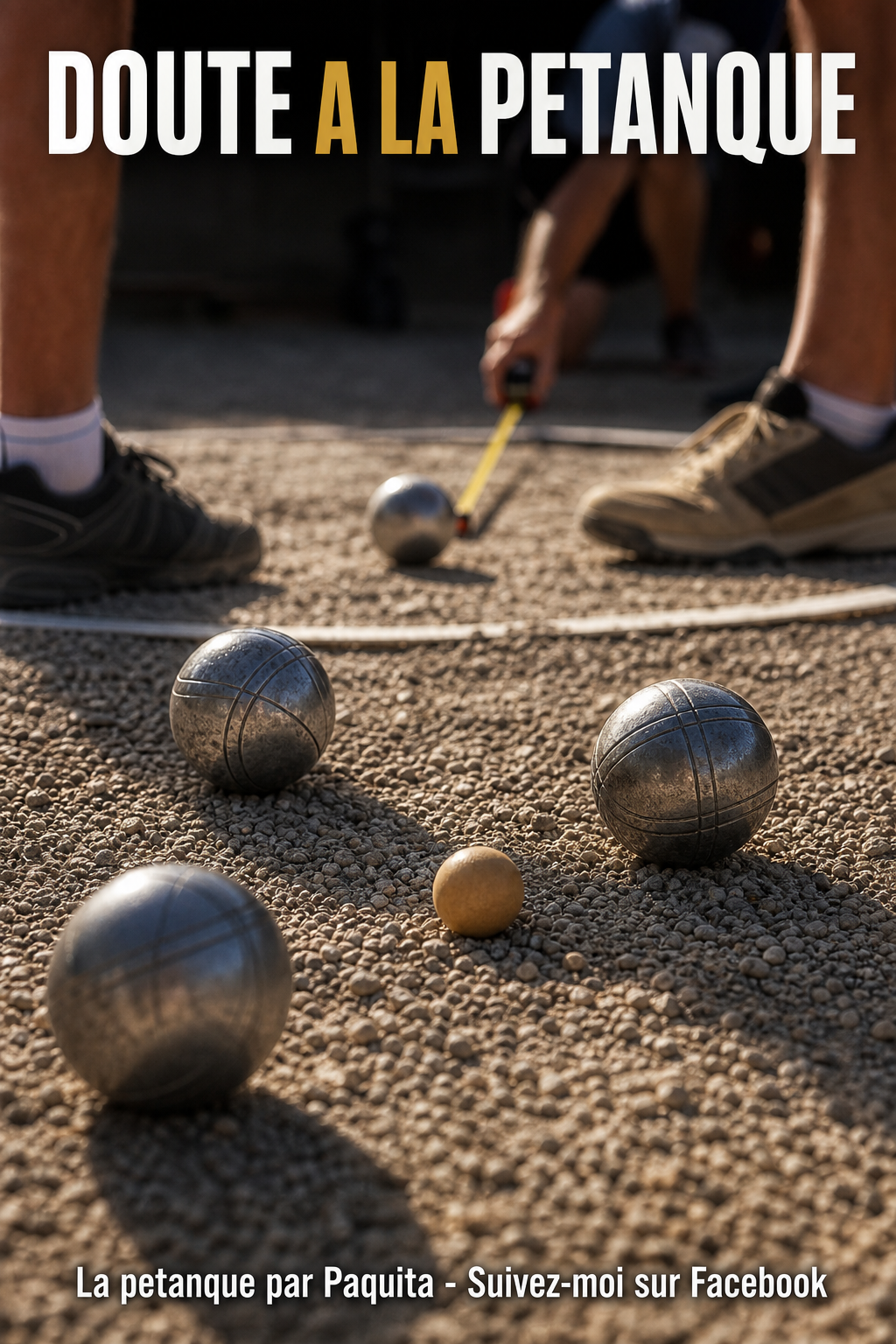
Mesure, boule déplacée, limite du terrain : la méthode claire pour résoudre les doutes à la pétanque sans envenimer la partie.Devant une boule discutée, le bon réflexe n’est pas de décider à l’œil : on arrête le jeu, on constate, on mesure puis on appelle l’arbitre si le désaccord demeure.
1. Le doute se traite avec des faits
À la pétanque, une situation incertaine ne donne pas automatiquement raison à l’équipe qui parle le plus fort. Une boule paraît plus près, le but frôle une limite ou un joueur croit avoir vu un contact : avant toute conclusion, il faut identifier ce qui peut être constaté. Position des boules, cadre du terrain, ordre de jeu, marque laissée au sol ou outil de mesure sont des éléments plus solides qu’un souvenir pressé.
Le règlement sert justement à faire redescendre la tension. Il ne remplace pas le constat par une intuition ; il propose une procédure selon l’incident. Quand un fait est mesurable, on le mesure. Quand il ne l’est plus, on évite la correction improvisée et l’on demande une décision compétente. Cette méthode protège le score comme la relation entre les équipes.
Dire « on recommence la mène » pour sortir d’un désaccord. Une mène ne se rejoue pas par confort : il faut d’abord appliquer le cas réellement rencontré.
2. Une distance serrée : mesurer avant de jouer
Deux boules peuvent sembler à égale distance du cochonnet sans l’être. Dès que le point change l’ordre de jeu ou le résultat de la mène, sortez un mètre, un compas ou l’outil admis par l’organisation. Gardez les joueurs autour de la zone et évitez de toucher au but ou aux boules : une mesure calme vaut mieux qu’une longue discussion.
La mesure doit répondre à une question précise : quelle boule est la meilleure, ou les distances sont-elles réellement identiques ? Si les équipes ne parviennent pas au même constat, n’empilez pas les essais. Signalez la situation à l’arbitre et reprenez seulement après sa décision. Retrouvez les bases de ces contrôles dans notre guide des règles de pétanque.
| Situation | What to avoid | Avoid |
|---|---|---|
| Deux boules très proches | Mesurer sans déplacer | Décider à l’œil |
| Outil indisponible | Call the referee | Vote between players |
| Disputed measurement | Faire constater calmement | Rejouer sans décision |
3. Boule ou but déplacé : stopper tout de suite
Une boule peut être touchée par un pied, un sac, un spectateur ou un élément extérieur. Le but peut aussi bouger après un choc. Dans ces secondes-là, le premier objectif n’est pas de réparer vite : c’est de préserver la situation. Arrêtez le jeu, regardez ce qui a bougé et faites constater l’incident par les deux équipes.
Ne replacez jamais un objet « à peu près ». Si la position initiale est connue avec certitude, la procédure prévue peut permettre de la rétablir. Si elle ne l’est pas, l’auteur du déplacement, le moment de la mène et la cause de l’incident comptent. Un arbitre pourra alors appliquer la règle adaptée, sans transformer une approximation en nouvelle injustice.
Après un incident, posez une seule phrase : « On arrête, on constate, puis on décide. » Elle évite que chacun rejoue déjà la scène dans sa tête.
4. Ligne, ficelle ou obstacle : le terrain doit rester lisible
Un cochonnet près d’une ligne ou une boule qui paraît sortie demandent la même discipline. On se réfère aux limites annoncées avant la partie : cadre marqué, ficelle, planche ou zone définie par l’organisation. Une impression de loin ne suffit pas pour retirer une boule ou déclarer un but nul.
Le bon ordre consiste à vérifier la limite concernée, à laisser les objets en place et à demander l’arbitre si le tracé ou le contact restent discutés. Les terrains irréguliers ajoutent parfois un obstacle ou un rebond inattendu ; ils ne permettent pas de changer la règle au milieu de la mène. Pour préparer ces cas sans pression, consultez aussi nos cas d’arbitrage à la pétanque.
5. Appeler l’arbitre est une solution, pas une attaque
L’arbitre doit être sollicité quand une mesure est contestée, quand une position ne peut plus être reconstituée ou quand une limite décide du sort de la mène. L’appel est d’autant plus utile qu’il intervient tôt : une fois une nouvelle boule jouée, revenir sur la scène devient souvent plus difficile.
Présentez les faits sans plaider votre cause : ce qui s’est passé, ce qui a été vu, ce qui a déjà été mesuré. Écoutez ensuite la décision et reprenez le jeu. Cette attitude est particulièrement précieuse en concours et en club, où une bonne procédure vaut mieux qu’une victoire obtenue dans l’amertume. Notre pilier arbitrage pétanque aide à préparer ces réflexes.
| Quand le doute porte sur… | Action immédiate | Suite saine |
|---|---|---|
| La meilleure boule | Measure | Arbitre si désaccord |
| Un objet déplacé | Arrêter le jeu | Constat puis règle adaptée |
| Une limite | Vérifier le cadre | Décision avant de reprendre |
6. La routine Paquita en quatre temps
Retenez une routine courte : arrêter, constater, mesurer, arbitrer. Arrêter empêche d’aggraver l’incident. Constater sépare ce qui est certain de ce qui est supposé. Mesurer transforme une impression en résultat. Arbitrer intervient lorsque les joueurs ne peuvent plus trancher seuls.
Sur le terrain, cette routine rend l’équipe plus crédible. Le capitaine peut parler calmement, les partenaires évitent les gestes inutiles et l’adversaire comprend qu’il sera entendu. C’est aussi une habitude de compétition : on défend ses intérêts en respectant le cadre, pas en cherchant à gagner la discussion.
Pour organiser une rencontre plus sereine, les clubs peuvent partager ce protocole avant la première mène et retrouver nos outils sur l’espace clubs et organisateurs.
Frequently asked questions Les doutes fréquents en partie
Une boule semble aussi proche que celle de l’adversaire : qui joue ?
Il faut d’abord mesurer. Si l’égalité est réellement constatée ou si la mesure reste impossible, faites intervenir l’arbitre plutôt que de décider à l’intuition.
Peut-on remettre une boule déplacée à sa place ?
Seulement si sa position initiale peut être établie avec certitude et selon la procédure applicable. Sinon, arrêtez le jeu et demandez la décision adaptée.
Une boule près de la ligne est-elle automatiquement nulle ?
Non. Vérifiez la limite définie pour le terrain et la position réelle de la boule ; une apparence ne suffit pas.
Quand faut-il appeler l’arbitre ?
Dès qu’une mesure, un déplacement, un ordre de jeu ou une limite reste contesté après un constat calme des deux équipes.
Comment éviter que le doute dégénère ?
Utilisez la même routine à chaque fois, annoncez les faits sans accusation et acceptez la décision avant de reprendre la mène.


