Règlement FFPJP · 3 August 2026
Identity check before a game: when can the referee intervene?
Contrôle d’identité en pétanque : qui vérifie, à quel moment et comment signaler un doute sans créer de litige sur le terrain.A well-managed identity check protects the competition without turning the team call into suspicion. The right response is to raise it early, let the official check the useful information, and keep the discussion off the playing area.
1. The check protects the game first
In pétanque, a request for verification can arise just before a team is called. It is not, in itself, an accusation. In an organised event, it connects the person present, the stated registration and the documents required by the competition framework. It protects both teams: a question settled before the first throw is better than a complaint hanging over an end already played.
The important point is not to confuse an administrative check with an on-court debate. The purpose is neither to judge a player's level nor to comment on age, origin or reputation. It is to let the organisers verify what is necessary, then resume play under the same framework for everyone.
When a detail appears inconsistent, report it calmly before the game. One factual sentence is better than an argument between opponents.
2. Before the game, checking is simpler
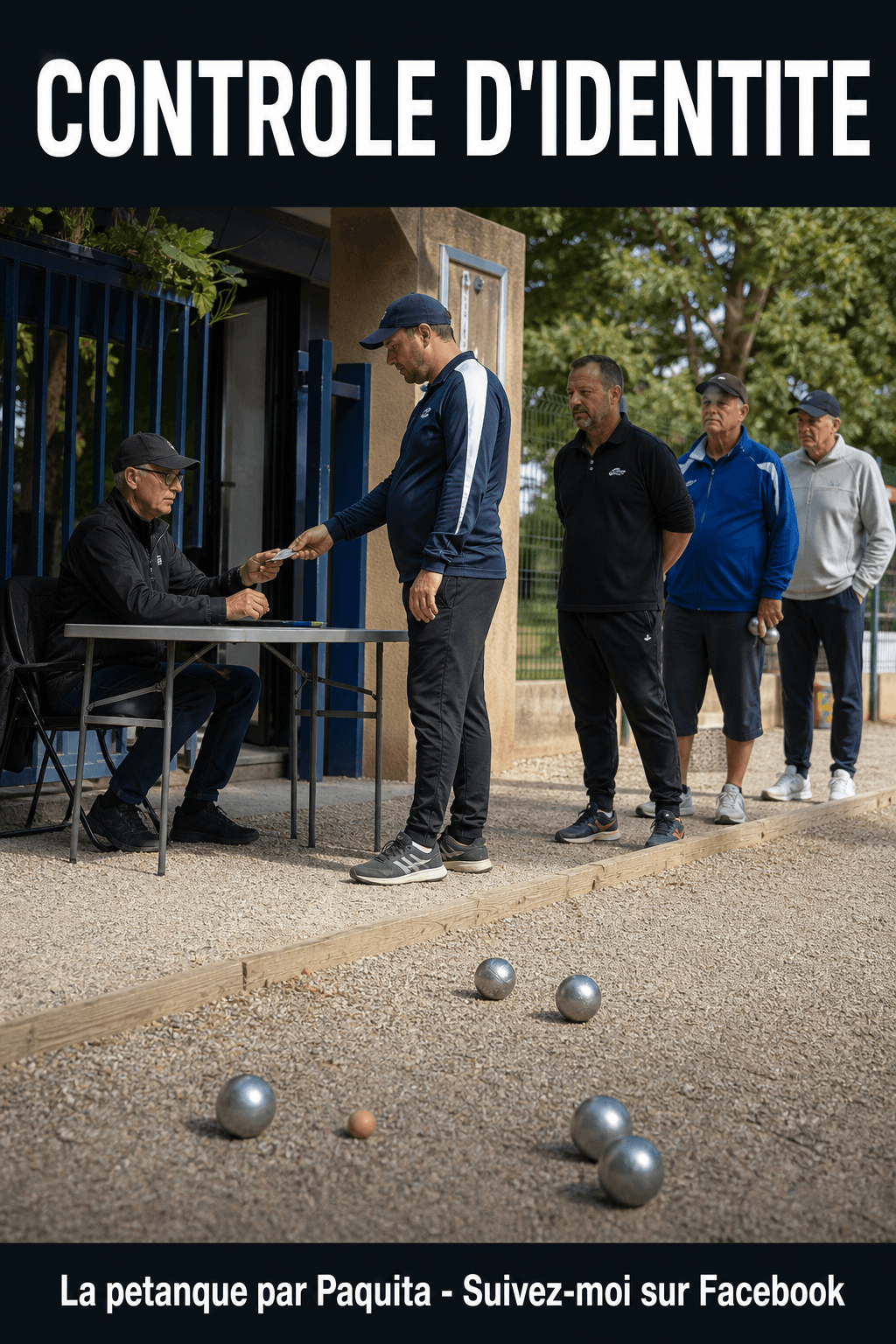
The best time is before the game actually starts . No score is involved, no boule has been played, and a possible correction does not affect a result. The captain can present the requested items, the scoring table or referee can check them, and both teams know the basis on which they begin.
A doubt discovered during play calls for even more calm. Note the moment, notify the official and do not decide a sporting consequence yourself. After the result, the matter becomes more sensitive: the record of the request, replies and decision matters as much as the underlying issue. The exact arrangements depend on the event's specific rules, so a team must never invent a sanction on the court.
3. Who acts, and how to make the request
Thereferee, when present, naturally leads a check that falls within that role. The organisers, scoring table or delegate may also be the right channel depending on the competition. An opposing team may report a doubt, but it does not replace the official: it simply states an observable fact and lets the procedure run its course.
A useful request stays brief: “We would like this team's registration checked before we start.” There is no need to add assumptions or look for witnesses around the court. The captain of the checked team gathers the useful documents and avoids three people answering at once. This restraint protects everyone, including a player identified by mistake.
Do not block the circle or demand an immediate decision from the opponent. The report goes to the official; the decision belongs to that official within the event framework.
4. A check must remain proportionate
A check does not permit every kind of question. Limit it to information needed for participation: identity, registration, licence, or a document requested by the organisers. Tone matters as much as the request. A checked player does not have to justify themselves before the whole boulodrome; cooperating with the competent contact is enough.
Conversely, refusing on principle or replying aggressively complicates a situation that is often very simple. Preparing documents, knowing the declared line-up and asking for a moment to allow the check are acts of fair play. The proper running of a competition rests on the same care being applied to every team, not on the force of a protest.
5. The captain's four-step routine
The captain does not have to plead a case before one exists. Their role is to make the check smooth: gather the available information, identify the registered players calmly, listen to the question and wait for the decision. If the procedure seems misunderstood, ask the official for an explanation instead of arguing with the opposing team.
This routine reduces misunderstandings. It also keeps the team focused on the game: while the captain handles administration, the other players avoid comments and prepare the first end. For situations where a refereeing decision needs explaining, see the pétanque refereeing guide.
6. The right response for each situation
| Situation | What to avoid | What it protects |
|---|---|---|
| Before the team call | Report the doubt to the table or referee | A clear start for both teams |
| Just before the throw | Check without a public debate and stay calm | Concentration and regularity |
| During the game | Notify the official, note the moment, and await their direction | A traceable handling of the situation |
| After the result | Present the available information to the organisers | A decision based on facts, not rumour |
The common mistake is to think an opposing player can “cancel” a game simply by asking. That is not so: a complaint needs a framework, a competent contact and, depending on the event, verifiable information. To prepare for competition with the right reference points, find dates and resources in the official competitions area.
A calm team does not try to gain an advantage from administrative uncertainty. It wants to begin with identical rules for everyone. Keep this phrase in mind: report it, let it be checked, play on. It prevents needless exchanges and reminds us that refereeing protects the game; it is not there to weigh it down.
Paquita's advice: before leaving the club for a competition, the captain checks the declared line-up and useful documents. This minute of preparation removes a great deal of tension on arrival. Once the check is over, the team returns to what matters: read the end, choose the right boule and respect the opponent.
Frequently asked questions Frequently asked questions
Can an opposing team demand an immediate sanction?
No. It may report a doubt, but the check and the decision belong to the official or organisation responsible for the event.
Must you wait for a dispute before checking?
No. The cleanest moment is before the first throw, when no end or score is at stake.
What should the player concerned do?
Stay calm, present the requested items to the competent contact and avoid feeding a public discussion.
Must the captain debate with the opponents?
No. The captain may listen to the reason for the report, then direct the request to the referee, table or organisers.
What if the situation arises during the game?
Notify the official, note the moment and let them specify how to proceed under the event rules. Do not decide a consequence yourself.