Règlement FFPJP · 30 July 2026
The diamond in pétanque: points won, rules and official special cases
Un carreau ne donne aucun bonus automatique : comprenez les points, la mesure et les cas où le but ou les boules bougent.Key takeaway. The diamond fascinates because it seems obvious: you shoot, the opposing ball leaves, yours stays. But as soon as we talk about points won, a jack hit, a ball moved behind, or a diamond that completely changes the lead, the certainties become less clear. The rules do not give an artistic bonus to the frame: they only judge the final position of the balls and the goal.
1.What we call a tile
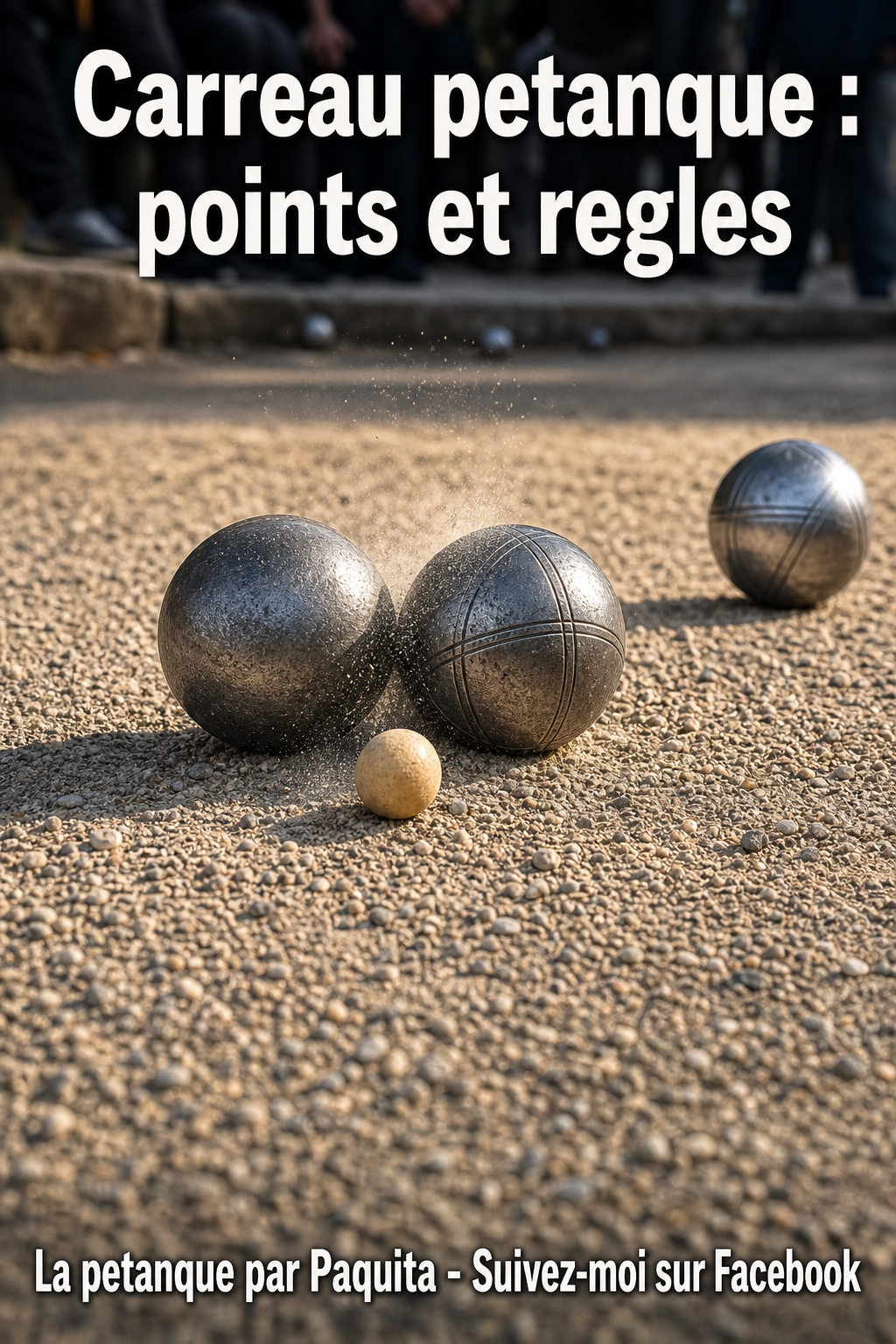
In players' language, a frame designates a shot where the ball played almost replaces the ball hit. The opposing ball leaves its place and the shooter's ball remains in the zone, sometimes exactly at the point of impact. The word belongs to pétanque culture, not to a special rule scale.
This nuance is crucial. The referee does not reward the beauty of the gesture. He notes the final positions: which ball is closest to the goal, is the goal still valid, which balls remain in play, and which team has the point.
Key takeaway: a diamond can be magnificent and not worth any points if another opposing ball remains closer to the goal. Conversely, a less pure shot can win the lead if the final position is favorable.
2.How many points does a tile really earn?
A diamond never earns an automatic point. In pétanque, the points of a match are awarded to the team which has one or more balls closer to the jack than the best opposing ball. Diamond helps achieve this situation, but it does not create a bonus.
If your ball stays on point and becomes closest to the goal, it can earn a point. If your team also has the second and third closest balls, they can score two or three. But it is the final distances that decide, not the fact of having scored a frame.
3.Official special cases
The first frequent case is the diamond which chases the target ball well, but displaces another ball as it falls. We do not return to the previous scene: all the balls are judged where they stopped, unless external intervention or planned foul. The second case is that of a ball which hits the goal following the impact. Here again, the goal remains valid if it remains within playing conditions.
The third case concerns limited land. A hit ball can go out, your ball can stay, or the other way around. Each ball released is void if it crosses the limits under the regulatory conditions. The frame does not protect a ball out, even if the shot was perfect at the start.
| Tile case | Decision | Key takeaway |
|---|---|---|
| Shot ball chased away, shooter remains | Final position | We measure from the current goal |
| Diamond then jack moved | Valid or void goal | The fate of the goal dictates the rest |
| Ball out of bounds | Zero ball | The style of shooting changes nothing |
| Diamond on already winning ball | Point recalculated | We compare all the distances |
4.If the jack also moves
The perfect diamond can become a complex shot when the jack moves in the same sequence. The rule remains the same: we wait for the elements to completely stop, then we analyze. If the goal is still valid, the lead continues with its new position. If the goal is a draw, the rules for a draw apply according to the balls remaining to be played.
This is where many players go wrong. They want to count the frame as if it had taken place before the goal was moved. However, the regulations judge the final scene. Shooting, moving and rebounding form a single game action until immobilized.
5.Measurement and decision after shooting
After a tile, the measurement must remain rigorous. It is not assumed that the ball remaining on the spot holds the point. We compare the distances to the jack with the appropriate tool, especially if an opposing ball is behind or to the side. Perspective illusions are common on clear terrain.
If the shot has moved several elements, you must take the time to identify all the valid balls. A ball that was thought to be out of play can still count. A barely returned ball can tip the lead. The safest method is to first identify each team's best ball and then count the extra points.
After an important frame, don't just look at the ball that was left. Take a complete tour of the game with your eyes: goal, friendly ball, best opposing ball, limits. It is this complete turn that avoids the points offered.
6.What the regulation changes in strategy
Knowing that the diamond has no special value changes the way you choose your shots. We do not shoot for show, but to produce a useful final position. Sometimes a simple shot that removes the ball is enough. Sometimes, you absolutely have to stay because the pitch or the score requires you to take the point back immediately.
In competitions, this reading makes the difference. At 12-12, a frame that stays but pushes the goal towards an opposing ball can be catastrophic. At 3-8, the same gesture may be necessary to open the lead. The regulations provide the framework; the strategy consists of choosing the risk adapted to the score and the position of the balls.
To turn the shot at the frame into a useful decision, work on precision, impact height and reading the score.
Discover the guideFAQ - tiles and rules
Is a diamond worth two points?
No. It is only worth what the final position allows you to score.
Should the drawn ball be replaced?
No, if the shooting is regular. We keep the final positions.
What if the diamond pushes the jack?
We check if the goal remains valid. If it is, we measure from its new position.
Can a diamond lose the point?
Yes, if the final position favors the opponent or if the goal is moved unfavorably.
When should you measure?
As soon as the eye is not enough, especially after a shot which has moved several balls or the goal.
For a clear overview of the rules, consult the pétanque rules guide. Read the pétanque rules guide.