Règlement FFPJP · 29 July 2026
Everything you always wanted to know about the rules of pétanque
Les repères essentiels du règlement de pétanque pour jouer, mesurer, réagir aux incidents et éviter les litiges inutiles.Le règlement ne sert pas à gagner une discussion : il permet de remettre la partie sur des faits. Avant de jouer, retenez le cercle, le but, l’ordre des boules, la mesure et le réflexe d’appeler l’arbitre quand le doute persiste.
Une partie se passe rarement mal parce qu’un joueur ignore tout. Elle se complique plutôt quand chacun se souvient d’une règle différente au moment où le but sort, qu’une boule est déplacée ou que la mesure devient serrée. Le bon réflexe est de stopper le jeu avant de transformer une incertitude en geste irréversible.
1.Partir du bon cadre de jeu
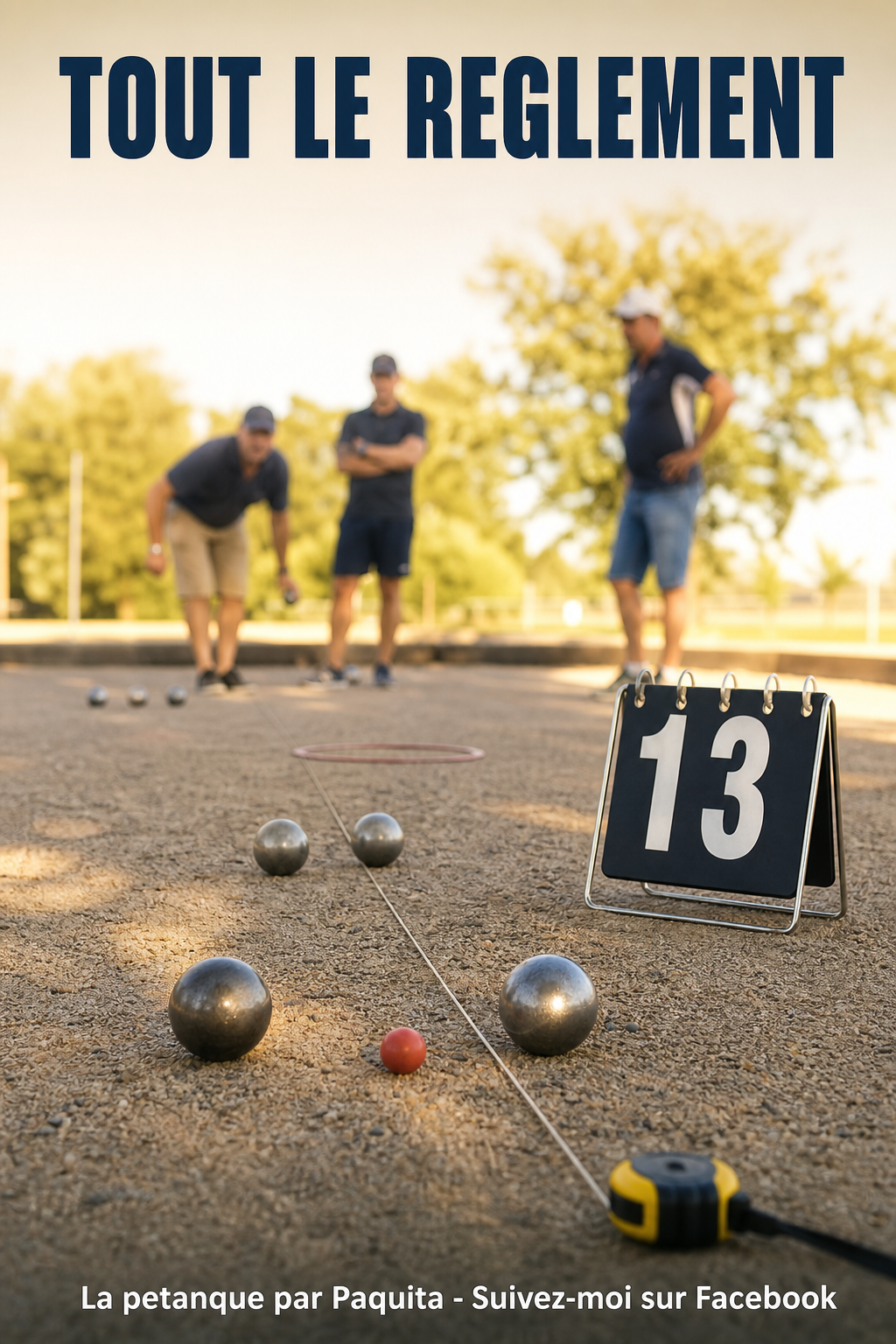
La pétanque se joue en tête-à-tête, doublette ou triplette. En tête-à-tête et en doublette, chaque joueur dispose de trois boules ; en triplette, il en joue deux. La partie se gagne généralement à treize points. Ces repères semblent élémentaires, mais ils donnent déjà la bonne méthode : savoir quel format est annoncé, quelles boules restent et qui tient le point avant de décider ce qui suit.
Dans une rencontre officielle, le règlement de l’épreuve peut compléter les règles de jeu : horaires, tenue, remplaçants, feuille de match ou procédure de réclamation. Ne mélangez pas la règle générale et le règlement particulier du concours. Le premier fixe le jeu ; le second organise la compétition. Un capitaine gagne du temps en demandant ce document avant le début des parties.
Avant la première mène, dites à votre équipe qui vérifie le score, qui garde un œil sur les boules restantes et qui appelle l’arbitre. Une responsabilité claire évite les débats à trois voix.
2.Sécuriser le lancer du but
Le but se lance depuis le cercle et, chez les seniors, sa distance de référence est comprise entre six et dix mètres. Il doit aussi être placé dans des conditions qui permettent de jouer correctement. Au lieu de discuter après le premier tir, vérifiez tout de suite la position, les limites matérialisées et la visibilité. Un lancer contrôlé avant la première boule vaut mieux qu’une mène entière à rejouer.
Si le lancer n’est pas valable, ne créez pas une règle de club improvisée. La procédure dépend du contexte et des boules restantes ; l’arbitre ou la table est là pour la confirmer. Le même principe vaut lorsqu’un but sort du cadre de jeu : regardez d’abord les boules encore disponibles pour chaque équipe, puis faites constater la situation avant de ramasser quoi que ce soit.
3.Comprendre l’ordre de jeu
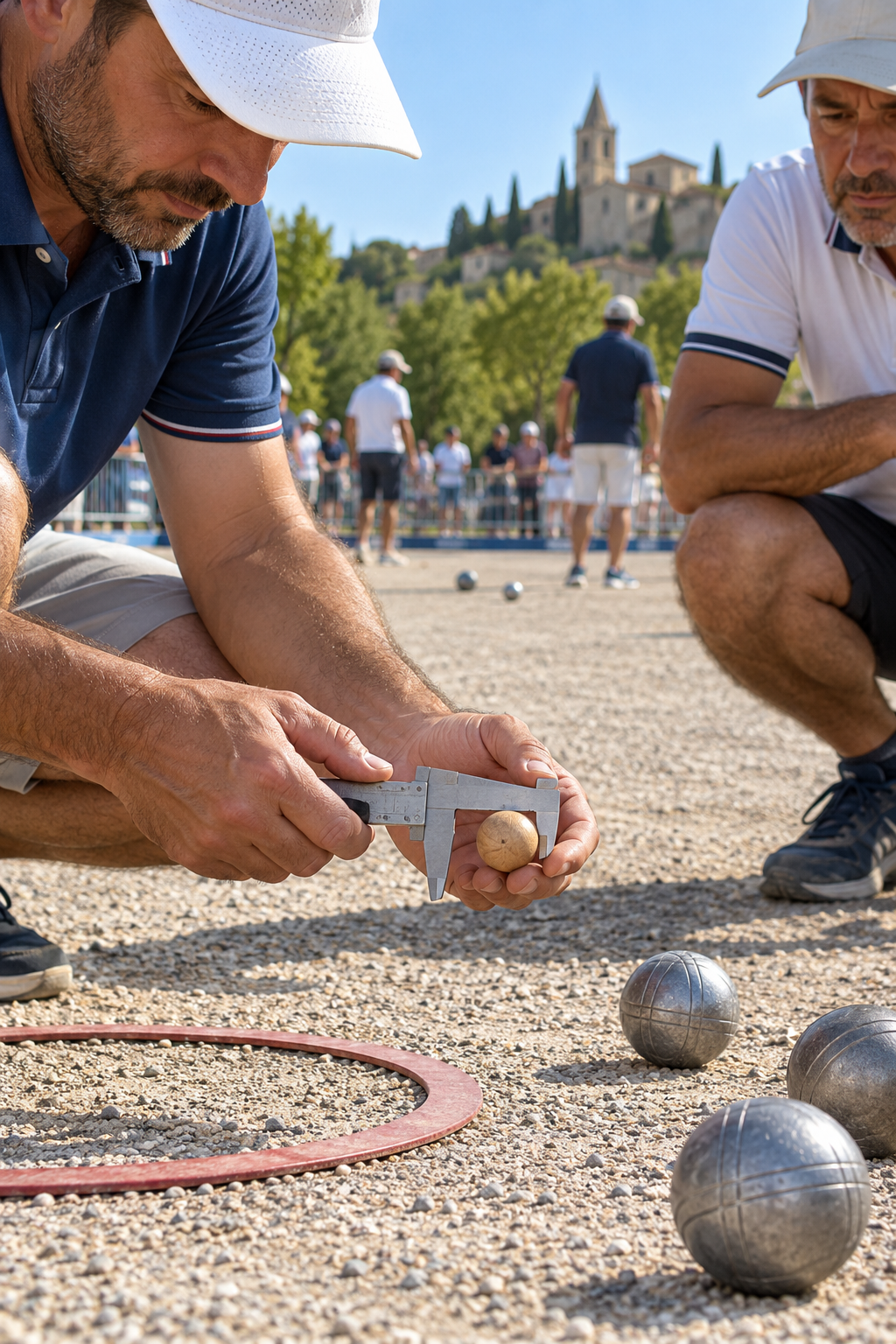
Une équipe joue tant qu’elle ne tient pas le point. Dès qu’elle place une boule plus près du but que l’adversaire, c’est l’autre équipe qui doit répondre. Cette règle devient délicate quand les distances paraissent égales, lorsqu’une boule a bougé ou quand le terrain masque la lecture. L’ordre de jeu ne se devine pas : il se constate.
| Situation | What to avoid | Mistake to avoid |
|---|---|---|
| Une boule semble mieux placée | Comparer avant d’annoncer le point | Jouer au ressenti |
| Deux boules paraissent égales | Mesurer ou appeler l’arbitre | Décider à la voix |
| Le but ou une boule a bougé | Faire constater immédiatement | Ramasser ou replacer seul |
| Une équipe n’a plus de boules | Compter avec les boules en place | Oublier le contexte de la mène |
Exemple terrain : votre équipe vient de jouer une boule qui paraît prendre le point, mais votre pointeur n’est pas certain. La bonne phrase n’est pas « c’est bon, à vous ». C’est : « on vérifie avant la suivante ». Cette courte pause protège le score et le rythme de la mène, surtout si les deux équipes ont encore plusieurs boules.
4.Mesurer sans aggraver le doute
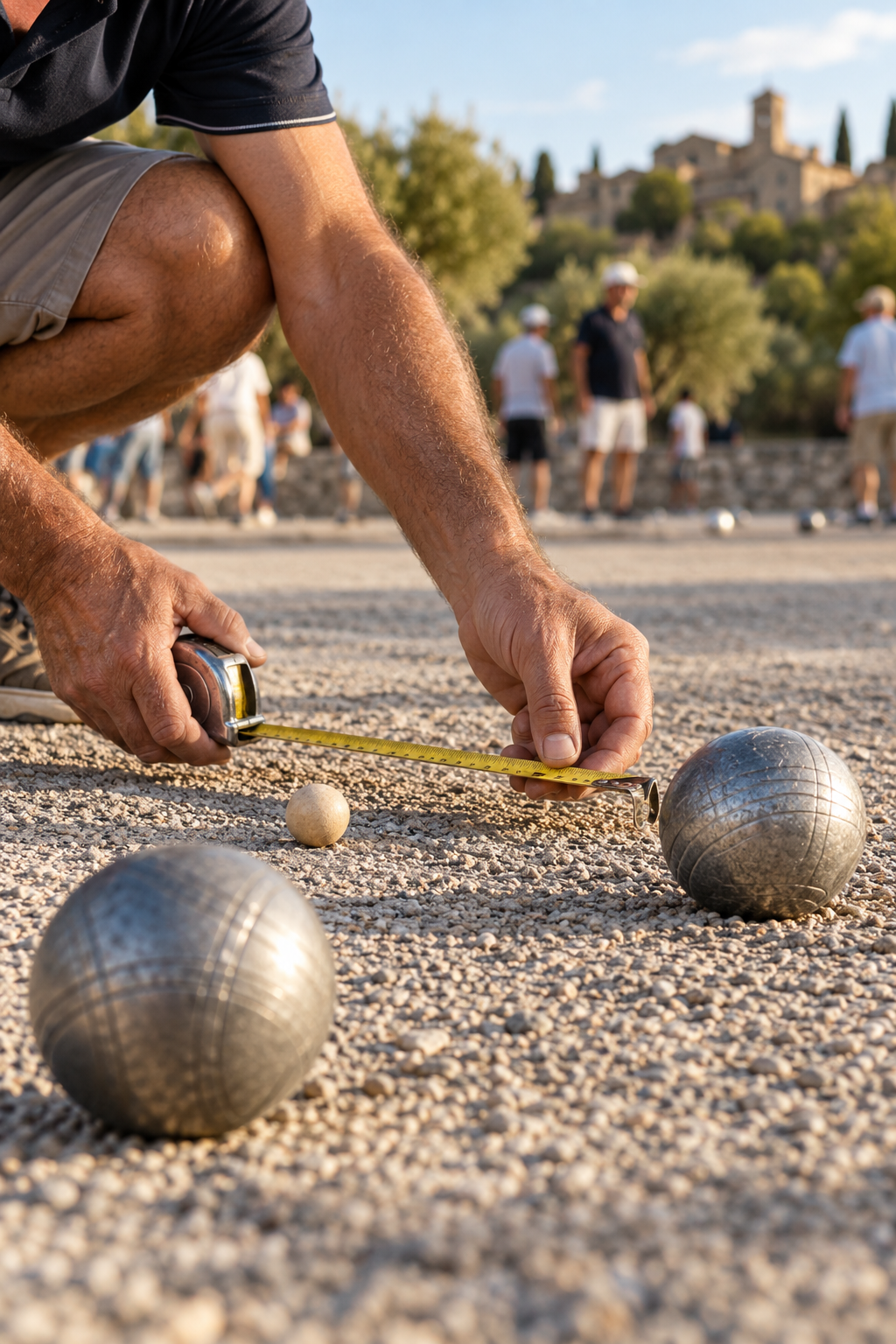
Une mesure sérieuse commence par l’immobilité. Ne déplacez pas les boules, ne balayez pas le terrain autour du but et ne désignez pas déjà le gagnant. Un outil adapté permet de comparer les distances ; en cas de désaccord, l’arbitre tranche selon la procédure. La mesure est un constat, pas une négociation.
Le piège classique consiste à jouer une boule parce que tout le monde « pense » savoir qui est devant. Si cette nouvelle boule déplace le jeu, il devient parfois impossible de revenir au point de doute initial. À l’inverse, demander une mesure n’est pas ralentir volontairement une partie : c’est préserver une décision juste, à condition de le faire sans mise en scène ni pression sur l’adversaire.
Utiliser le pied, une règle approximative ou la main pour trancher une situation serrée. Quand le point compte, la seule économie utile est celle d’une dispute évitée.
5.Réagir proprement aux incidents
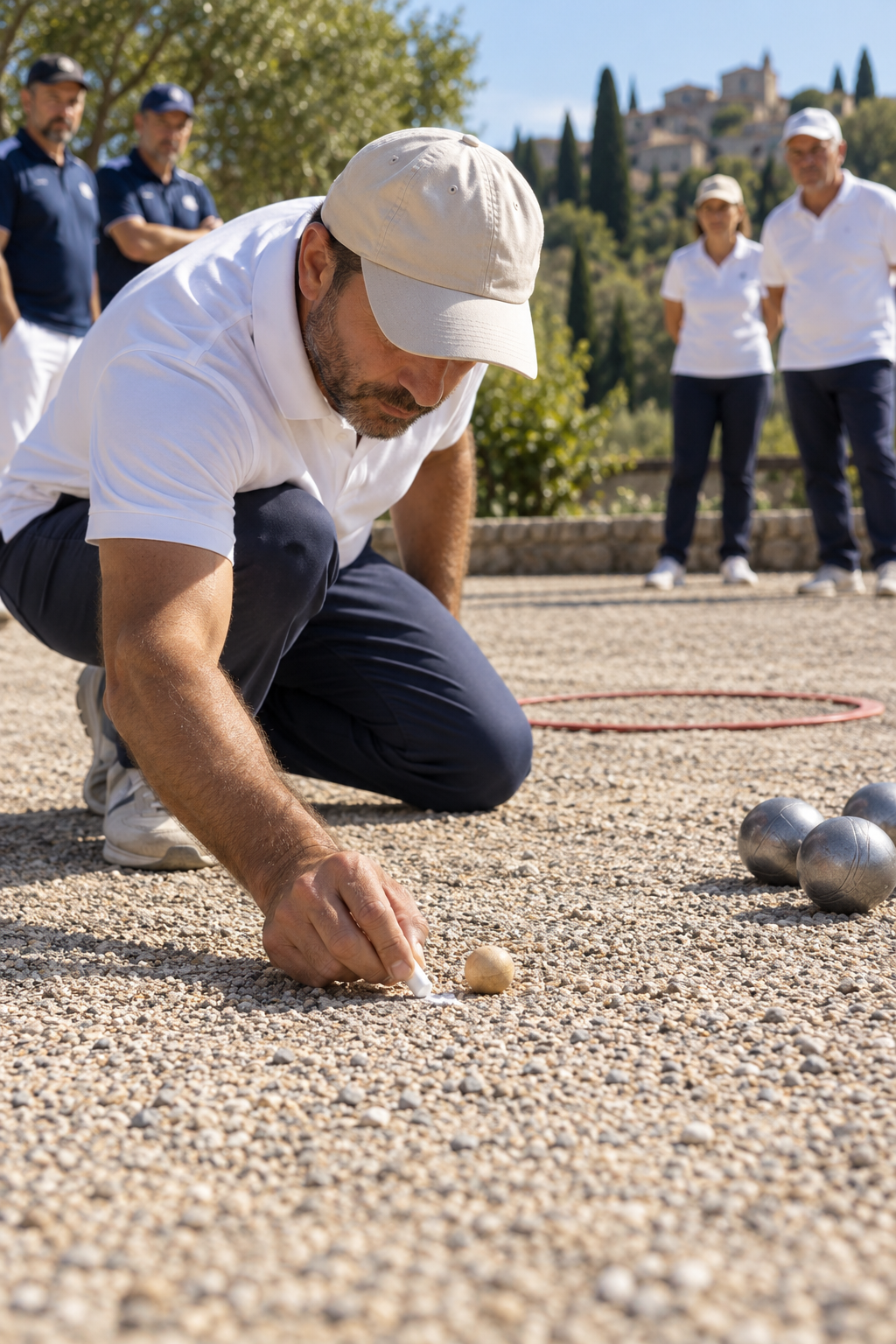
But déplacé, boule touchée par mégarde, joueur qui gêne, limite incertaine : la réponse dépend toujours des faits précis. Retenez une méthode plus fiable qu’un souvenir vague d’article : arrêtez le jeu, laissez les objets en place, identifiez ce qui s’est produit et prévenez l’arbitre si les équipes ne sont pas immédiatement d’accord. Plus l’incident est signalé tôt, plus sa résolution est claire.
Évitez les accusations. « La boule a été touchée pendant la mesure » décrit un fait ; « vous avez triché » ferme la discussion. Pour préparer ces moments, consultez les règles de pétanque expliquées puis les cas d’arbitrage pétanque. Les joueurs de club peuvent aussi retrouver des repères pour l’organisation sur le hub clubs PetanqueLand.
6.Installer une routine qui calme la partie
La meilleure prévention tient dans une routine de fin de mène : annoncer le score, compter les points avec les deux équipes, vérifier la feuille quand elle est utilisée, puis seulement reprendre les boules. Cette séquence paraît lente la première fois ; elle devient naturelle en quelques concours. Une équipe organisée ne laisse pas le stress écrire sa version de la règle.
Conseil Paquita : choisissez un mot simple, par exemple « constat ». Dès qu’il est prononcé, tout le monde sait qu’on arrête de jouer, qu’on ne touche plus rien et qu’on cherche la décision la plus propre. C’est un excellent réflexe pour les débutants comme pour les compétiteurs. Pour poursuivre sans vous noyer dans les exceptions, passez par les rendez-vous et ressources officielles.
Je regarde le cercle et le but, je sais qui doit jouer, je mesure avant de parler, je signale l’incident tout de suite, puis j’appelle l’arbitre si le doute demeure.
Frequently asked questionsLes questions les plus utiles
Quelle est la distance habituelle du but à la pétanque ?
Pour les seniors, le repère de jeu est compris entre six et dix mètres. Les conditions de placement et les règlements d’épreuve doivent aussi être respectés.
Qui joue quand deux boules paraissent à la même distance ?
Il faut mesurer ou demander l’intervention de l’arbitre. Ne décidez pas à l’intuition : l’ordre de jeu découle du constat.
Que faire si une boule est déplacée accidentellement ?
Arrêtez immédiatement le jeu et laissez la situation visible. L’arbitre applique ensuite la procédure adaptée aux circonstances.
Peut-on contester une décision pendant la partie ?
Oui, de façon calme et immédiate. Exposez le fait observé, demandez une vérification et évitez de jouer tant que le point litigieux n’est pas réglé.
Pourquoi connaître le règlement aide-t-il à mieux jouer ?
Parce que moins de temps est perdu en débat et plus d’attention reste disponible pour la distance, le choix de boule et la stratégie de la mène.