Règlement FFPJP · 3 August 2026
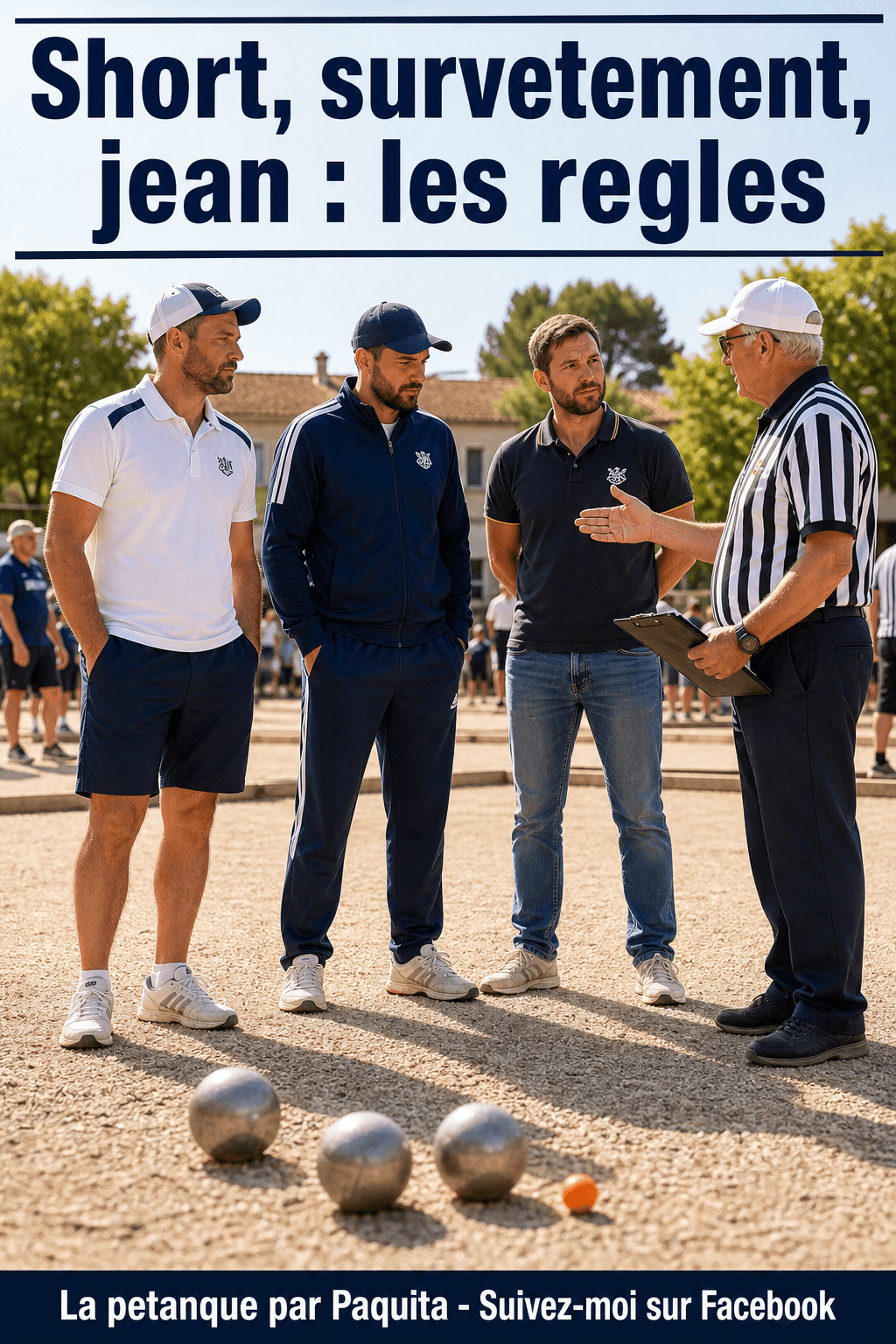
Shorts, tracksuits, jeans: how to apply the dress rules without getting them wrong
Short, survêtement ou jean à la pétanque : vérifiez la règle de l'épreuve, évitez le litige et préparez une tenue de rechange.1.Why attire depends on the setting
The first mistake is to discuss attire without discussing the event. A friendly game is not a departmental championship. A club competition with no specific requirement is not a qualifying round or an official final. The FFPJP framework mainly concerns sporting presentation, team identification and compliance with the instructions specific to the competition.
The right reflex is therefore to read the poster, invitation or specific regulations. If the document requires matching tops, sports bottoms or full club attire, the obligation is clear. If nothing is specified, the referee retains discretion regarding propriety, safety and the image of the event.
On-court guideline: attire should be assessed before play begins, not when the opponents start leading. The later the objection, the more it looks like a tactic.
2.Sports shorts: allowed or risky?
Sports shorts may be accepted in many competitions, especially when they are clean, understated and suited to play. They become more questionable when the event requires strictly uniform attire or championship presentation. In that case, the word 'shorts' is not what matters; the exact instruction given to the teams is.
The weather complicates matters further. In midsummer, an organiser may allow a practical tolerance, but it must be announced. A player who arrives in shorts with no alternative takes an unnecessary risk if the check is stricter than expected.
3.Tracksuits: the safest solution
A sports tracksuit is often the most cautious option: it matches the expected sporting image, provides protection when the weather changes and coordinates easily with a club top. For teams, it is also a simple way to present a consistent appearance without buying a complete outfit for every condition.
Be careful, however: a tracksuit does not remove the need to follow the instructions. If a team must wear matching tops, the bottoms do not compensate for a shirt error. And if the organisers ban certain markings or require a colour, that rule must be followed.
In practice, the tracksuit mainly serves as a safety net. It can be put on quickly, does not hinder the action and keeps players presentable when the temperature drops between the morning pools and the afternoon knockout stage. Advising this option helps a club avoid multiple individual interpretations.
4.Jeans: why they cause disputes
Jeans are the most contentious case because they sit between everyday habit and sporting presentation. In some relaxed competitions they may pass without comment. In a more demanding official event, they may be considered inconsistent with the expected image, especially when the specific regulations explicitly require sportswear.
The problem is therefore not only the fabric. It is also the signal it sends: jeans may suggest that the player did not prepare for the event. In a championship, that impression can be enough to trigger a check or a request to change.
| Attire | Advantage | Risk |
|---|---|---|
| Sports shorts | Comfort in hot weather | Depends on the instructions |
| Tracksuit | Clearly sporting appearance | Must remain consistent with the team |
| Jeans | Common everyday wear | Championship dispute |
| Spare outfit | Prevents a blockage | Requires a minimum of planning |
5.Pre-match check
An attire check must remain factual. The referee or organiser reviews the instructions, observes the clothing and requests a correction if necessary. The captain should avoid turning the check into a general debate about fashion in pétanque. What matters is compliance with that day's event.
If an opposing team reports a problem, it should do so calmly and preferably before play starts. A late objection damages the atmosphere and risks shifting the issue: instead of discussing attire, people start discussing motives.
6.Paquita's method
Before leaving, check four points: the type of event, the top requirement, the rule for bottoms and the weather. If you are playing as a team, agree on the complete outfit together. Add an understated alternative to your bag: tracksuit bottoms, a club top and a neutral jacket. This prevents your competition being decided by an administrative detail.
This preparation also has a mental benefit: once attire is settled, the player arrives focused on the court, the draw, the rhythm and the opening ends. Conversely, looking for a jacket ten minutes before the start creates unnecessary tension within the team.
Paquita's advice: do not look for the outfit that just barely passes. Look for the outfit that will waste nobody's time. Comfort matters, but peace of mind before the first end is worth points too.
For clubs, dress instructions should be clear from registration onward. PetanqueLand software helps keep organisational information tidy and easy to read.
Discover the softwareFAQ - Your frequently asked questions
Are shorts banned in FFPJP competitions?
Not automatically. Everything depends on the type of event and the instructions issued by the organisers.
Are jeans always banned?
No, but they become risky in championships or events requiring strict sportswear.
Is a tracksuit a good solution?
Yes, it is often the safest solution because it remains sporty, understated and easy to coordinate.
When should questionable attire be reported?
Before matches begin or as soon as the doubt arises, calmly, through the referee or the control table.
What outfit should you prepare if in doubt?
A club top, understated sports bottoms, suitable shoes and a neutral jacket cover most situations.