Règlement FFPJP · 29 July 2026
These official rules that even experienced pétanque players often ignore
Ordre de jeu, but nul, mesure et arbitrage : les réflexes utiles pour éviter les erreurs de règlement en concours.An experienced player often knows the terrain better than the beginner. He knows how to read a slope, feel a ball, choose a useful shot. But the official regulations are not only a matter of the level of play. They evolve, they become more precise, and above all they mix in clubs with local traditions. Result: some very solid players still apply approximate rules, sometimes out of habit, sometimes because no one has contradicted them for years.
1.Why the experts are still wrong
The error of experienced players rarely comes from a lack of seriousness. It comes from automation. When you have played hundreds of games, you end up believing that what you have always seen done is necessarily official. However, the leisure field tolerates a lot of arrangements: we quickly replace a ball, we restart a goal by agreement, we let a measure be discussed. In competition, these shortcuts can become mistakes.
The official regulations serve precisely to break away from custom. It gives a common rule to teams who do not know each other, on sometimes different terrains, with a referee responsible for ensuring that the same logic is respected for everyone.
Key point: Experience helps you play, but it does not replace regular reading of the rules and the reflex to call the referee when the situation requires it.
2.Order of play and wrong player's ball
Many players know that the team without the point must play. But the borderline cases are less well controlled: equality of distance, ball played by the wrong partner, error after a contested measurement, change of mind after entering the circle. The order of play is not a simple tactical arrangement; it arises from the position of the balls in relation to the goal.
A ball played too early or by the wrong player can create a tricky regulatory situation. The most important thing is not to correct it yourself after the fact without noticing. We stop, we check, then we apply the rule or we ask the referee.
3.Drawn goal, moved goal, lost goal
The jack concentrates a large part of the confusion. When it goes out of bounds, when it becomes untraceable, when it is moved into a forbidden area or when it bounces after an obstacle, experienced players often have a quick response. But fast doesn't mean right.
The right question is always the same: is the goal still valid, and do both teams still have balls? Depending on the answer, the point may go to one team, the lead may be drawn, or play may resume from a specific position. This is precisely where automation is expensive.
| Rule often ignored | Why does she trap | Right reflex |
|---|---|---|
| Drawn goal with balls remaining | We think we always have to replay | Count the available balls |
| Unmarked boule | We minimize identification | Mark before competition |
| Play time | We let the minute slip away | Prepare your choice more quickly |
| Framed land | We change the limit orally | Respect the defined framework |
4.Equipment, brands and terrain
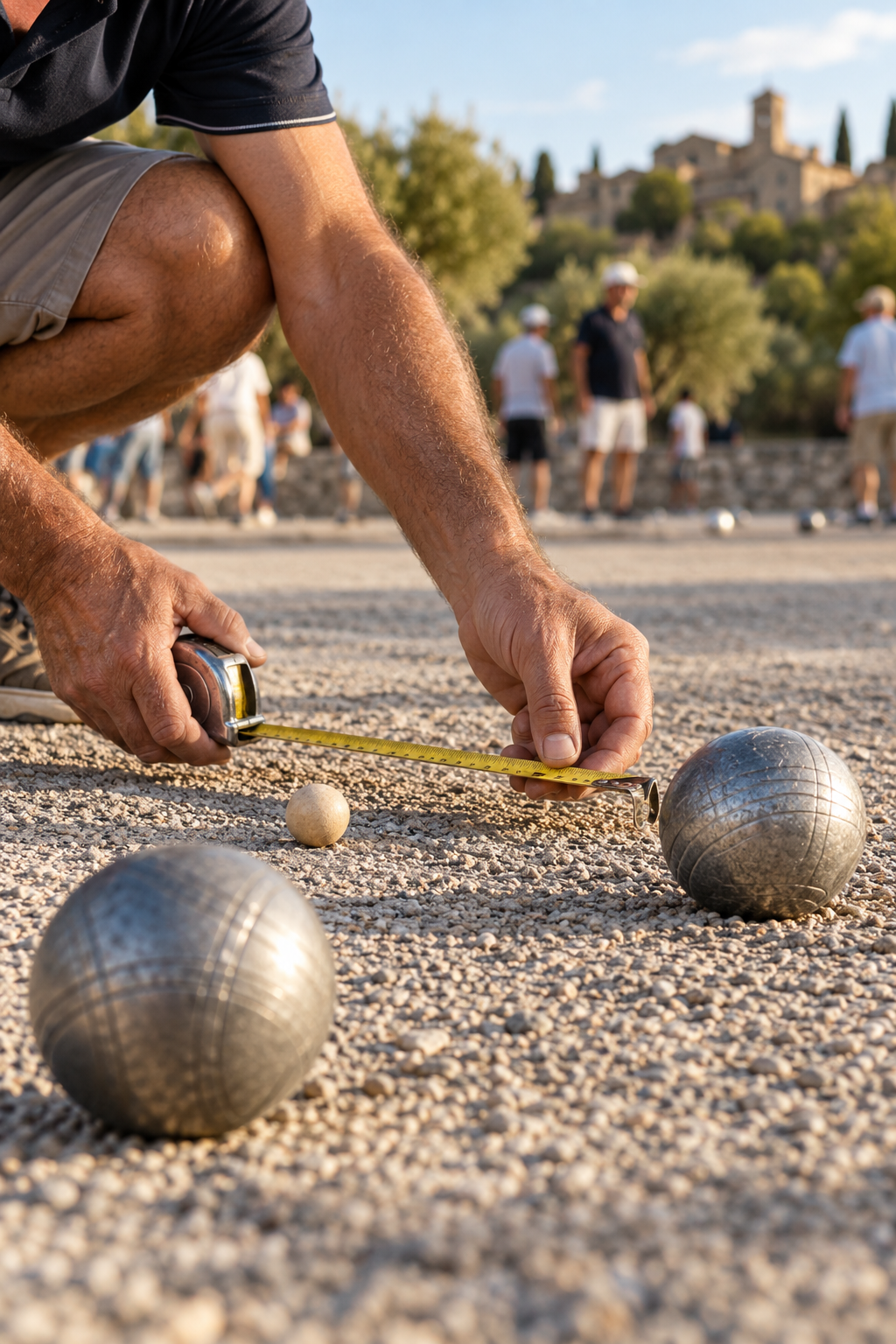
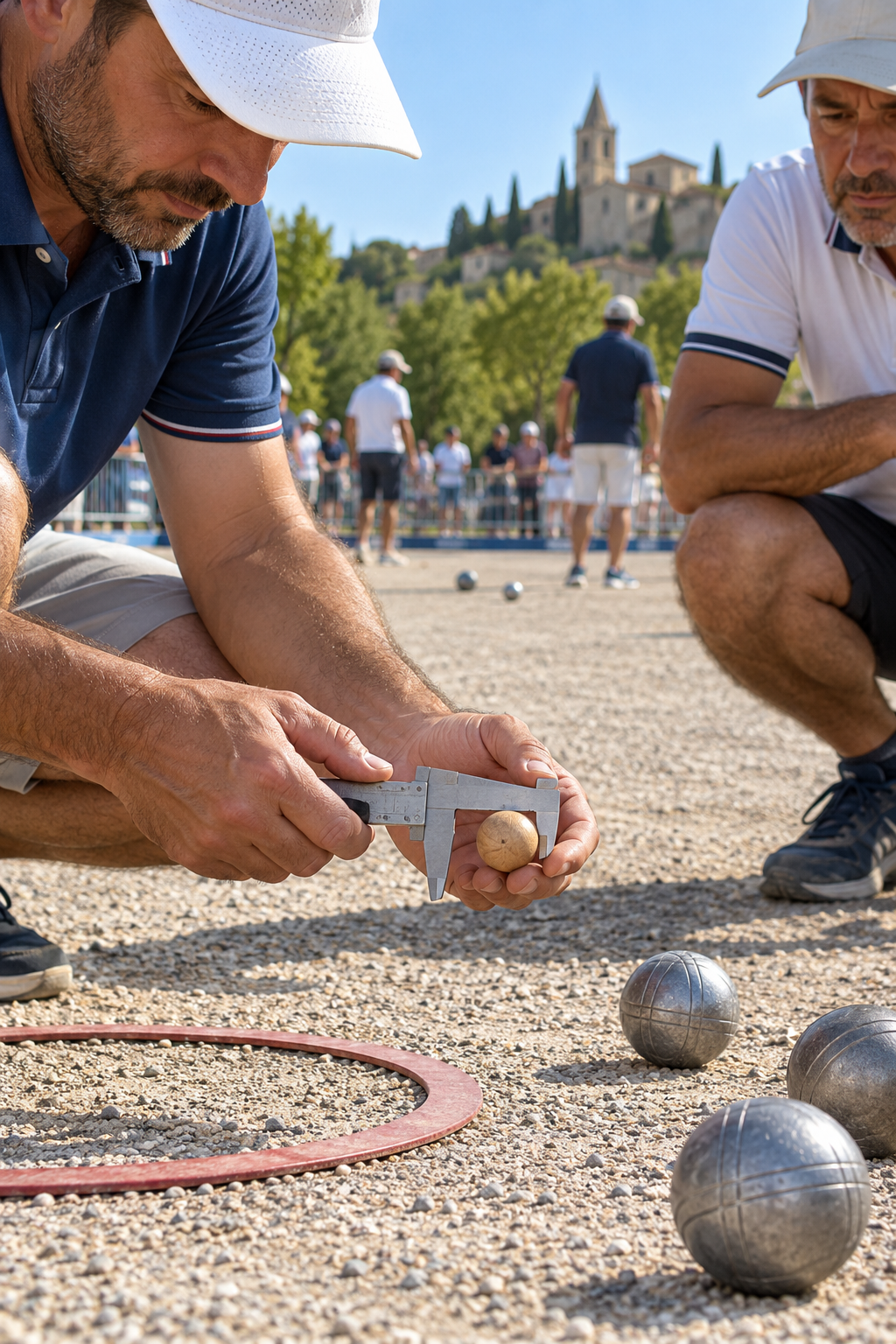
The balls must be identifiable, suitable for competition and comply with approval requirements. This is not an administrative detail. A ball that is impossible to identify can create a dispute during movement or confusion at the back of the game. Same remark for the circle, the distances, the terrain and the limits: these are regulatory benchmarks, not simple habits.
Paquita's advice: before a competition, check your boules as you check your license: legible marking, known diameter, weight assumed, cloth and meter ready. The material avoids a lot of discussion.
5.Disputes and arbitration
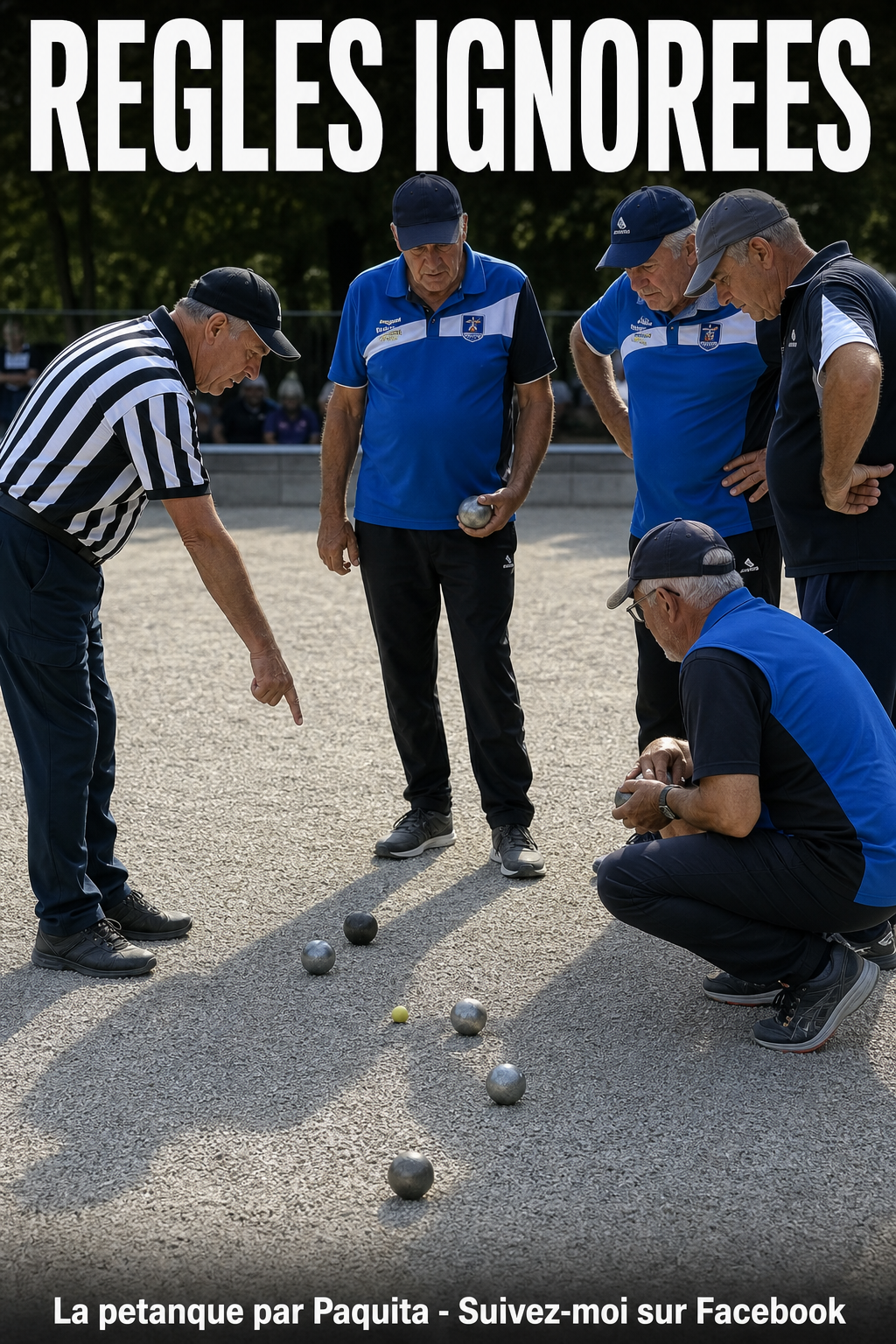
The experienced player sometimes likes to settle things between players. It's noble when everyone agrees, dangerous when tension rises. The regulations provide for the referee to avoid escalation. Calmly contesting is possible; insisting after a decision, annoying the opponent or making multiple comments can become a behavioral problem.
Official pétanque requires calm because calm protects the game. A clear decision, even frustrating, is better than an endless discussion that disrupts both teams.
6.Checklist before competition
Reread the following points before a competition: distance from the goal, minute rule, order of play after a tie, consequence of a draw, measuring procedure, validity of equipment, boundaries of the field and role of the referee. These are the eight areas where seasoned players are still surprised.
The best proof of experience is not knowing all the answers by heart. This is knowing when an answer should be checked.
The PétanqueLand competition & melee software To properly organize registrations, groups and tables, the software helps clubs to frame competitions with rules that are readable for everyone. Discover the software
To check a specific case without prolonging a discussion, also consult our pétanque officiating guides.
Frequently asked questionsFAQ - Your frequently asked questions
Should experienced players re-read the rules?
Yes. Playing experience does not guarantee mastery of borderline cases, especially in official competitions.
Which rule is most often forgotten?
The order of play after a close measure and the consequences of a draw are among the most frequent confusions.
Can a club habit be applied in competition?
Only if she follows the rules. In the event of a contradiction, the official rules prevail.
When to call the referee?
As soon as a measure, a limit, a movement or a dispute does not find immediate agreement.
Can behaviour be penalized?
Yes. Repeated challenges, embarrassment or refusal of a decision may be subject to disciplinary arbitration.