Règlement FFPJP · 28 July 2026
Cercle de lancer à la pétanque : les règles utiles
Cercle de lancer : dimensions, position des pieds, erreurs fréquentes et méthode simple pour éviter les litiges à la pétanque.Le cercle n’est pas un détail de décor : il fixe le point de départ de chaque lancer. Garder ses pieds entièrement dedans jusqu’au contact de la boule avec le sol évite une faute, mais surtout une discussion qui coupe le rythme de la mène.
1.Pourquoi le cercle de lancer est si important
Une partie serrée se joue souvent à quelques centimètres. Le cercle donne à chaque joueur le même point de départ : il évite qu’un appui avancé, volontaire ou non, transforme discrètement une portée ou une ligne de tir. C’est pourquoi cette règle mérite mieux qu’un regard distrait au moment du lancer.
Dans beaucoup de clubs, l’habitude s’installe en partie amicale : un talon frôle le bord, un joueur accompagne déjà sa boule hors du cercle, personne ne relève. Le problème apparaît le jour où l’enjeu augmente. La remarque semble alors brutale, alors qu’elle corrige simplement un geste répété. La meilleure prévention est une routine visible, partagée avant la compétition.
Regardez le lancer de profil, pas le résultat de la boule : c’est la façon la plus simple de voir si le joueur quitte son appui avant l’impact au sol.
2.Ce que demande réellement le règlement
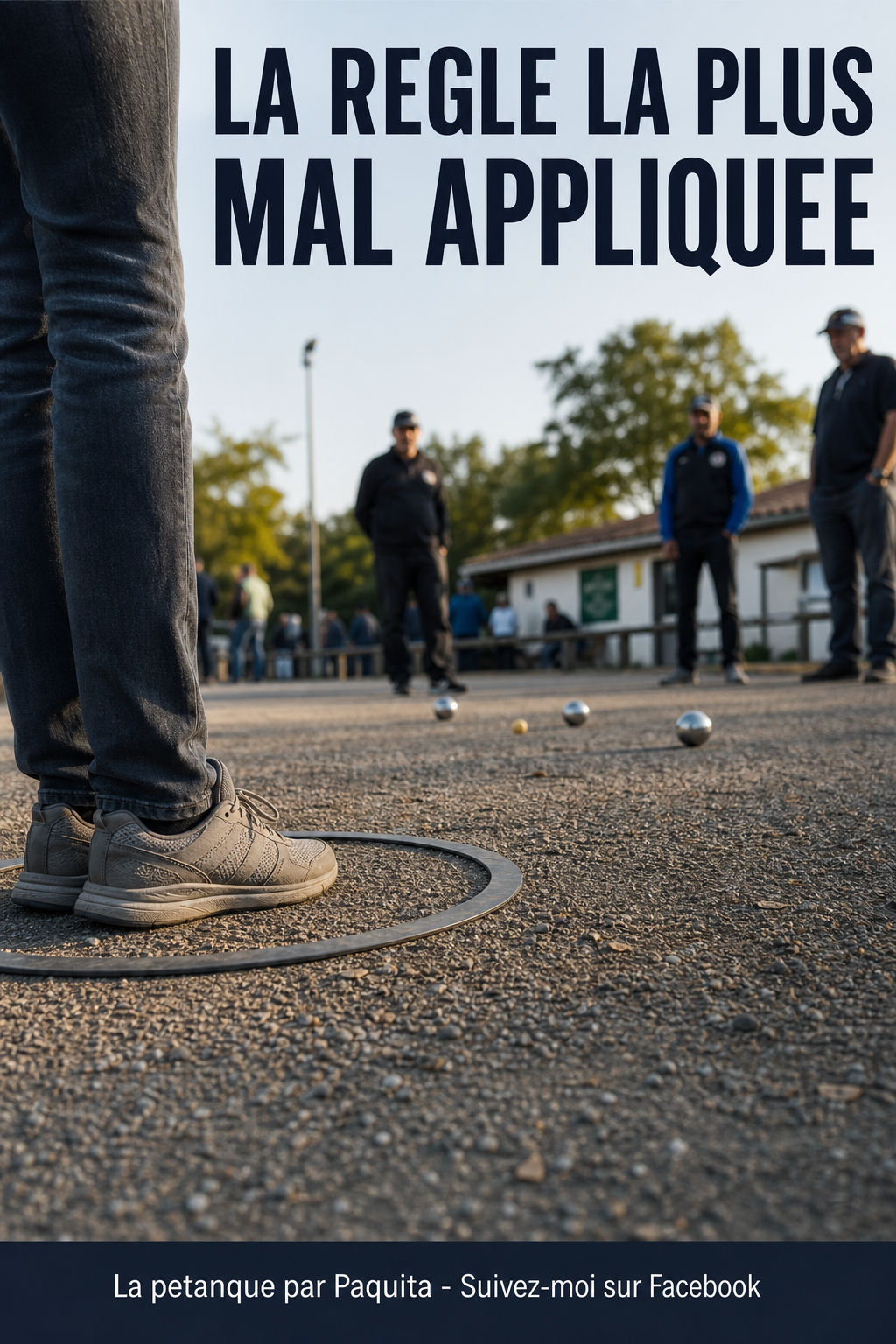
Le règlement FIPJP prévoit qu’un cercle tracé mesure entre 35 et 50 cm de diamètre. Lorsqu’un cercle rigide est utilisé, son diamètre intérieur est de 50 cm, avec la tolérance prévue par le texte. Les pieds du joueur doivent être entièrement à l’intérieur ; ils ne doivent ni toucher ni mordre le périmètre.
Le point qui échappe le plus souvent est le timing : le joueur ne peut pas sortir du cercle ni lever complètement un pied avant que la boule jouée ait touché le sol. Une autre partie du corps ne doit pas prendre appui au sol à l’extérieur. Ces règles ne visent pas à piéger : elles rendent le geste observable et identique pour les deux équipes. Pour les détails d’un cas réel, consultez le pilier arbitrage à la pétanque.
| Situation | Réflexe correct | Why |
|---|---|---|
| Drawn circle | Vérifier un diamètre de 35 à 50 cm | Le point de lancer reste conforme |
| Rigid circle | Utiliser le modèle réglementaire | Le repère est stable pour tous |
| Au lancer | Garder les pieds dedans jusqu’à l’impact | Le geste est validable sans débat |
| Position du cercle | Le marquer avant le but | La reprise de mène reste lisible |
3.Les quatre erreurs que l’on voit le plus
La première est le pied qui mord la ligne. C’est la plus visible, mais pas toujours la plus fréquente. Vient ensuite le joueur qui se redresse et sort juste après avoir lâché sa boule : si celle-ci n’a pas encore touché le sol, le geste n’est pas conforme. Troisième erreur : déplacer ou ramasser le cercle alors que des boules restent à jouer. Enfin, un cercle posé à peu près ou non marqué rend toute discussion plus compliquée.
Ne confondez pas rapidité et précipitation. Une bonne posture n’impose pas de jouer plus lentement ; elle impose seulement d’attendre une fraction de seconde avant de repartir. C’est très peu de temps, et c’est assez pour conserver une mène propre.
4.Faire respecter la règle sans tendre l’ambiance
Une remarque utile décrit un fait plutôt qu’une intention. Dites : « ton pied est sorti avant l’impact », pas « tu cherches à gagner du terrain ». Le premier énoncé ouvre une vérification ; le second transforme un détail technique en accusation. Si le fait n’est pas net, on évite de rejouer la scène de mémoire à plusieurs voix.
Le capitaine ou l’organisateur peut prévenir la plupart des tensions avec un rappel collectif au départ : cercle visible, position marquée, appuis contrôlés. Cette démarche donne à chacun le même cadre. Pour les formats et réflexes d’organisation, la ressource Clubs PétanqueLand aide aussi à préparer une rencontre plus sereine.
Attendre un 12–12 pour parler du cercle. Une règle tolérée dix mènes devient difficile à rappeler sans que l’autre équipe y voie une tactique de dernière minute.
5.La routine de deux minutes à l’entraînement
Placez un cercle rigide, puis jouez six boules : trois points et trois tirs. Un partenaire regarde seulement les appuis. Il annonce « bon » ou « à revoir » sans commenter la qualité de la boule. Ensuite, échangez les rôles. Cette séparation est précieuse : on corrige le départ, pas le niveau du joueur.
Une vidéo de profil peut compléter l’exercice. Cherchez un seul détail : le pied reste-t-il au sol et dans le cercle jusqu’au premier contact ? Le joueur n’a pas besoin de modifier tout son geste. Il peut simplement se donner le repère mental « boule au sol, puis je bouge ». Pour relier ce travail aux autres fondamentaux, retrouvez les conseils du guide des règles de pétanque.
6.Réagir à un doute et préparer la suite
Arrêtez la discussion avant qu’elle ne devienne un échange de souvenirs. Constatez ce qui est encore visible : position du cercle, marque au sol, ordre des boules. Si les équipes ne parviennent pas à s’accorder sur un élément important, l’arbitre est la bonne ressource. Son rôle est de ramener la décision au règlement, pas de désigner un fautif moral.
Évitez surtout de déplacer le cercle ou les boules pour « montrer ». Vous risquez de faire disparaître l’élément que vous cherchez à vérifier. Une décision calme vaut mieux qu’une certitude criée : notez mentalement le cas, reprenez avec la décision donnée, puis revoyez la règle après la partie si nécessaire.
Avant de lancer, dites-vous : « je suis stable, ma boule touche le sol, puis je pars ». Cette phrase courte installe une posture plus fiable que n’importe quel rappel sous tension.
Le cercle devient simple lorsqu’il cesse d’être un sujet d’arbitrage et devient un automatisme. Installez-le proprement, marquez-le, entrez dedans sans vous presser, lancez, puis repartez après l’impact. Ce protocole protège l’équité et préserve la relation entre adversaires.
Vous préparez une compétition ou encadrez des joueurs de club ? Gardez le lien vers les cas d’arbitrage à portée de main, puis partagez cet article à l’équipe avant le prochain concours. C’est un rappel doux, mais souvent plus efficace qu’une correction au milieu d’une mène.
Frequently asked questionsLes questions sur le cercle de lancer
Peut-on poser un pied sur le bord du cercle ?
Non. Les pieds doivent être entièrement à l’intérieur et ne pas mordre le périmètre. Prenez une demi-seconde pour vous replacer avant de jouer.
À quel moment peut-on sortir du cercle ?
Après que la boule lancée a touché le sol. Sortir ou lever complètement un pied avant ce moment crée une non-conformité.
Le cercle doit-il rester au même endroit toute la mène ?
Il sert de repère pour les lancers de l’équipe. Ne le déplacez pas et ne le ramassez pas pendant que des boules restent à jouer ; en cas de doute, faites constater la situation.
Un cercle tracé à la main est-il toujours admis ?
Le règlement encadre son diamètre et l’utilisation des cercles fournis ou réglementaires. En concours, suivez les consignes de l’organisateur et utilisez un cercle rigide lorsque cela est prévu.
Faut-il appeler l’arbitre à chaque pied mal placé ?
Un rappel calme suffit souvent lorsque le fait est clair. Si les équipes ne sont pas d’accord, ou si la décision influence la suite de la mène, l’arbitre doit trancher.