Psychologie · 10 August 2026
Why some pétanque players cannot cope with losing
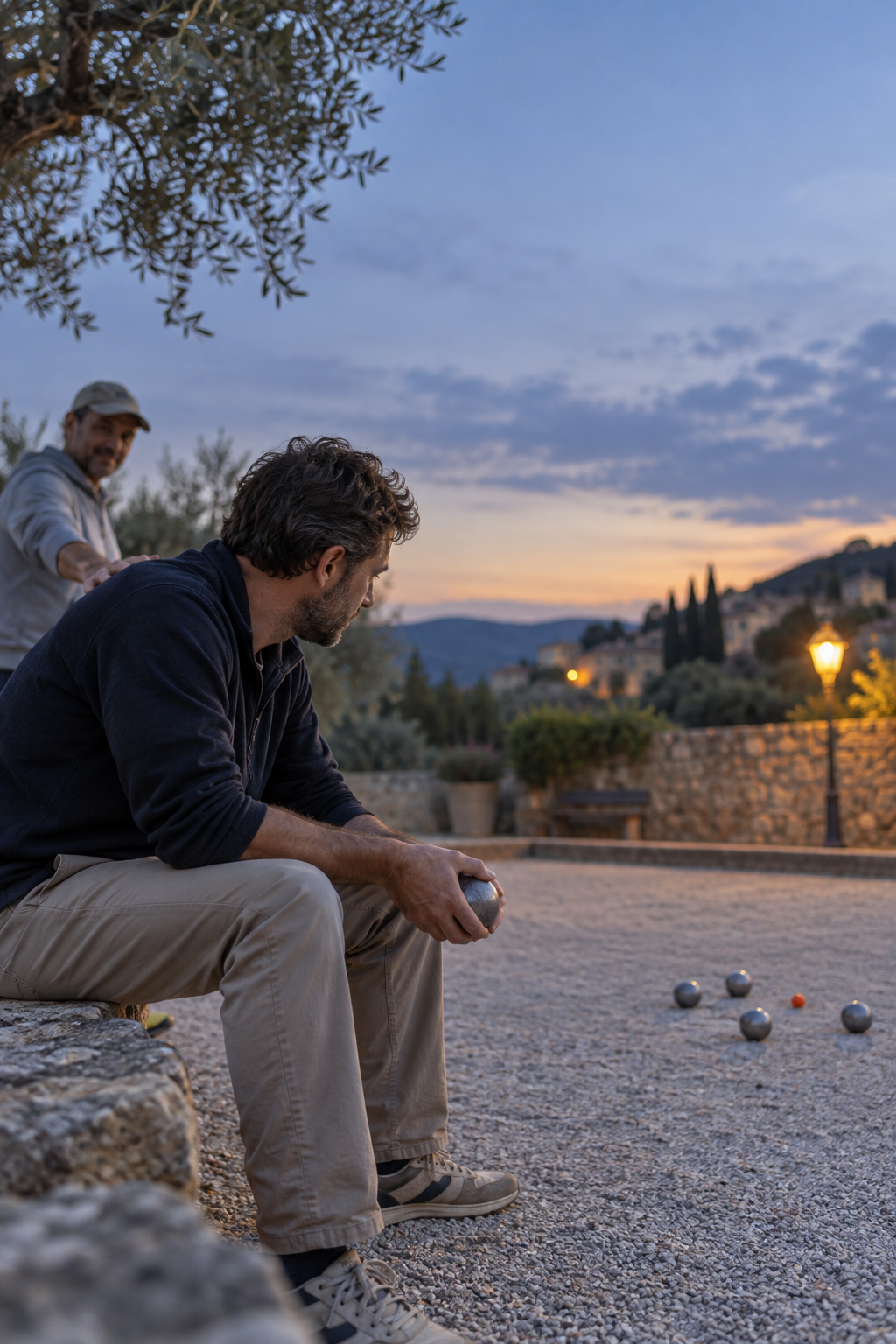
In pétanque, defeat becomes heavy when it damages ego and confidence. Spot the signals, protect the team and turn a setback into progress.A defeat hurts not only because it costs a point. It becomes hard to carry when it harms the image a player wants to project. The good news is that this reaction can be trained, end after end, without giving up ambition.
1. Losing affects more than the score
In pétanque, a game can come apart in one image: the missed shot at thirteen, the point that falls short, the debated decision that goes wrong. The score is visible, yet what burns is often elsewhere. A player may think they should have known better, that they let a partner down, or that spectators will remember the miss. Confusing one shot with personal worth is the first trap. A missed shot is information, not a verdict. The players who handle defeat best are no less demanding; they separate the day's result, the quality of their preparation and their identity as players.
That distinction is practical. A team can lose 13-11 after reading the ground well, following its plan and communicating properly. It can also win while piling up rushed decisions. In the first case there are things to keep; in the second there are weaknesses to see. That is the task of a debrief: name what depended on you, then let go of what depended on a bounce, the ground or an exceptional opponent's boule. You find the same decision-making logic in our guide to reading pétanque tactics : the most spectacular shot is not always the best choice.
Replaying the entire game in your head as soon as hands are shaken. You then look for someone to blame instead of isolating two or three useful facts. The mind tires, the team closes up and the next game begins under tension.
2. The three signs of a defeat that spills over
The first sign is haste: the player immediately wants to shoot, talk or leave. The second is overgeneralising: “I always miss”, “we never get there”, “he is always against us”. The third is withdrawal: hard silence, eyes down, minimal answers to a partner. None of this makes someone a poor competitor. It simply says emotion has taken all the room. The earlier you notice it, the easier it is to take back control.
Paquita suggests one very short question: “What do we need to play the next boule?” It brings the mind from an imagined past back to present action. Perhaps you need to measure, name a target, choose a delivery height or simply breathe for ten seconds. The point is not to demand cheerfulness from a hurt player. It is to ask them to be available for one simple, fair action. That is the essential difference between mastering an emotion and denying it.
| What you hear | What it reveals | Useful response |
|---|---|---|
| “It is over” | The score has become fate | Return to the number of boules and the end in progress |
| “You should have shot” | The need to find someone responsible | Describe the situation first, without accusation |
| Complete silence | Disappointment cuts cooperation | Give one simple instruction: distance, target, point to protect |
3. In the next end, choose an action that reassures
Imagine a close game. You have just dropped four points after a missed shot; your team has three boules left at the start of the next end. The bad reflex is to try to repay the defeat in one shot: throw the jack too quickly, seek an impossible shot or change roles without talking. The better reflex is quieter. The middle player checks the distance, the pointer names the landing zone and the shooter waits for a clear target. A calm end does not guarantee the point; it gives the team back its ability to choose.
This approach is especially useful on ground that punishes tense movements. A boule held too long catches, an insufficient delivery stops, and a shot played in revenge becomes an offered opportunity. On uneven ground, rely on the reference points in our guide to difficult terrains : identify the line, soft patch and likely bounce before talking about courage. Calm is not passive: it is a method of precision.
After a major disappointment, impose one first low-risk decision: a closing point, a clean measure or a clear call. The game resumes before pride takes the circle.
4. Protecting the team without patronising the player
A useful partner does not say “it is nothing” when they can see it is something. They also avoid an immediate trial. They can say, “We still have boules; show me the area you see,” or “We will debrief later; for now we choose our shot.” Those sentences recognise disappointment without turning it into a show. In a triplette, this regulating role belongs to everyone, not only the captain.
Communication becomes even more fragile when defeat happens in a competition. Players fear judgement from the club, opponents or themselves. That is why team rules must be known before the first game: no technical comment during the delivery, no hot debrief in front of everyone, one shared restart phrase. When discussion slips toward rules, the right reflex is to consult the refereeing guidelines rather than letting frustration decide the tone.
5. Making defeat an appointment for progress
An effective debrief takes five minutes and follows three lines. First: what did we do well despite the result? Second: which decision weighed most? Third: what will we practise on Wednesday? The last question stops the debrief becoming a confession. It creates a precise session: twenty points at the distance that caused trouble, ten shots at a target boule, or a communication routine before every end.
Also note the context. Were you rushed? Did you eat late? Was the ground new? Was a player returning from injury? Those details are not excuses; they explain why a good intention did not produce a good movement. Consistent competitors build a small notebook of reference points. Over competitions, they discover their defeats do not repeat in the same way: some come from a tactical choice, others from pace, and others from preparation that was too light.
Keep one sentence in your bag: “I take the lesson, not the label.” After the game, it stops you confusing a difficult day with your real level.
6. Staying ambitious means accepting that you learn in public
Handling defeat does not mean liking to lose or smiling when an opportunity escapes. It means refusing to let a defeat direct your next movement. An ambitious player accepts being seen when they succeed and when they learn. They ask for precise feedback, thank the partner who refocuses them, then play another boule with a clear intention. It is less romantic than a speech about mindset, but far more solid.
Next time the score tightens your throat, do not try to become indifferent. Look for one right action: breathe, look, call, play. Then save the result for the debrief. That is how defeat stops being humiliation and becomes what it should always be in pétanque: part of training.
Frequently asked questions Frequently asked questions
Why can a small defeat make me so angry?
Because it can revive a sense of injustice, shame or powerlessness. Identify the emotion before commenting on the level of play: it will tell you which response to build.
Should I analyse the game immediately after defeat?
Yes for two simple facts, no for a complete trial. Keep detailed analysis for a calm moment, when everyone can listen without defending their ego.
How can I help a partner who no longer speaks?
Offer a very concrete, non-judgemental task: measure, observe an area or call a distance. Cooperation returns better through an action than through a lecture.
Should a team always play cautiously after losing a big end?
No. It must choose risk appropriate to the real situation. Useful caution is discussed; it does not come from fear.
Which exercise trains this ability best?
Organise practice games with a score handicap and a three-minute debrief. Note the words used, the decisions made and the quality of the next end.