Actualités · 22 August 2026
Pourquoi certains joueurs adorent les terrains difficiles à la pétanque
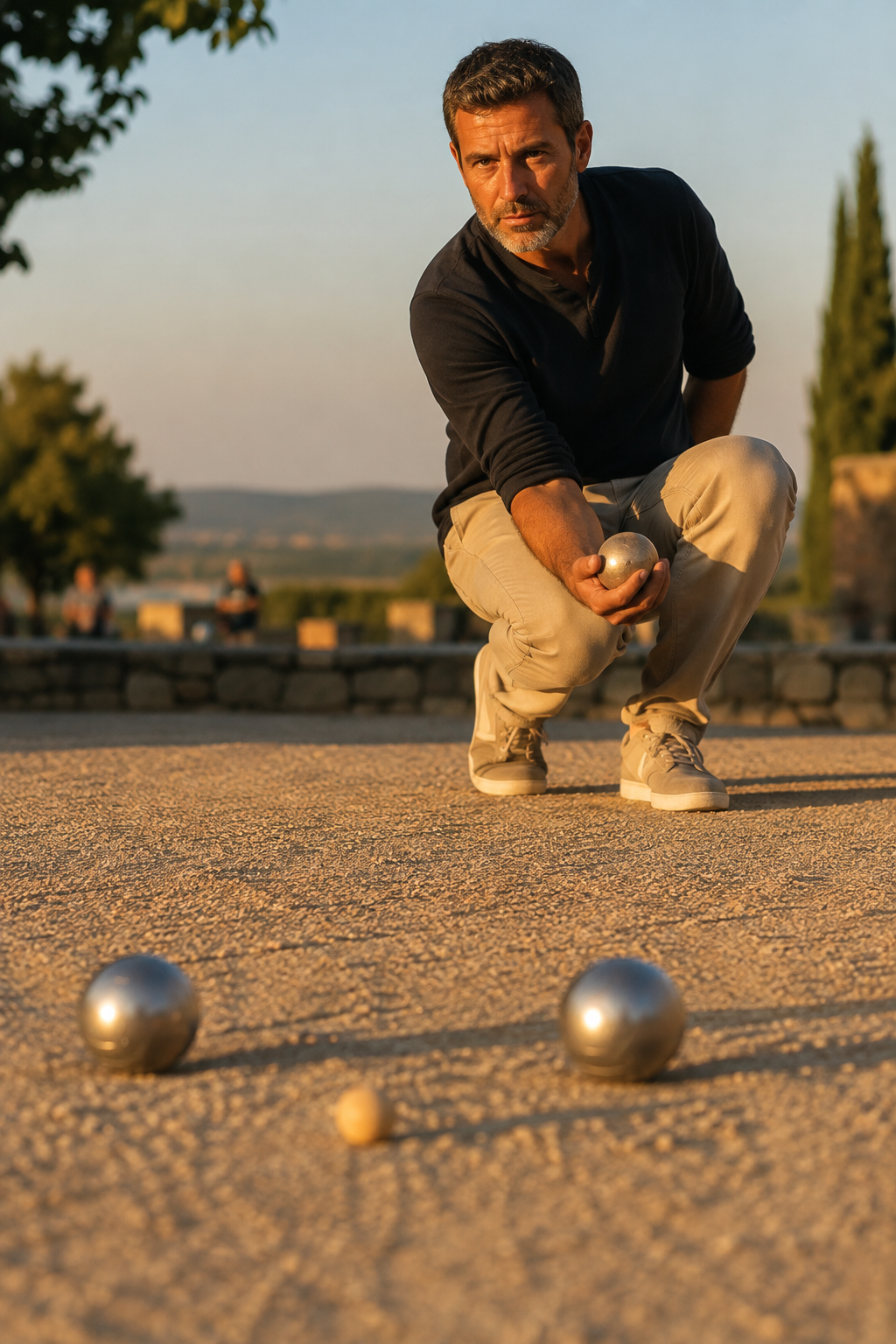
Gravier, pentes et rebonds ne sont pas une fatalité : apprenez à lire le terrain difficile pour mieux pointer, choisir vos tirs et rester lucide en équipe.Good players do not enjoy difficult ground because it is unfair: they enjoy it because it forces everyone to read the ground, slow down and choose. Where smooth ground rewards repetition, lively ground rewards attention.
Gravel, hard patches, a slight slope, soft ground: tricky play is not an enemy. It becomes an advantage as soon as you stop asking it for a perfect line and start asking the right questions.
Why some players develop a taste for difficult grounds
On regular ground, many boules look alike. On unpredictable ground, every player reveals how they think. Lovers of difficulty enjoy that part: they know the result depends less on an automatic action than on reading the ground, patience and dialogue with the team.
A stone does not explain a bad end on its own. It simply makes you precise about the objective. Should you block in front of the jack, look for a softer lane, or accept a slightly long boule that avoids the bad bounce? This thinking connects with the basics of pétanque pointing : you are not only playing a distance; you are playing a position that makes sense.
At the start of the game, do not immediately look for the perfect boule. Play a first observation boule: it tells you about pace, bounce and the ground’s reaction.
Read the ground before releasing the boule
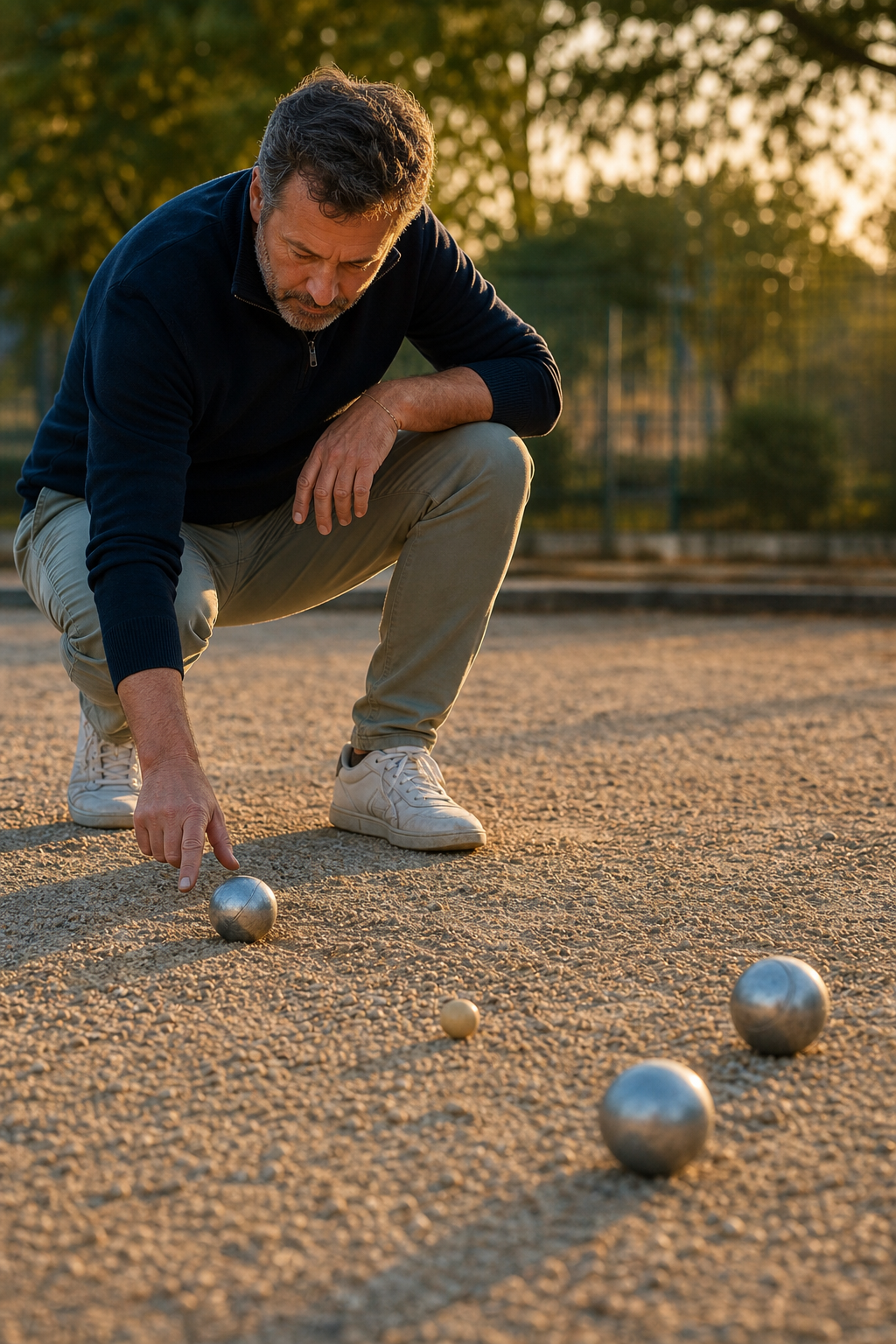
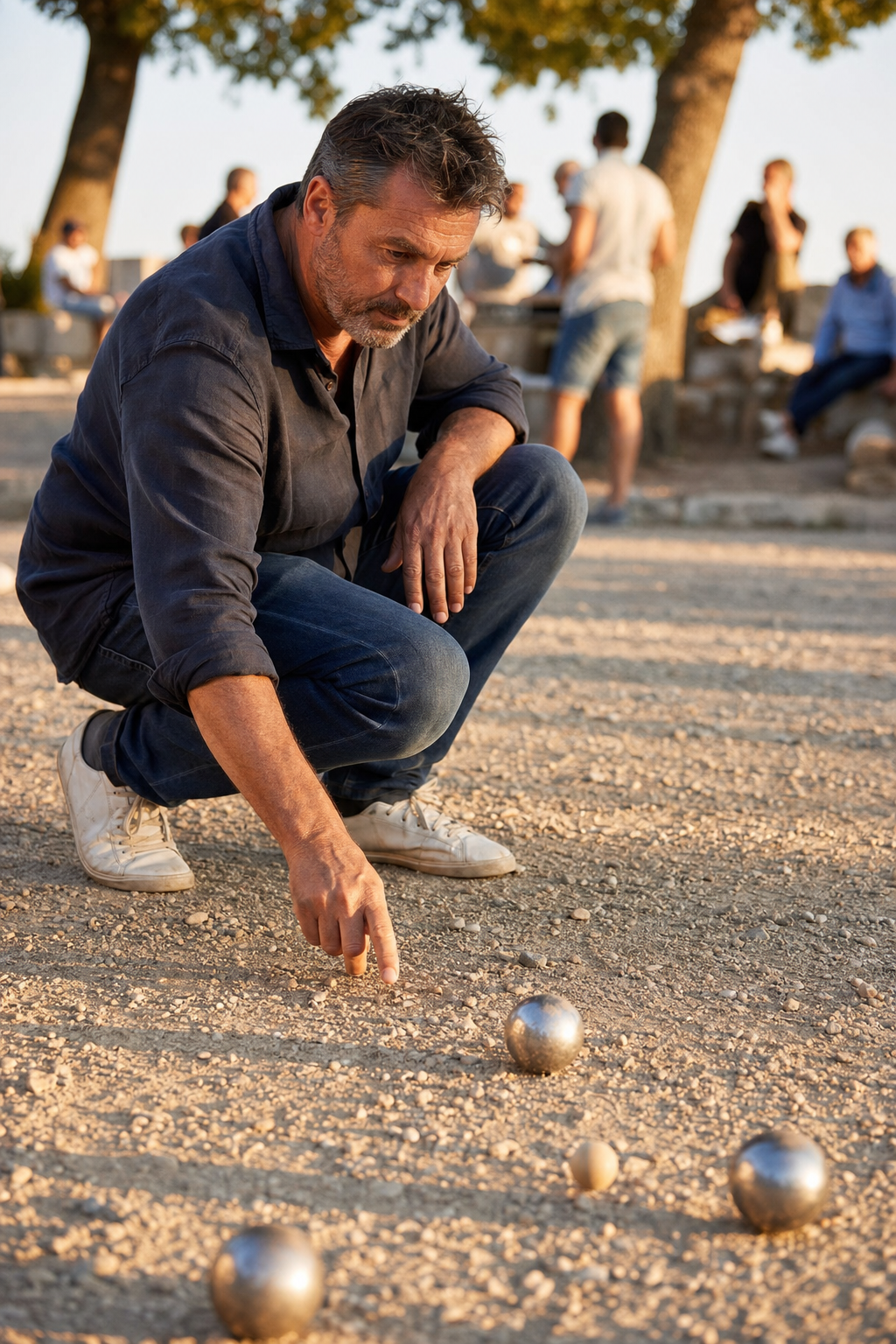
Before choosing your action, take ten seconds. Look at the colour of the gravel, marks left by previous boules, compacted areas and small changes of slope. The ground often gives its answer before the throw. A lighter strip can be harder; a slightly hollow strip can slow the boule; a flat stone can divert it without warning.
The right method is to isolate one main risk, not make a list of every flaw. If the boule is most likely to take a slope to the right, choose a line that moves away from that danger. If the ground is fast, give yourself a wider stopping area. This discipline feeds improvement: the guide improving at pétanque reminds us that we learn better by observing one consequence at a time.
| What you see | What it can cause | Simple decision |
|---|---|---|
| Loose gravel | Unpredictable braking | Play slightly firmer, with a margin |
| Hard patch | A longer run | Land before the patch or go around it |
| Side slope | Gradual drift | Aim uphill, without overcorrecting |
| An isolated stone | A sharp bounce | Change line rather than force it |
An end on gravel: the choice that changes everything
Imagine an end at 10-all. The jack is eight metres away on a grainy area, with a harder patch to its right. Your pointer can aim in front of the jack, but the direct lane crosses a stone that has already deflected two boules. The hurried reflex would be to try ‘the right line’ anyway.
The player who likes this ground does something else. They say: ‘I am looking for the soft area on the left, a boule that finishes in front.’ The aim is not the centimetre; it is a useful boule that closes access. Even if it stays forty centimetres away, it changes the end. The opposing shooter must now choose between an imperfect target and a risky recovery. That is exactly the logic of pétanque tactics : turning a reading into a constraint for the other team.
On difficult ground, a boule placed 50 centimetres in the right area is often worth more than one attempted 10 centimetres away on a line with no margin.
Point with a margin rather than imaginary certainty
Uneven ground punishes the player who wants to reproduce their usual action exactly. Keep your routine, but adapt your target. Instead of aiming at the jack as a fixed point, draw a landing area : in front, behind, left or right according to the obstacle and the score.
A high lob can become dangerous on a hard patch; a rolling shot can be more regular on compacted gravel. There is no universal action, only a choice consistent with what you have observed. Test one clear intention at a time: length, line or height. Trying to correct all three at once creates a boule with no reading.
Difficulty becomes reassuring when you accept it. You no longer judge yourself on an unpredictable bounce; you judge your ability to prepare an option. This habit avoids the invisible mistake that blocks improvement : confusing an unlucky result with a necessarily bad decision.
Shoot without rushing at a misleading target
Shooting changes character too. A boule tight to the jack on bumpy ground may look obvious, while a slightly off-centre impact can move the jack into a disastrous area. Before you shoot, ask three questions: where does the struck boule go, where can the jack go, and which opposing boule might still be in play?
A decision shot is not always the most spectacular. Sometimes the best choice is to hit a more accessible boule to regain control, or to point in order to reduce the gap. Strong teams do not glorify the attempted shot; they value the decision that leaves the least randomness for the next end.
If you shoot, set a clear target and keep your rhythm. The ground is no reason to throw quickly. Prepare more: stable footing, a simple trajectory, and step back if the window is poor.
The classic mistake: cursing the ground instead of using it
‘This ground is unplayable’ is often the sentence that loses the end before the last boule. Of course, some surfaces are uneven. But they are uneven for both teams. By repeating that the ground is bad, you take attention away from what matters: the next option.
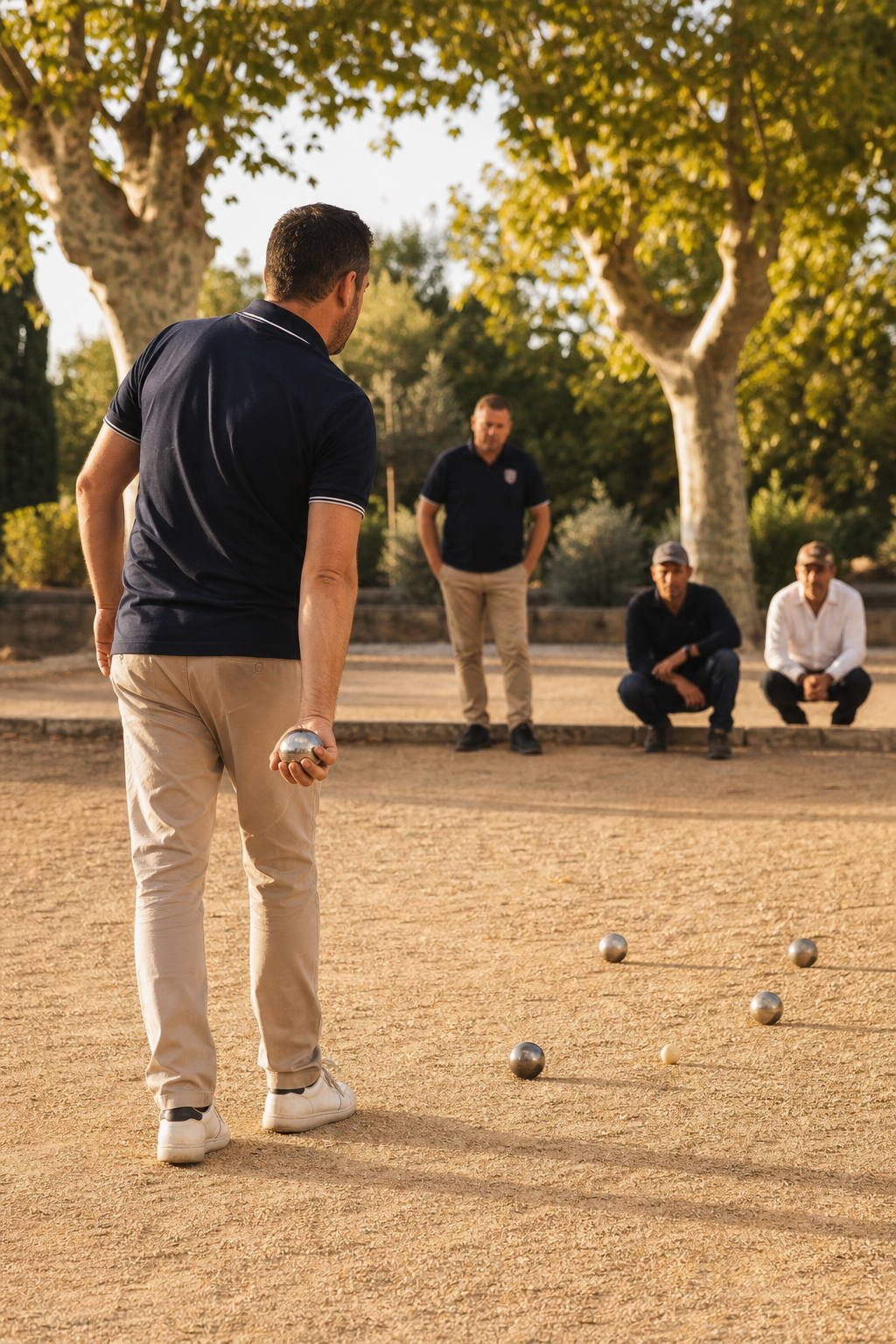
The other mistake is copying the opponent’s boule because it worked once. A lucky bounce does not become a strategy. Keep a short memory: observe what repeats, not what impresses you. A team that calmly exchanges observations finds a common reference point faster, as in these teams that seem to read each other’s minds.
Classic mistake: correct your action after every bounce. Instead, choose a hypothesis, test it on one boule, then adjust. That small discipline makes difficult ground a school of clear thinking.
Make difficult ground your best training
In training, deliberately seek out the less comfortable areas. Play three ends with one rule: call the intended landing area before each boule. Then compare intention and result, without settling for ‘good’ or ‘bad’. You will develop a memory of the ground that travels with you, even when you change club or tournament.
The next time ground feels unwelcoming, smile a little: it gives you the chance to observe better than the others. It is a discreet skill, but it makes play calmer, more accurate and much more interesting.
Frequently asked questions about difficult pétanque grounds
Should you always point harder on gravel?
No. First you need to know whether the gravel truly slows the boule. A compacted area can instead make it run; observe the opening ends before changing strength.
Does a slight slope require a major correction?
Usually not. Aim slightly uphill and watch the reaction. Overcorrecting turns a small slope into a big miss.
Can you shoot on any surface?
Yes, but the decision must include what happens to the struck boule and the jack. A satisfying target to hit is not always the best one to play.
How can you help a discouraged teammate?
Bring the discussion back to precise information: pace, slope or bounce. A useful observation calms better than blame or vague encouragement.
What simple exercise can a club use?
Choose three different areas and ask everyone to call their landing point before playing. You are training reading, team language and decision-making.
Your turn: in your next game, appoint someone to observe the ground before each end. Then continue with our guide to improve methodically.