Actualités · 4 August 2026
Why some pétanque victories hurt more than defeat
Pourquoi une victoire peut laisser un malaise à la pétanque, et comment en faire un progrès concret pour toute l’équipe.A win can feel bitter when it exposes a tense team, a misunderstood choice or vanished enjoyment. The score matters, but it must not hide what needs repairing before the next game.
1. Understanding why a win can hurt
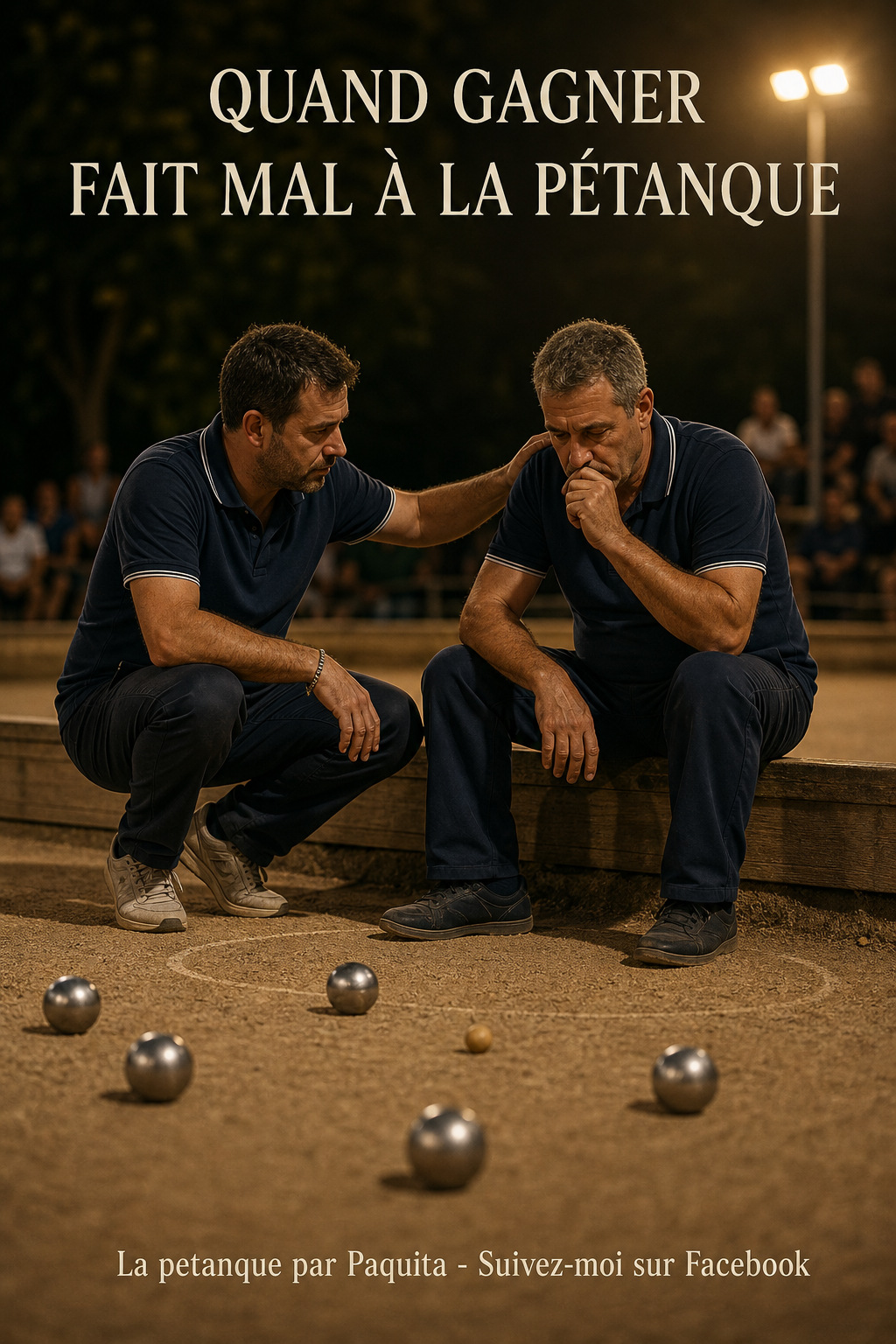
Winning is supposed to bring relief. Yet some wins leave a strange silence: the points are on the board, but the team does not feel stronger. It happens after an end saved by luck, a run of disputed choices, an isolated partner or a nervous finish. The discomfort is not a character flaw. It is often a signal: the result has hidden a difficulty that deserves calm attention.
The first mistake is to set joy against high standards. You can be happy to win while admitting that the game was not well controlled. That nuance protects the group. It also avoids a false trial: a difficult win does not prove that a player is incapable, any more than it proves that everything is fine. It simply gives material to learn from, provided we separate the result from the way it was achieved.
After the handshake, let the emotion settle. Keep one simple sentence: “We won; now let us look at what put us under pressure.”
2. Read the game beyond the scoreboard
A final score does not tell the whole story of a game. It shows neither balls played without intent, nor hesitation before a shot, nor the partner who no longer dared to speak. To understand a painful win, review three things: end-by-end decisions, communication and the moments when the team lost its plan. This reading is more useful than merely counting missed balls.
A simple example: your team wins because the opponent misses the last ball. It is a valid win, but it must not erase the fact that you let several chances to close the end slip away. Conversely, a messy game can reveal real strength: continuing to talk and stay engaged. What matters is naming precisely what should be kept and what must change.
| What you notice | Useful question | Decision for next time |
|---|---|---|
| An end saved on the last shot | Did we have a plan beforehand? | Clarify the intention earlier |
| A silent partner | Were they being heard? | Give everyone a short turn to speak |
| A forced shot | Was the risk acceptable? | Count the balls before choosing |
| A favourable score | What did we do well? | Keep that concrete marker |
3. Debrief without turning success into reproach
The post-game debrief should be brief and factual. Everyone can answer three questions: which choice helped us, which moment escaped us, and which action will we try next time? These questions prevent broad statements such as “we were bad” or “you should have shot”. They bring the discussion back to things that can be practised.
Choose the right time. Between two games, a few sentences are enough; a longer analysis can wait until the end of the competition. The aim is not to dissect every ball, but to recover a shared framework. If the team won while tightening up, it can decide, for example, to reduce instructions to one sentence before important balls. If it hesitated too much, it can agree on a clear decision order.
Criticise a decision, never a person. “We played that end too quickly” opens a solution; “you made us lose the thread” closes the discussion.
4. Turn discomfort into collective progress
An uncomfortable win becomes useful when it produces a precise commitment. Note one thing to keep and one thing to work on. For example: keep the pointer’s calm at the end of an end, then practise counting balls before each choice. This limit matters; a team that tries to fix everything at once fixes nothing for long.
It is also healthy to acknowledge successes. Perhaps you held on under pressure, accepted a difficult choice or reacted well after a poor end. These markers feed confidence without telling an overly pretty story. To go further with pressure management, also read why fear of winning exists in petanque and how champions stay calm. A team progresses when it knows how to celebrate without blinding itself.
Frequently asked questions After a difficult petanque win
Should we discuss mistakes even after winning?
Yes, but in moderation. Point out one or two useful situations without turning the winning moment into a meeting of reproaches.
How can we stop the score from hiding problems?
Review decisions and communication, not just the result. A win can be solid, lucky or fragile: the play itself tells you which.
What if a partner feels hurt despite the win?
Listen to their feeling first, then return to a concrete situation. Find the next playing rule that will let everyone take part better.
How long should the debrief last?
Two or three minutes are enough between games. Save the detailed analysis for later to preserve energy and enjoyment.
The best next step after a painful win is simple: enjoy the point scored, then learn from the game you played. This double view makes the team stronger without taking away its joy.