Actualités · 26 July 2026
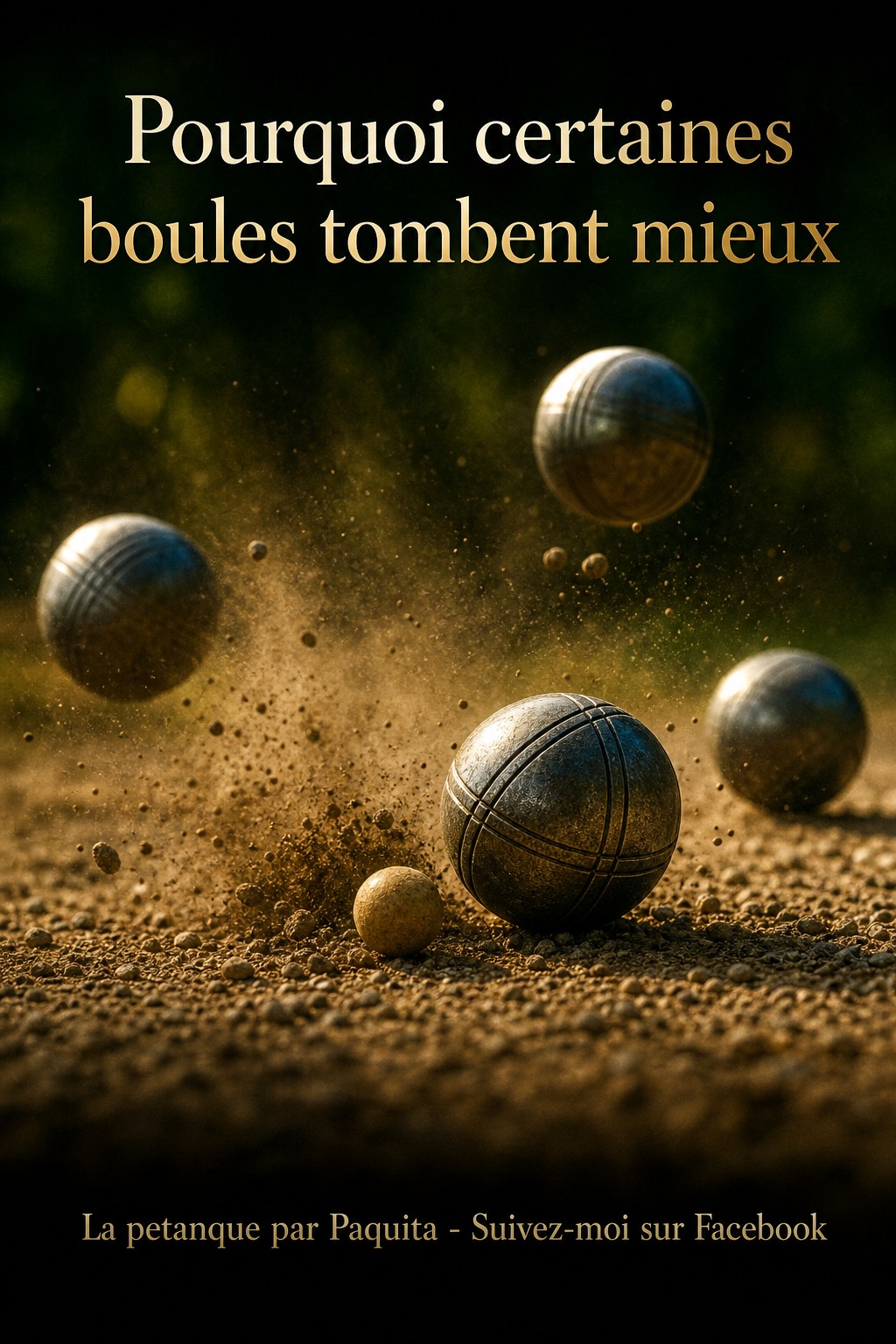
Why do some balls always seem better fall in pétanque
Behind the impression of luck lie trajectory, rotation, height, ground reading and intelligent selection of fall zones.01Luck does not act alone
Two balls thrown towards the same target can end up very differently because they arrive neither with the same speed, nor with the same angle, nor with the same rotation. A ball that seems to fall well often carries less horizontal energy and meets the ground with a trajectory compatible with the chosen data.
An expert decision remains verifiable: it takes into account the score, the remaining balls, the terrain and the profile of the players. It does not promise to remove uncertainty; she chooses the most favorable uncertainty. In training, verbalizing this reasoning allows the team to build a common vocabulary and avoid vague debates at the decisive moment.
02Height creates tolerance
Higher carry reduces forward speed at contact and allows the ball to sit more. Too high, it becomes sensitive to wind and distance errors; too low, it crosses the defects of the ground. The right compromise creates a wider window of success, not a magic point.
An expert decision remains verifiable: it takes into account the score, the remaining balls, the terrain and the profile of the players. It does not promise to remove uncertainty; she chooses the most favorable uncertainty. In training, verbalizing this reasoning allows the team to build a common vocabulary and avoid vague debates at the decisive moment.
To observe: the value of a ball depends as much on the situation it creates as on its final distance to the goal.
03Rotation stabilizes output
Clean on-axis rotation helps the ball maintain a predictable reaction. A lateral exit can, on the contrary, amplify a slope or cause a hook after the first contact. Regular players don't remove all hazards: they reduce the variables they add themselves.
An expert decision remains verifiable: it takes into account the score, the remaining balls, the terrain and the profile of the players. It does not promise to remove uncertainty; she chooses the most favorable uncertainty. In training, verbalizing this reasoning allows the team to build a common vocabulary and avoid vague debates at the decisive moment.
04The chosen data counts more than the perfect data
The best landing spot isn't always the smoothest. It must be visible, repeatable and compatible with the player's reach. A slightly rough but wide area may provide more safety than a small, perfect patch surrounded by rocks. Good balls often fall where error remains acceptable.
An expert decision remains verifiable: it takes into account the score, the remaining balls, the terrain and the profile of the players. It does not promise to remove uncertainty; she chooses the most favorable uncertainty. In training, verbalizing this reasoning allows the team to build a common vocabulary and avoid vague debates at the decisive moment.
05Why certain balls promote sensation
Diameter, weight, grooves and hardness change the grip and return to the ground, but no ball corrects an inconsistent trajectory. Material becomes advantageous when it matches the player's hand, strength and style. The confidence thus created especially improves the repetition of letting go.
An expert decision remains verifiable: it takes into account the score, the remaining balls, the terrain and the profile of the players. It does not promise to remove uncertainty; she chooses the most favorable uncertainty. In training, verbalizing this reasoning allows the team to build a common vocabulary and avoid vague debates at the decisive moment.
06Test instead of believe
Draw three drop zones and play ten balls on each with the same intention. Note the first impact, the final deviation and the reaction. The field then reveals which data absorbs small errors. This observation turns a lucky ball impression into a measurable technical choice.
An expert decision remains verifiable: it takes into account the score, the remaining balls, the terrain and the profile of the players. It does not promise to remove uncertainty; she chooses the most favorable uncertainty. In training, verbalizing this reasoning allows the team to build a common vocabulary and avoid vague debates at the decisive moment.
| Time | Useful question | Trap |
|---|---|---|
| Before | What are the facts? | Anticipate failure |
| In the circle | What unique intention? | Fix everything |
| After | What did the land do? | Observing |
Don't just judge where the ball stops. First observe his first contact: this is where the explanation begins.
Dig deeper into the game and turn these principles into solid habits.
Discover the guide