Règlement FFPJP · 1 August 2026
Nom mal saisi en concours : corriger sans litige
Nom, prénom ou licence mal saisis : une méthode simple pour corriger une inscription, garder une trace et éviter le litige en concours.A forgotten letter, a reversed first name or a poorly copied license can be enough to open a competition. The correction must be rapid, traceable and verifiable. The objective of this article is simple: to separate the applicable rule, the tolerance of the field and the bad habits which create unnecessary arguments.
1.A small mistake can become a big problem
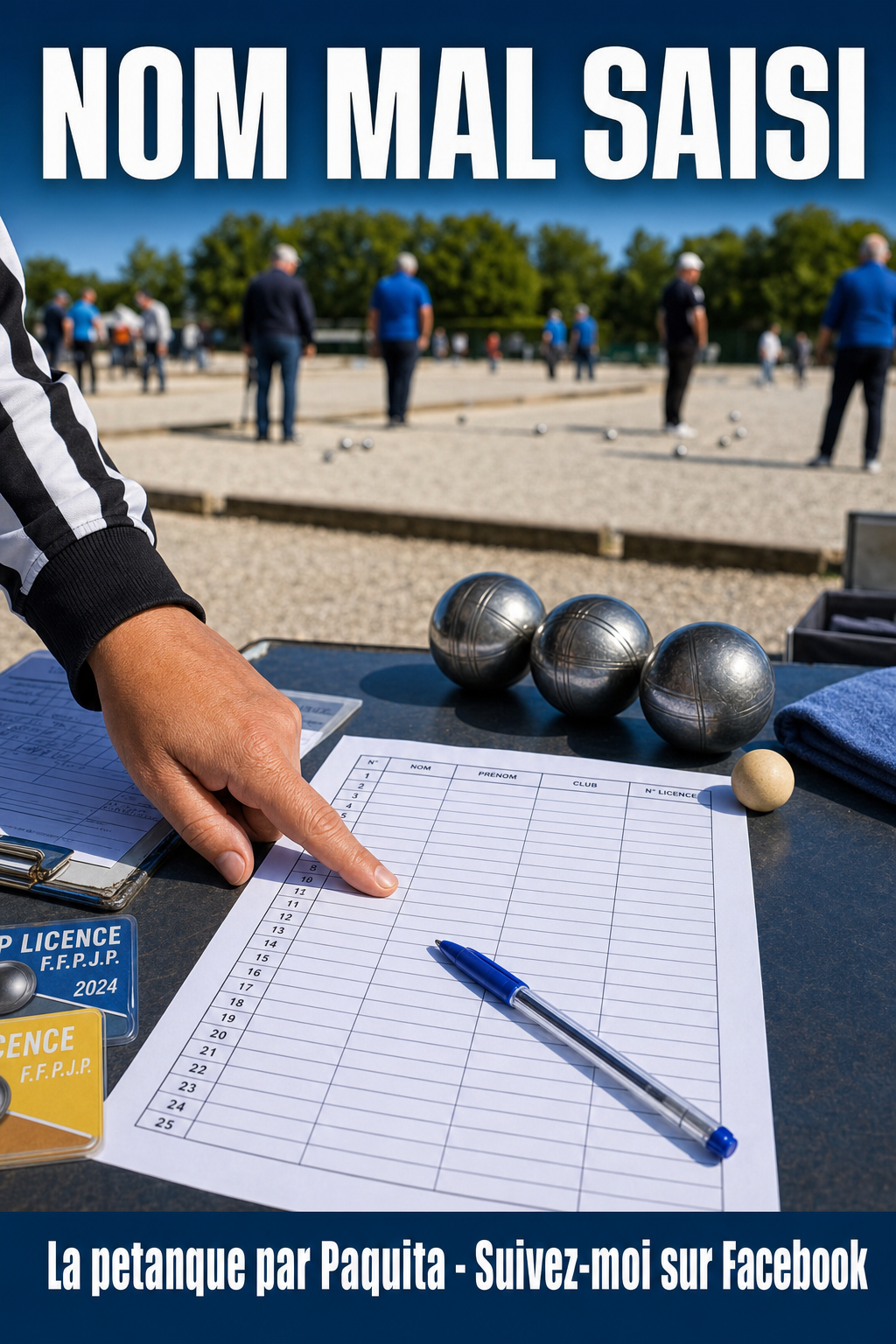
On a registration sheet, a typo seems tiny. However, it can complicate the draw, the license check, the match sheet, the final ranking or a protest. In official competitions, the player's sporting identity must be clear, especially when two names are similar or when a team represents a club.
The danger is not only the error itself. The danger is the correction made at random, without trace, by a person who did not warn the table or the referee. At this time, each opponent may suspect a masked substitution, a modified team or a non-compliant registration.
Have the desk correct the name before the draw. After the draw, record the correction, the time and the person who approved it.
2.Check before correcting
The first step consists of comparing three pieces of information: official name of the player, license number and club. If a dematerialized license or authorized proof is available, it must be relied on. Correcting only because a player says "my name is spelled differently" is not clean enough in a sensitive event.
The scoreboard must note what changes: spelling error, name-first name inversion, wrong club, incomplete number. This precision avoids transforming an administrative correction into a team modification.
3.The right time: before the draw if possible
An error spotted before printing is simply corrected. It does not yet modify the table, does not change the opponent and does not disrupt the competition. This is why players must re-read their registration when they pay or confirm their presence.
After the draw, the correction remains possible if it only concerns the incorrectly entered identity of a player already registered. On the other hand, it becomes much more delicate if it resembles a change in composition. In this case, the referee or the person in charge of the event must validate.
4.The written record protects both teams
A clean correction leaves a trace: old entry, new entry, approximate time, valid person. This is not unnecessary bureaucracy. This is what allows you to respond calmly if an opponent asks why the board displays a different name between the first and second rounds.
The trace must remain simple. A mention on the sheet, an annotation in the competition software or a table note is often enough. The goal is to show that this is an identity correction, not a hidden replacement.
| Situation | Good reflex | Mistake to avoid |
|---|---|---|
| Before registration | Read the test instructions | Rely on a club habit |
| At the control | Present clear evidence | Chat without documents |
| If there is any doubt | Call the referee calmly | Challenge the opponent |
| After correction | Keep track simple | Modify without notifying the table |
5.How to react if an opponent contests
If an opponent contests, we must return to the facts: is the person registered the same? Does the license match? Are the club and category consistent? Was the correction validated before the dispute became sporting? These questions bring the discussion back to objective ground.
The team involved must avoid getting angry. A name entered incorrectly is often a human error, not an accusation. The calmer and more documented the response, the quicker the dispute is closed.
Keep the proof simple and the workaround. In competitions, the calmest player is often the one who has anticipated the administrative details before arriving on the field.
6.Better organize registrations
Clubs can reduce these problems by using clean lists, separate first and last name fields, and verification at the time of the call. When the contest is important, a double reading of the table is better than a late correction in the middle of the table.
The PetanqueLand competition software takes on its full meaning here: centralize teams, limit copying, keep track of corrections and produce more readable sheets. The objective is not to complicate the lives of volunteers, but to prevent them from being alone in the face of a protest.
PAQUITA TOOL — PetanqueLand competition and mêlée softwareWhen it comes to matters of dress, registration, and organization, the hardest part is keeping information clean. The PetanqueLand software helps clubs manage registrations, teams, groups and tables without hazardous copies. Organise a competition better.
FAQ - Your frequently asked questions
Can a spelling mistake cause you to lose a game?
No, not her alone. But if it hides an error of identity or composition, the organization must intervene.
Who can correct a name on the sheet?
The scorer's table or the organization, with validation from the referee if the event is official or if the correction arrives after the draw.
What evidence should I use to correct?
License, official authorized document or federal data available. The license number is often the most reliable reference.
Correction or replacement: what's the difference?
The correction keeps the same player and corrects his identity. Substitution changes a person from the team and obeys much stricter rules.
Should we keep the old entry?
Yes, at least in note form. This explains the change if a dispute appears later.