Règlement FFPJP · 28 July 2026
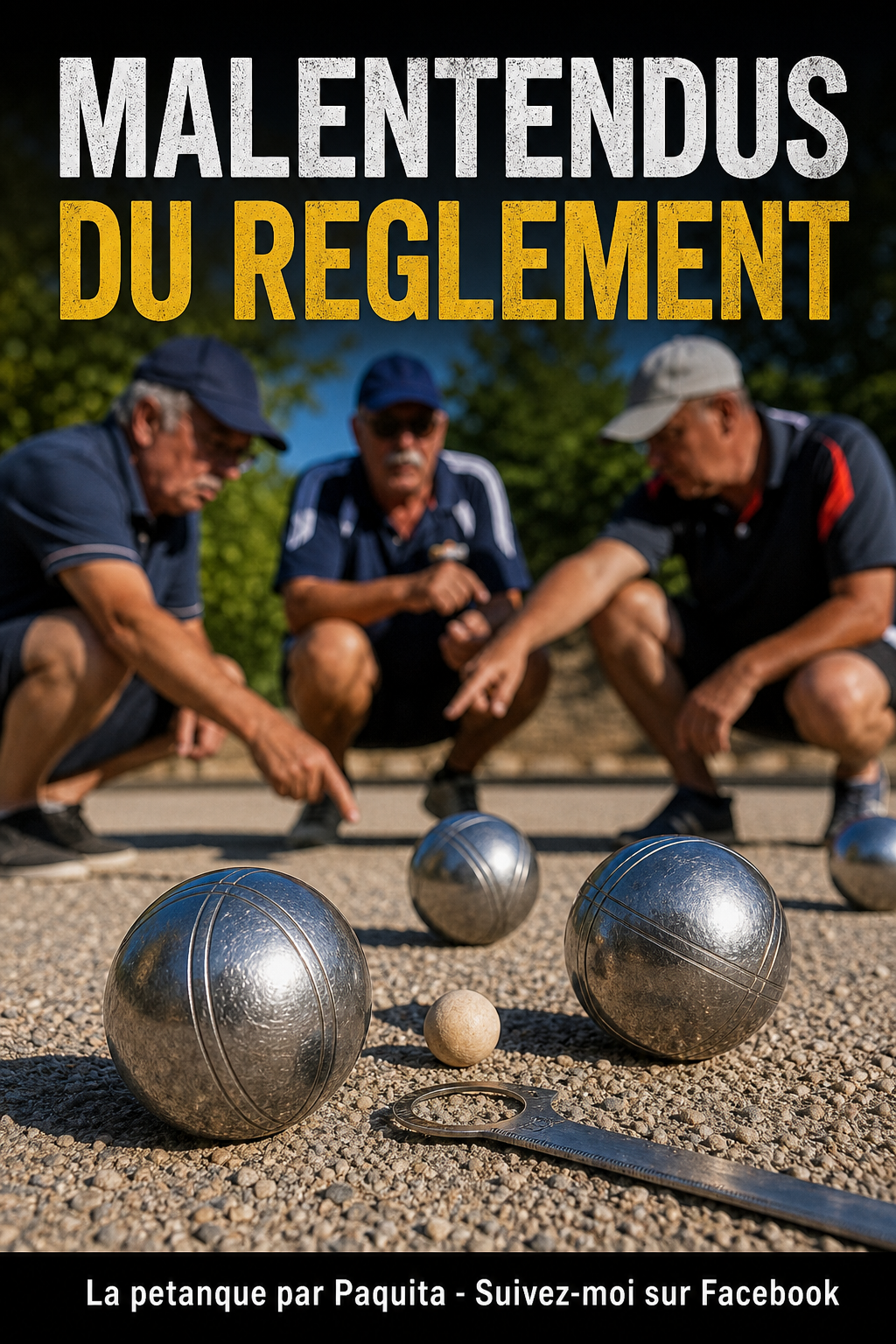
These misunderstandings about the rules of petanque which cause unnecessary arguments
Évitez les disputes inutiles à la pétanque : les bons réflexes pour constater, mesurer et demander une décision claire en concours.Une discussion se calme quand on quitte les phrases toutes faites pour revenir à trois choses : ce qui s’est passé, ce qui a été marqué et ce qui reste à jouer. Cette méthode aide les équipes à reprendre la mène proprement, sans transformer une règle en duel d’ego.
1.D’où viennent les disputes à la pétanque ?
Une contestation commence rarement avec le règlement ouvert sur la table. Elle part plutôt d’une certitude lancée trop vite : « le but sorti annule toujours la mène », « cette boule doit être remise » ou « on partage le point dans le doute ». Ces raccourcis sont séduisants, mais ils oublient les conditions qui changent la décision.
Le bon réflexe consiste à isoler le fait. Qui a touché quoi ? La boule ou le but avaient-ils été marqués ? Restait-il des boules à jouer ? La distance est-elle réellement contestée ? Une réponse précise vaut mieux qu’un souvenir de partie. Elle protège autant l’équipe qui réclame que celle qui répond.
Avant de parler de sanction ou de point, dites simplement : « On arrête, on constate, puis on décide. » Cette phrase enlève déjà beaucoup de tension.
2.Le but nul n’annule pas toujours la mène
Le malentendu le plus courant concerne le cochonnet devenu nul. La formule « but sorti, mène nulle » est incomplète. La suite dépend notamment des boules encore disponibles pour chaque équipe. C’est précisément le type de situation où il faut éviter de ramasser les boules avant d’avoir vérifié le cas.
Dans une partie officielle, ne cherchez pas à gagner la discussion par la voix. Regardez l’état de la mène, annoncez calmement les boules restantes et, s’il demeure un doute, sollicitez l’arbitre. Le cadre est le même pour tous : c’est ce qui rend la décision acceptable même lorsqu’elle ne vous arrange pas.
| Useful question | Ce qu’il faut constater | Mistake to avoid |
|---|---|---|
| Le but est-il devenu nul ? | Sa position et la cause de la sortie | Déclarer la mène nulle sans regarder la suite |
| Qui a encore des boules ? | Les boules restantes des deux équipes | Se fier au score ou à l’impression |
| Le cas est-il clair ? | Les faits observables sur le terrain | Reprendre le jeu pendant la discussion |
3.Une boule déplacée ne se traite pas toujours de la même façon
Une boule peut bouger à cause d’un joueur, d’une autre boule, d’un objet ou d’un incident extérieur. Ces situations ne produisent pas automatiquement la même réponse. Le marquage de la position devient alors une sécurité concrète : il permet de retrouver une place fiable plutôt que de reconstruire la scène à l’œil.
À proximité du but, prenez quelques secondes pour marquer les boules importantes et le cochonnet quand le terrain le permet. Cette habitude n’enlève rien au rythme du jeu ; elle évite surtout qu’un choc accidentel transforme une bonne mène en débat interminable. Si la position n’est plus certaine, mieux vaut demander une décision que déplacer une seconde fois l’élément en cause.
Remettre immédiatement une boule « à peu près là ». Une approximation peut créer un second litige, plus difficile à résoudre que le premier.
4.Mesurer avant de conclure, appeler avant de s’énerver
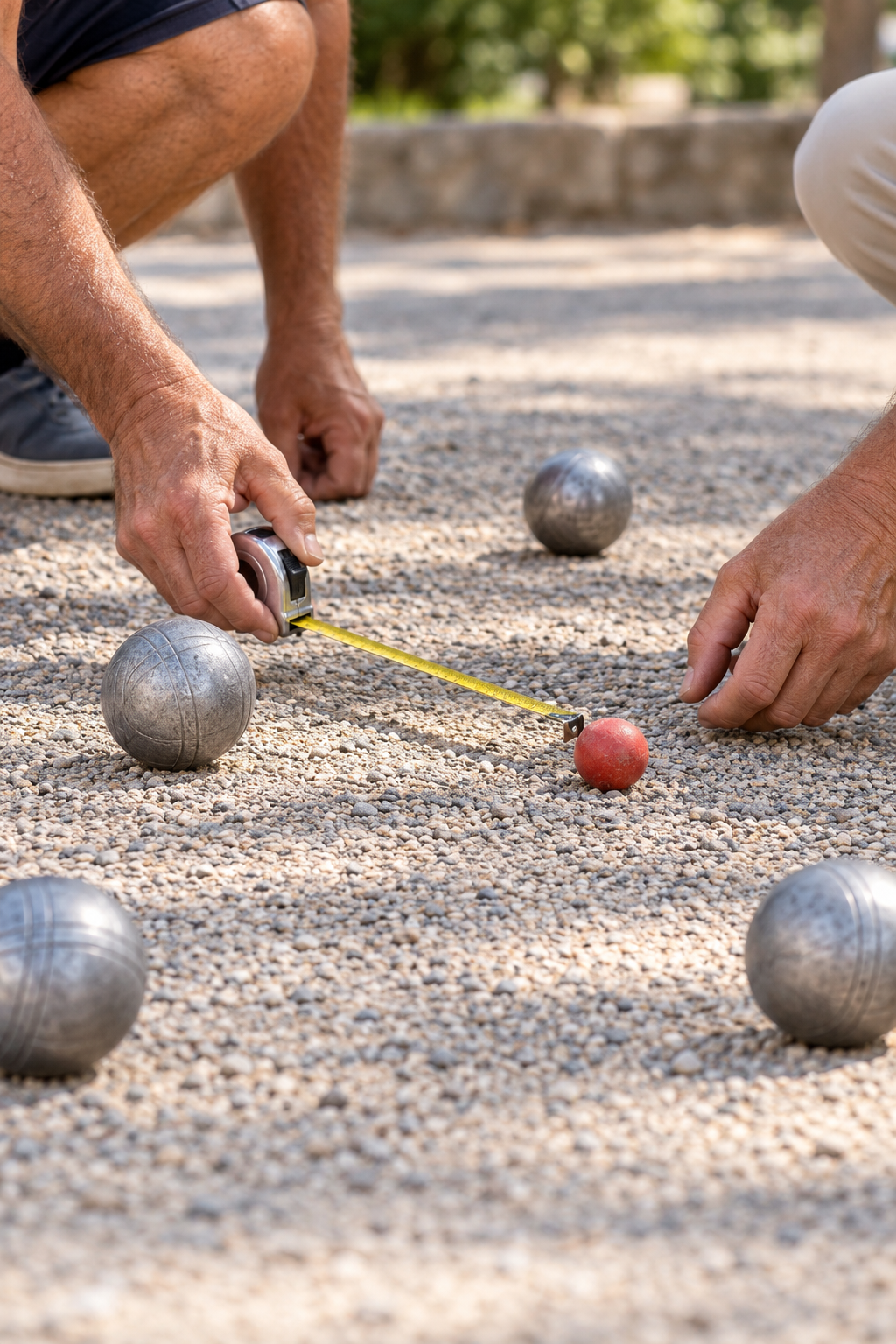
À la pétanque, le point appartient à la boule la plus proche du but, pas à celle qui semble devant depuis le cercle. Lorsque la distance compte, on mesure. Cette règle de comportement est aussi utile que la mesure elle-même : elle évite que le regard, l’angle ou l’habitude du terrain deviennent une preuve.
Si les joueurs ne s’accordent plus sur un fait qui change la suite de la mène, l’arbitre est le bon interlocuteur. L’appeler n’est ni une accusation ni une faiblesse. C’est demander une décision neutre pour continuer. Le parcours arbitrage à la pétanque aide aussi à distinguer les cas où une vérification suffit de ceux qui exigent une intervention.
| Situation | Bonne réaction | What it protects |
|---|---|---|
| Une distance est contestée | Mesurer sans déplacer les repères | Le point et la confiance entre équipes |
| La cause d’un déplacement est incertaine | Stopper le jeu et exposer les faits | La position des boules |
| Le désaccord persiste | Appeler l’arbitre avec une question précise | Le rythme et l’équité du concours |
5.Un arrangement amical ne remplace pas le cadre officiel
Entre amis, les joueurs peuvent choisir une solution simple pour garder le plaisir de jouer. En concours, la logique change : un accord improvisé ne doit pas contredire une procédure ni créer un avantage qui pèserait sur une poule, un tableau ou un classement. La règle commune protège aussi les équipes qui ne sont pas sur votre terrain.
Le plus apaisant est de séparer l’ambiance de la décision. Restez cordial, mais formulez le cas avec précision : « Le but est sorti, il reste telles boules, quelle est la suite ? » Une question claire donne à chacun une porte de sortie honorable. Elle évite les phrases définitives et les arrangements que personne ne saura expliquer plus tard.
6.La routine qui évite la plupart des malentendus
Une équipe sereine n’a pas besoin de connaître chaque ligne par cœur : elle sait ralentir au bon moment. Choisissez un porte-parole, marquez les positions sensibles, annoncez les boules restantes et mesurez dès que le point influence le choix suivant. Cette mini-routine rend les décisions plus lisibles pour vos adversaires comme pour vos partenaires.
Le capitaine peut aussi reformuler sans prendre parti : « Voilà ce que nous avons vu ; vérifions ce qui manque. » Cette posture transforme une contestation en recherche de solution. Pour prolonger ce travail en compétition, retrouvez les repères et les rendez-vous sur les compétitions officielles de pétanque, puis partagez vos questions de terrain avec l’équipe avant le prochain concours.
Une règle bien appliquée ne fait pas perdre de temps : elle évite de rejouer mentalement la même dispute pendant les trois mènes suivantes.
Les malentendus ne disparaîtront jamais complètement, surtout dans une mène tendue. Mais vous pouvez les empêcher de prendre toute la place. Constater, marquer, mesurer, demander : ces quatre verbes suffisent souvent à remettre la partie sur ses rails. Gardez ce réflexe pour votre prochain concours et consultez notre guide arbitrage à la pétanque lorsque vous voulez revoir une situation concrète. Pour recevoir les nouveaux cas pratiques de Paquita, vous pouvez aussi vous inscrire à la pétanque newsletter.
Frequently asked questionsLes questions fréquentes sur les désaccords de jeu
Que faire en premier lorsqu’une situation devient douteuse ?
Arrêtez la mène, évitez tout nouveau déplacement et décrivez le fait exact. La bonne décision dépend de détails observables, pas de la personne qui parle le plus fort.
Faut-il toujours mesurer lorsqu’une équipe conteste le point ?
Quand la proximité des boules décide du point et que les joueurs ne sont pas d’accord, la mesure est le moyen le plus propre de sortir de l’impression.
Why mark the boules and the goal?
Le marquage facilite la reconstitution d’une position après un incident. Il ne remplace pas l’analyse du cas, mais il évite de discuter sur un emplacement devenu incertain.
Peut-on régler un litige à l’amiable pendant un concours ?
Le dialogue reste indispensable, mais un arrangement ne doit pas écarter le cadre applicable à l’épreuve. En cas de désaccord sérieux, l’arbitre est là pour trancher.
Quand faut-il appeler l’arbitre ?
Appelez-le quand le fait contesté modifie la suite de la mène et que les équipes ne parviennent plus à établir une décision commune, même après vérification.