Actualités · 4 August 2026
The best-kept secrets of pétanque champions
Les habitudes concrètes des champions de pétanque pour lire une mène, choisir le bon coup et rester lucide en équipe.Champions do not treat every boule like an exam. They rely on a simple routine: read, choose, state, then accept. It does not promise a perfect shot; it makes the next decision sounder.
1. Observe the end before looking for the gesture
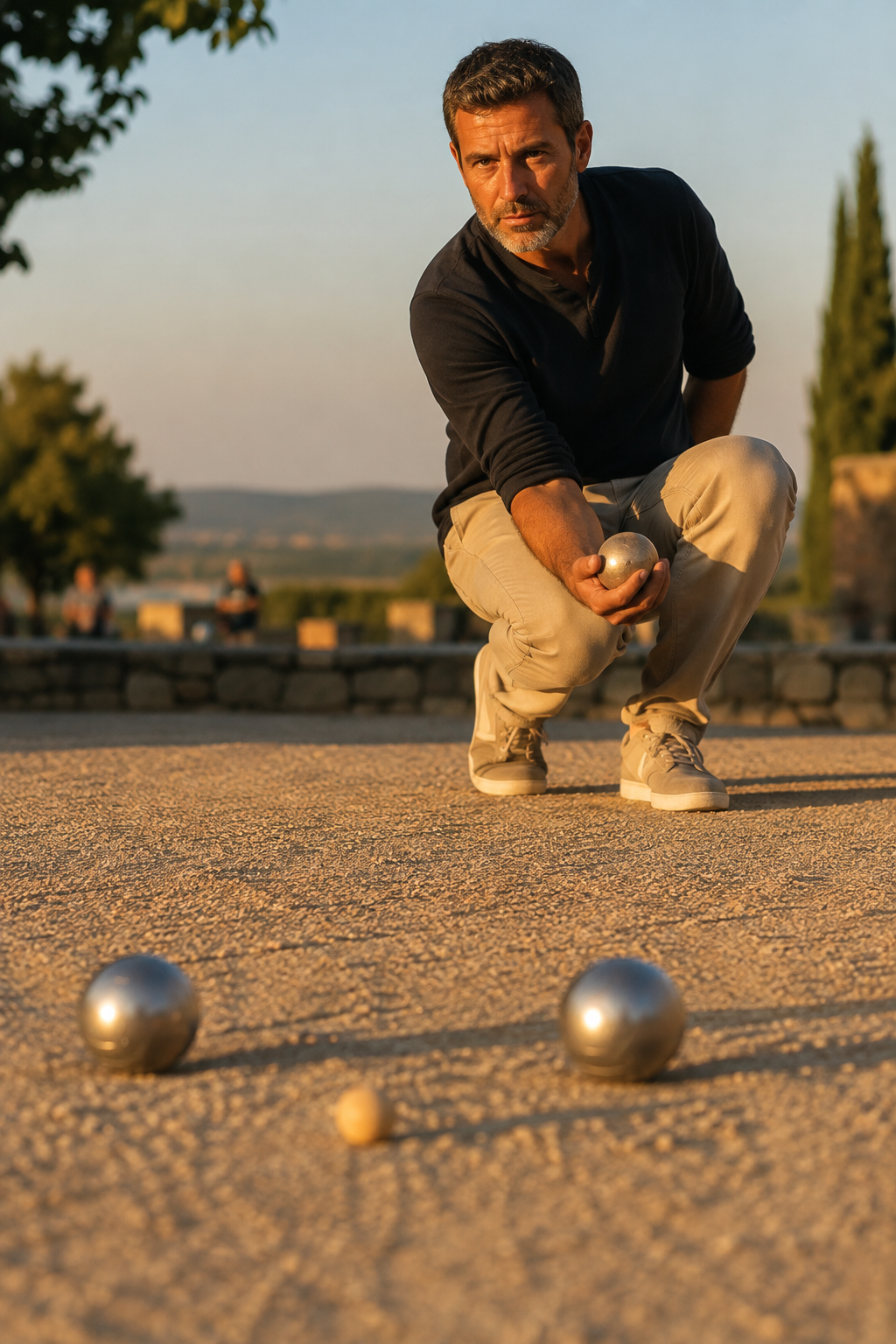
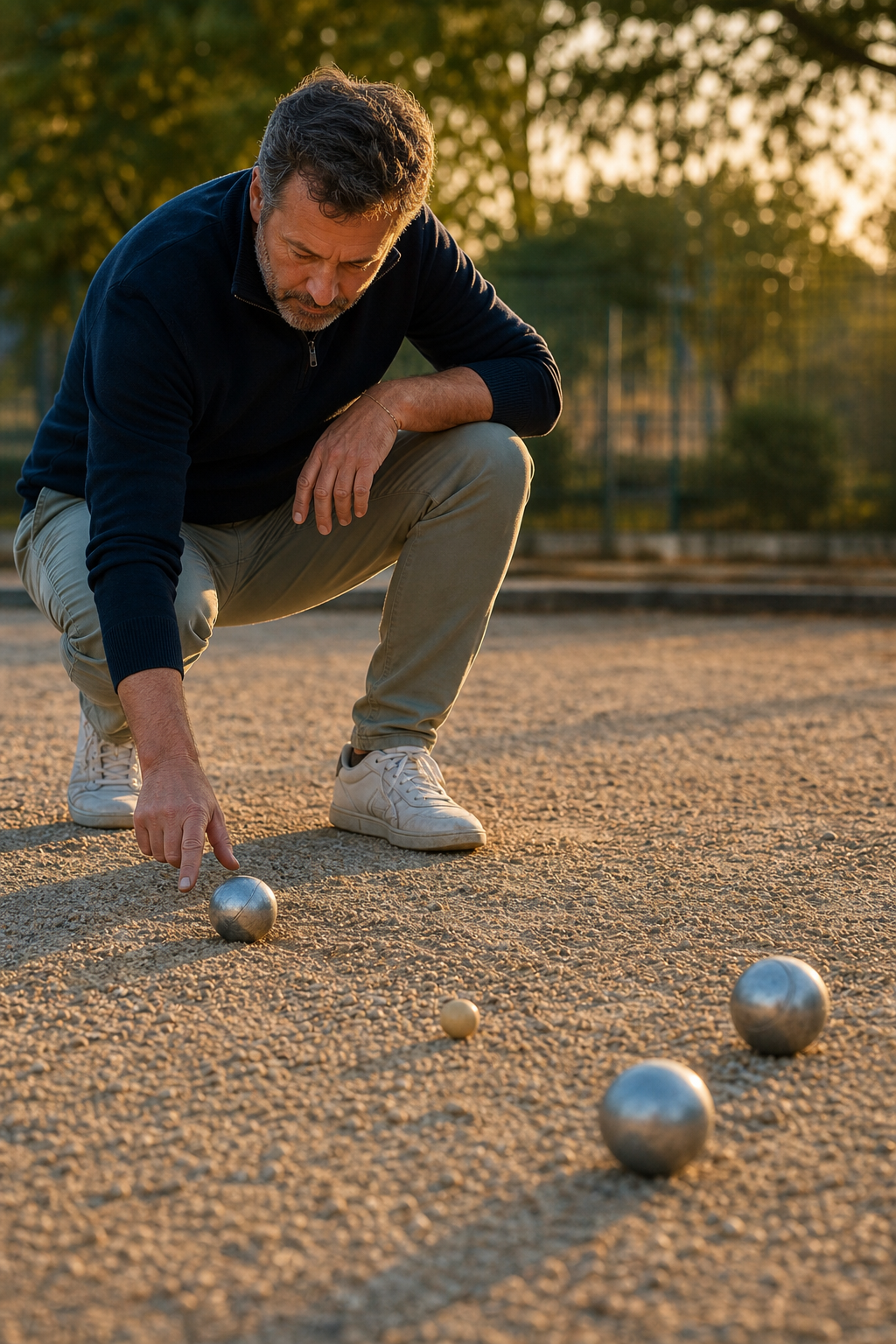
The first secret of good players is rarely in their arm: it begins in their eyes. Before stepping into the circle, they see the distance to the jack, the slope, the opponent’s counting boule and the areas where a boule will speed up or slow down. They also look at the boules still to play. A difficult point does not have the same value when the team holds two boules as when it is playing its final chance.
This reading prevents the costliest reflex: deciding under the influence of the previous boule. A missed shot, a fortunate ricochet or an opponent’s remark does not by itself change the situation. The consistent player puts the elements back in order, then sets a concrete aim: place in front, close the access, remove a boule or limit the points. They do not confuse the urge to make amends with the choice that serves the end.
Before every sensitive boule, name in your mind the point to protect and the acceptable risk. Ten seconds of reading are worth more than a hurried shot.
2. Prefer the shot that protects the end
A champion is not the player who always attempts the spectacular shot. It is the player who knows when the simple shot becomes the best choice. A point boule in front of the jack can force the opponent to shoot; a clean hit can reopen a blocked end; a short boule can sometimes be preferable to one lost at the back. The useful decision depends on the score, the boules available and the real difficulty of the ground.
To make it, talk about the desired effect rather than the gesture alone. Instead of saying “shoot”, the team can say “remove the one closing the path”. The shooter then receives a clear intention. Instead of asking “point”, say “keep the front, even without getting close”. This way of communicating protects the player’s confidence and reduces arguments that come too late.
| Situation | Option to consider | What it protects |
|---|---|---|
| Several boules remain | A safety point | Tempo and options |
| The target is clear | A committed shot | Turning the end around |
| Very uneven ground | A broad landing area | The chance of staying in play |
| Last boule | A stated objective | Team coherence |
3. The short routine that steadies tense moments
Consistency does not mean never missing. It means returning quickly to a method after an error. An effective routine can take four steps: breathe, look at the ground from the circle, choose a target, then let the gesture do its work. It is deliberately short: in competition, an overly complicated method vanishes as soon as pressure rises.
The benefit is twofold. First, the player leaves the inner commentary: “I absolutely have to make this” becomes “I play this area”. Then their partner understands better what is needed. Champions seem calm because they give themselves observable tasks. They know that concentration is not a heroic feeling: it is a patient return to the boule, the ground and the intention.
After a missed boule, ban the immediate debrief. State only the next intention: distance, landing area or target. Analyse the rest between ends.
4. Make the team support rather than pressure
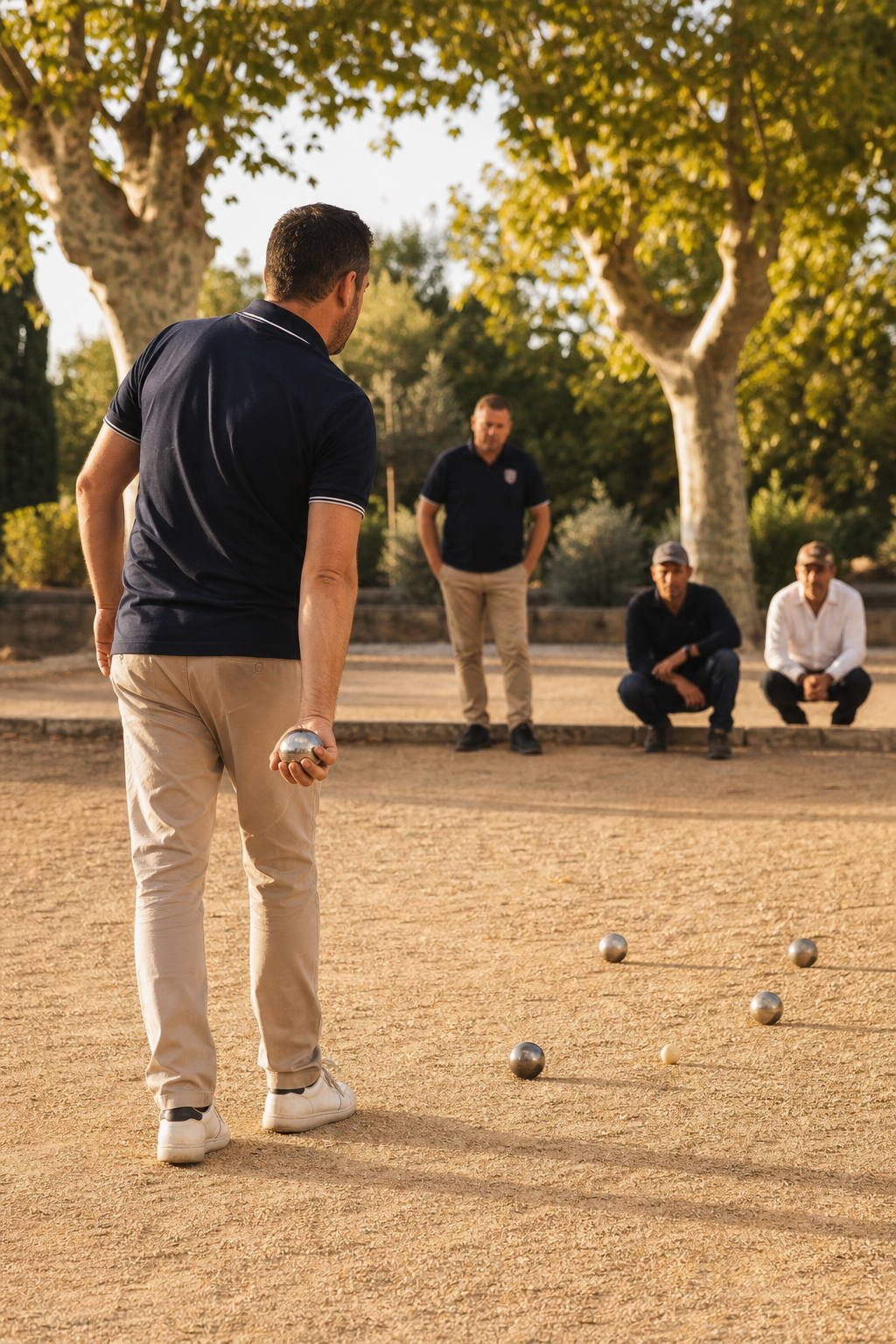
In pétanque, a good decision can be spoiled by three voices speaking at once. Strong teams give themselves one rule: one proposal, one decision, then support. That does not mean disagreements must be hidden; they should appear early enough to help, then make room for one instruction when the gesture is played.
Language matters. “You will not miss” adds an obligation; “play your area” provides a marker. After the boule, avoid judging the person. Review the situation instead: did we count the boules, see the slope, state the risk? This habit turns errors into information. It is also a useful entry point for working on clarity with players who sabotage themselves or for a better understanding of the mental quality of great players.
Frequently asked questions Habits of pétanque champions
Should you always take more time before playing?
No. The right pace is not slowness; it is the time needed to read the ground and state a clear intention without breaking your gesture.
What is the first thing to observe in an end?
Start with the boule that counts and the boules remaining. They immediately indicate the level of risk your team can accept.
How do you help a partner who has just missed?
Give a marker for the next boule, not a full explanation. An area, a target or a distance is more useful than a heated comment.
Can this routine be trained outside competition?
Yes. Create high-stakes ends, impose a one-sentence instruction and note after each series what you read well or forgot.
The most lasting secret therefore remains modest: play the present situation, as a team, with an understandable intention. That is how a more reliable gesture eventually appears.