Règlement FFPJP · 28 July 2026
In case of doubt at petanque: what the official rules really say
Mesurer, protéger la position et appeler l’arbitre au bon moment : la méthode simple pour résoudre un doute de règlement à la pétanque.Une boule semble proche, le but paraît limite et chacun est sûr d’avoir vu la bonne chose. À ce moment-là, le meilleur réflexe n’est pas de gagner le débat : c’est de retrouver un fait vérifiable. En compétition, le règlement ne donne pas raison à la voix la plus ferme ni à l’équipe qui menait. Il fournit une méthode pour reprendre la mène proprement. La différence entre une équipe sereine et une équipe qui s’épuise est souvent là : elle sait transformer une impression en question précise.
1.Le doute n’est jamais une décision
Une boule semble proche, le but paraît limite et chacun est sûr d’avoir vu la bonne chose. À ce moment-là, le meilleur réflexe n’est pas de gagner le débat : c’est de retrouver un fait vérifiable. En compétition, le règlement ne donne pas raison à la voix la plus ferme ni à l’équipe qui menait. Il fournit une méthode pour reprendre la mène proprement. La différence entre une équipe sereine et une équipe qui s’épuise est souvent là : elle sait transformer une impression en question précise.
2.Stopper le jeu sans figer l’ambiance
Dès qu’un doute change la suite de la mène, annoncez calmement une pause. Personne ne touche aux boules ni au but, personne ne rejoue et chacun peut voir la position. Cette courte discipline évite le problème le plus pénible : devoir décider après qu’un objet a été bougé. Elle protège aussi l’adversaire, donc la crédibilité de votre propre équipe.
Avant toute mesure, demandez à chacun de reculer d’un pas : la position reste visible et la discussion perd immédiatement en tension.
3.Mesurer et constater avant d’interpréter
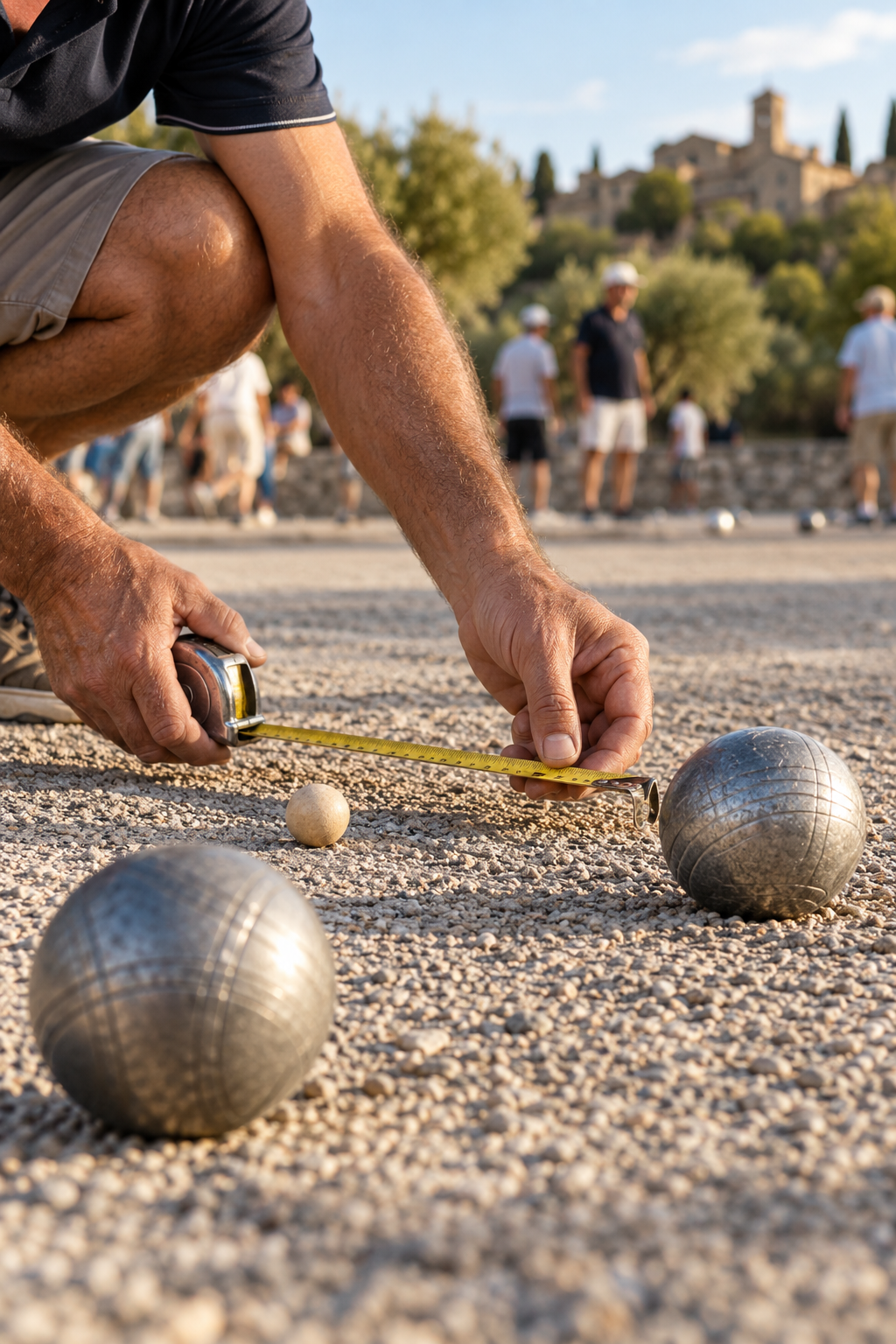
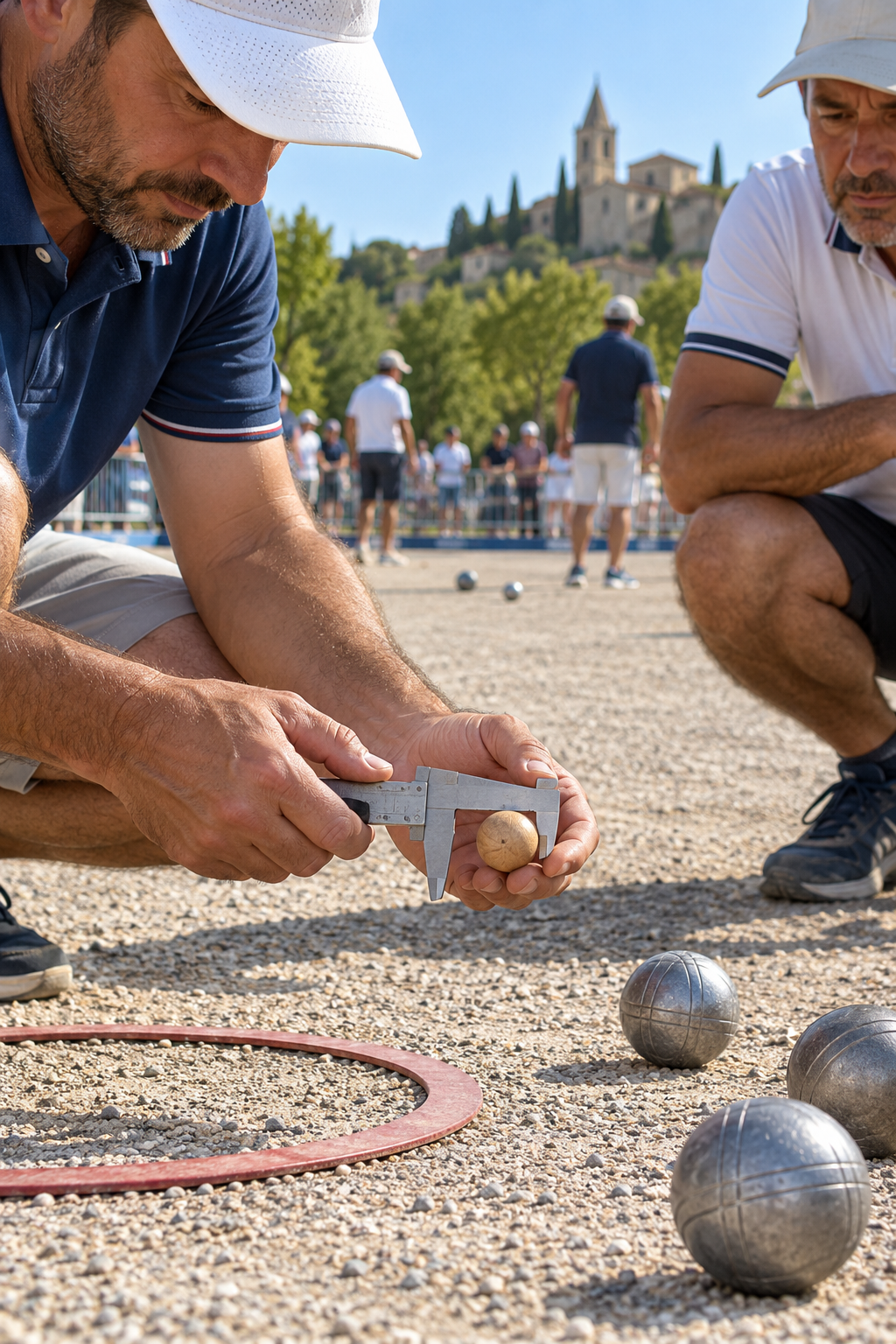
Commencez par nommer le fait précis : distance au but, boule sortie, ordre de jeu ou position du cochonnet. Si la distance compte, utilisez un instrument adapté et laissez les deux équipes suivre la mesure. Une impression à l’œil peut être très trompeuse sur un terrain en pente ou après plusieurs impacts. On ne discute de la règle qu’après avoir établi ce qui s’est réellement passé. Si l’outil manque ou si la position a déjà été modifiée, dites-le tout de suite : inventer une certitude ne répare jamais une mène.
| Situation | Premier geste | Avoid |
|---|---|---|
| Une distance est contestée | Mesurer sans toucher | Décider à l’œil |
| Le but a bougé | Constater sa cause et son marquage | Le replacer de mémoire |
| Le désaccord continue | Appeler l’arbitre calmement | Rejouer pour finir vite |
4.Les égalités et le but déplacé
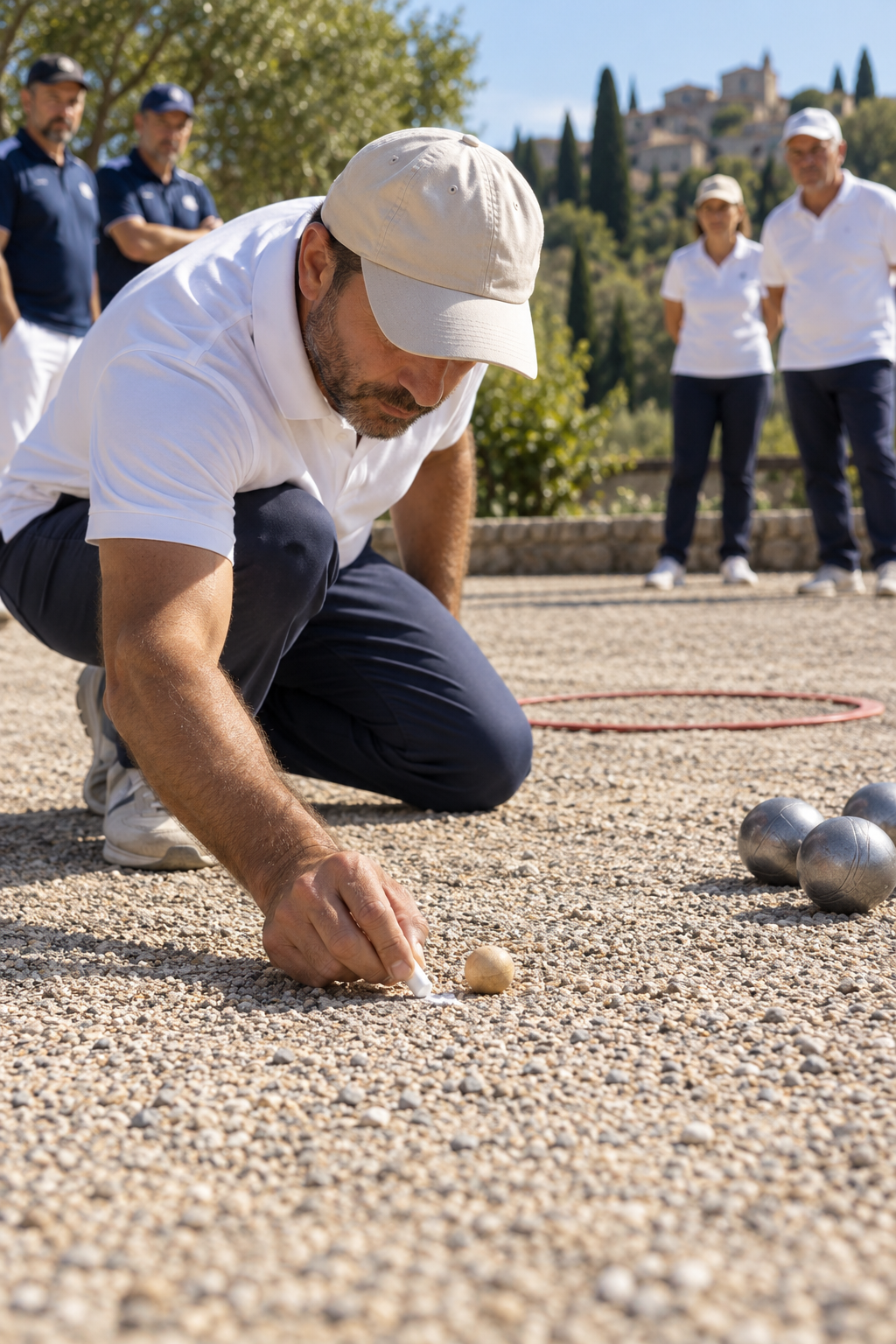
Deux boules réellement à égale distance ne créent pas un point imaginaire. La suite dépend des boules encore en main : l’équipe qui a joué en dernier peut devoir rejouer, une équipe seule à posséder des boules les joue, et sans boule restante la mène peut être nulle. Pour un but déplacé, la cause, le marquage préalable et sa position finale comptent. Ne le replacez jamais de mémoire avant le constat. Un cercle, une trace ou un repère discret fait parfois gagner plus de sérénité qu’une longue connaissance théorique.
5.Quand demander l’arbitre
L’arbitre n’est ni une menace ni un juge appelé pour donner un avantage. Il intervient lorsque les joueurs ne parviennent plus à constater le même fait ou à appliquer la procédure. Appelez-le tôt, expliquez la situation sans accusation et laissez-le observer avant de toucher quoi que ce soit. Une décision claire prise à temps coûte moins qu’une contestation qui suit toute la partie.
Chercher la bonne procédure n’est pas « faire une histoire ». C’est respecter les deux équipes et garder envie de jouer la mène suivante.
6.La routine qui évite les litiges
La routine tient en quatre verbes : stopper, constater, mesurer, trancher. Le capitaine peut les dire à voix haute et demander une réponse courte : « Qu’est-ce qui est certain ? » Puis l’équipe choisit la suite prévue par le règlement ou appelle l’arbitre. C’est un petit rituel, mais il transforme une tension en décision de jeu. En entraînement, exercez-vous aussi à annoncer un doute sans mettre en cause l’autre équipe : cette formulation devient précieuse le jour où l’enjeu monte. Pour d’autres cas, gardez le guide d’arbitrage à la pétanque à portée de main.
Retrouvez les gestes, sanctions et cas concrets dans notre guide des règles de pétanque.
Frequently asked questionsFrequently asked questions
Que faire avant toute chose ?
Arrêtez la mène, ne déplacez rien et identifiez le fait exact qui pose problème.
Can a club habit replace the rules?
Non en concours officiel. Elle peut seulement aider à organiser une partie amicale si tous les joueurs sont d’accord.
Qui peut demander une mesure ?
Toute équipe concernée peut demander que la situation soit vérifiée proprement avant que le jeu reprenne.
Quand faut-il appeler l’arbitre ?
Dès que les joueurs ne parviennent pas à établir le fait ou la suite à donner sans conflit.
Pourquoi marquer le but et les boules ?
Le marquage aide à reconstituer une position après un déplacement accidentel et limite les discussions.