Règlement FFPJP · 26 July 2026
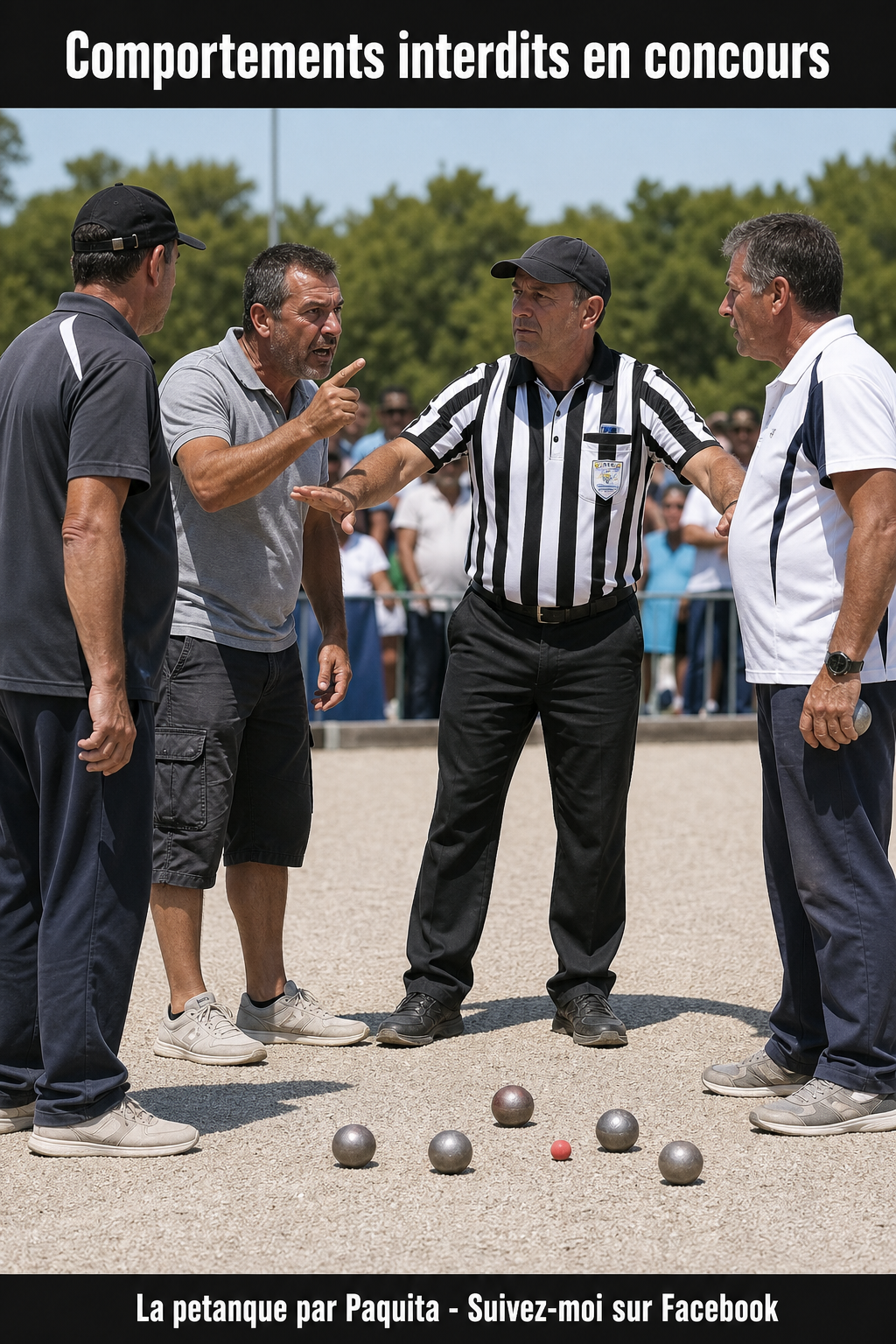
These behaviors prohibited by the petanque regulations that we often see
Arguments, gestures, pressure, delays and protests: the conduct limits every petanque competitor should know.1.The limit between passion and prohibited behavior
We can encourage, discuss the move and experience the game. But as soon as the attitude aims to destabilize the opponent, delay the game or challenge endlessly, we are going beyond the spirit of sportsmanship.
The regulations first serve to make the situation understandable for both teams. The faster a player clarifies, the less space the dispute takes up.
2.Talking while the opponent is playing
A player must be able to execute his gesture under normal conditions. Speaking loudly when throwing, laughing conspicuously or moving in the center may warrant intervention.
3.Challenge every decision
Asking for a measure or calling the referee is normal. Systematic protest, especially after a clear decision, breaks the rhythm of the competition and tenses up neighboring areas.
| Situation | Good reflex | Common error |
|---|---|---|
| Doubt | Check calmly | Accusing too quickly |
| Dispute | Call the umpire | Debating endlessly |
| End of lead | Validate before collection | Pick up too early |
4.Gestures, placements and discreet intimidation
Positioning yourself in the middle, walking near the goal during the opponent's concentration or picking up too quickly can cause problems without a word. If the player is warned and starts again, the problem becomes clear.
When tension rises, slow down the decision and make the facts visible. A calm verification is better than a certainty announced too loudly.
5.Possible sanctions and role of the referee
The referee can call for order, warn then sanction depending on the severity and repetition. The goal is to protect the party, not to create additional conflict.
6.Stay intense without crossing the line
A strong team nourishes its own confidence without parasitizing the other. She talks between partners, accepts the common framework and lets the opponent play. This calm makes the competition more beautiful.
A well-organized competition reduces tension: clear registrations, legible tables and followed schedules.
Discover