Actualités · 4 August 2026
This rare quality sets great pétanque players apart
La qualité mentale qui aide les joueurs de pétanque à lire une mène, choisir sans précipitation et rester utiles à leur équipe.When an end becomes tense, great players do not first look for the spectacular shot. They stay calm enough to read the game, name a priority and play a bowl that fits what remains to be done.
1. This rare quality is not a mysterious gift
You often notice it afterwards: a player has missed a bowl, the opponents have taken the point, yet the team has not come apart. It is neither coldness nor a naturally quiet temperament. This rare quality is mental availability : the ability to keep looking at a situation as it is, even when it upsets the planned approach.
In pétanque, it starts by accepting the simple facts. Where is the jack? How many bowls does each team still have? Is the opponent’s bowl truly shootable, or merely tempting? A clear-minded player does not confuse the urge to make up for a miss with the decision that helps the end. That small gap between emotion and action makes play more reliable.
Before taking a bowl, describe the situation in one factual sentence: “we have two bowls left; they hold the point at eight metres.”
2. Read the ground before looking for the answer
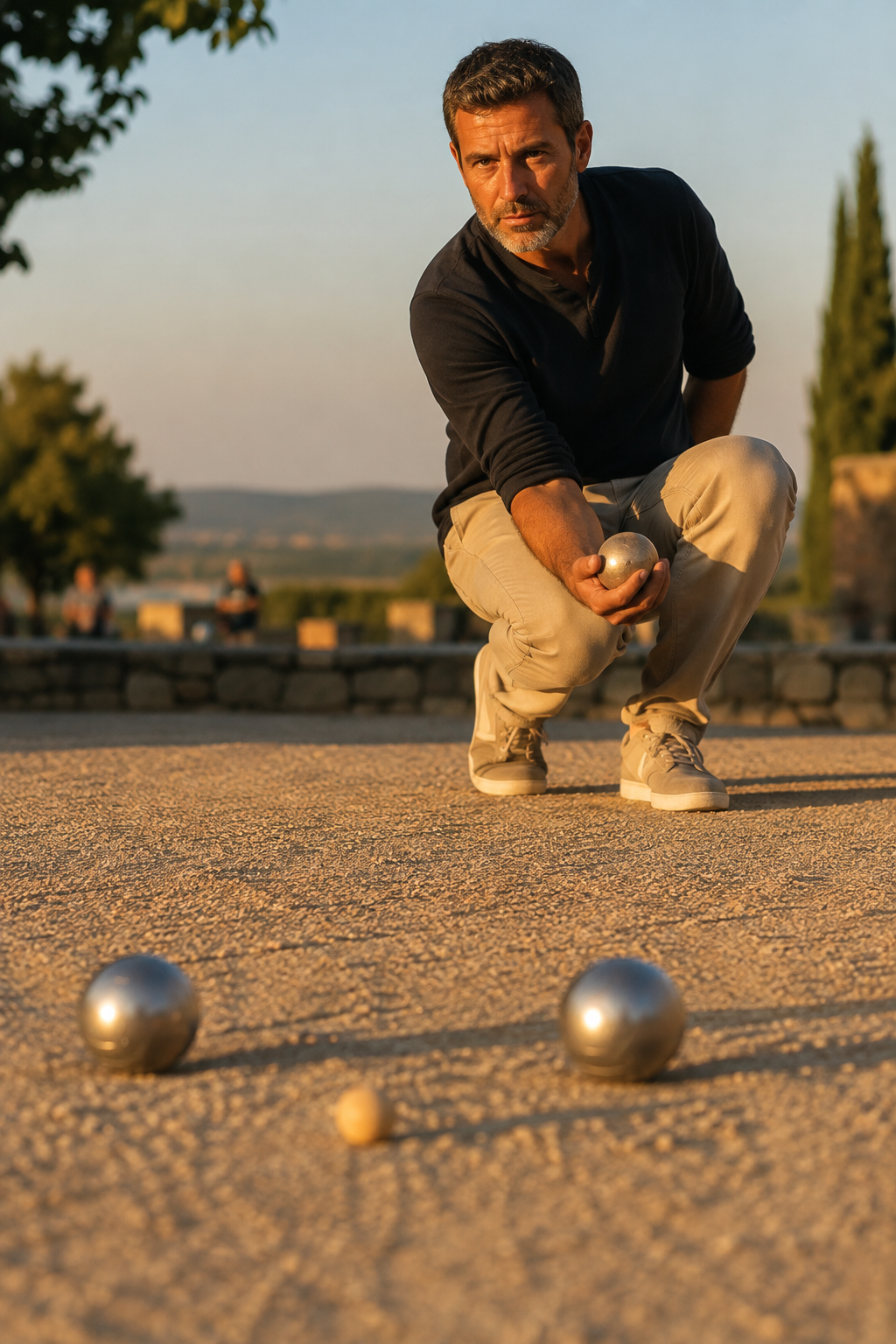
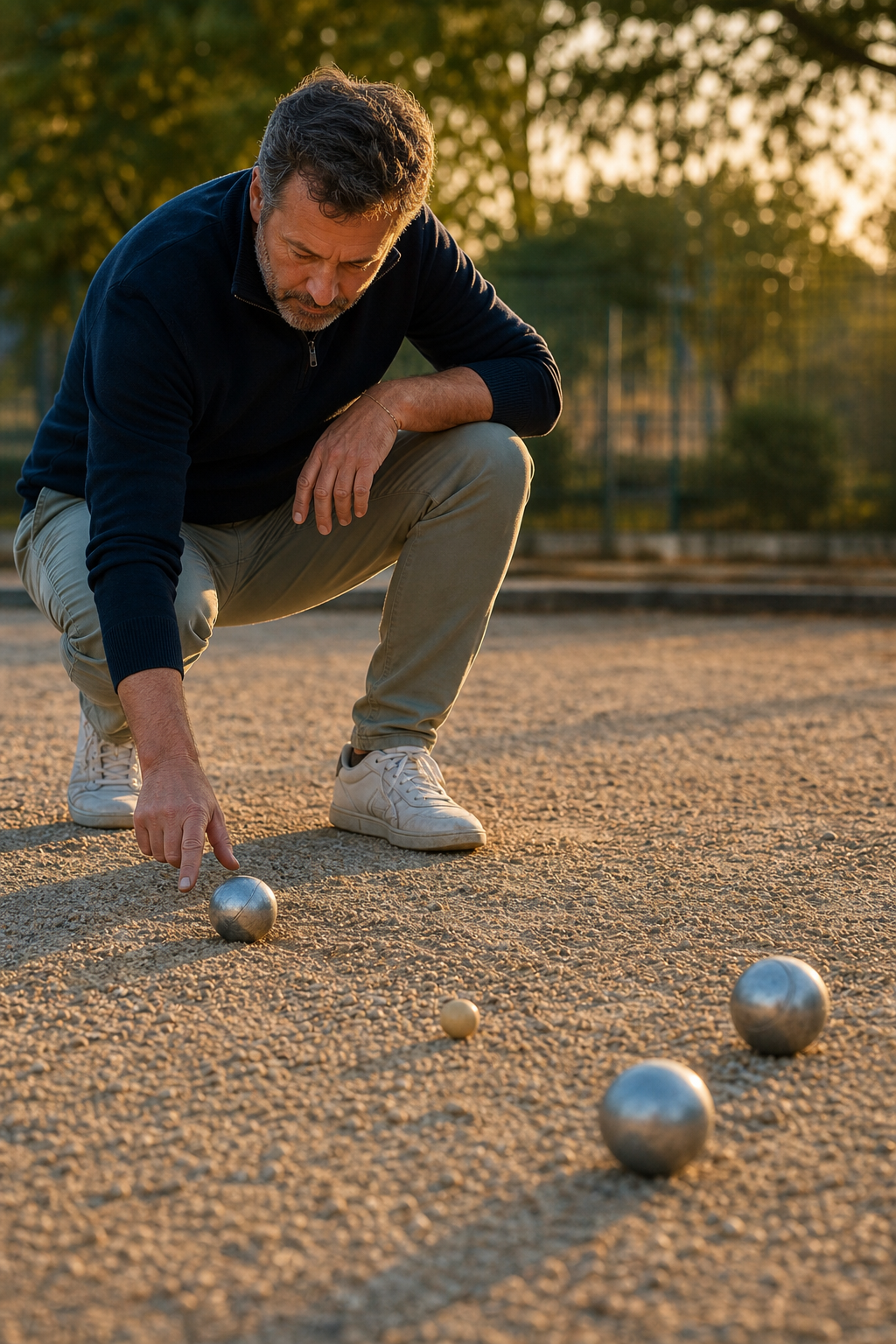
Haste often comes from an incomplete reading. Once the circle is placed, take a few seconds to study the line, the slope, the marks left by bowls and the useful space around the jack. A slightly short point can protect an area. A bowl placed a little off line can prevent a clean shot. Observing is not delaying the game: it prepares a delivery whose intention is known.
The score matters too. At 11–11, giving away a safety point does not have the same consequence as at 2–8. Great players are not cautious on every end; they adjust risk to the bowls left and the moment in the match. That reading avoids false bravery: shooting at a poorly drawn target when a well-built point would have kept control.
| What you see | Useful question | Clearer decision |
|---|---|---|
| An opponent bowl close to the jack but hidden | Is the shot really open? | Prefer a point that reduces its value |
| Ground that carries to the left | Where does the boule actually finish? | Choose the landing point, not the intended centre |
| Few bowls left | What must we protect? | Name the objective before the delivery |
3. Make a proportionate choice rather than a flash of brilliance
A good decision does not always promise the best result; it increases the chance of keeping the end playable. Shoot when the target is clear, the shooter is in rhythm and the possible gain is worth the risk. Point when it closes a door, improves position or forces opponents to reveal their game. In both cases, ask: what does this bowl protect?
It helps to state two options quietly. “I shoot and we may take back the point, but I could free the jack.” “I point in front and we keep a reply bowl.” This very short comparison brings the group back into the game. Above all, it prevents a shot chosen out of frustration after a difficult end.
Do not say “we absolutely have to shoot.” Say instead what the shot must achieve and what happens if it misses.
4. Give your partners useful information
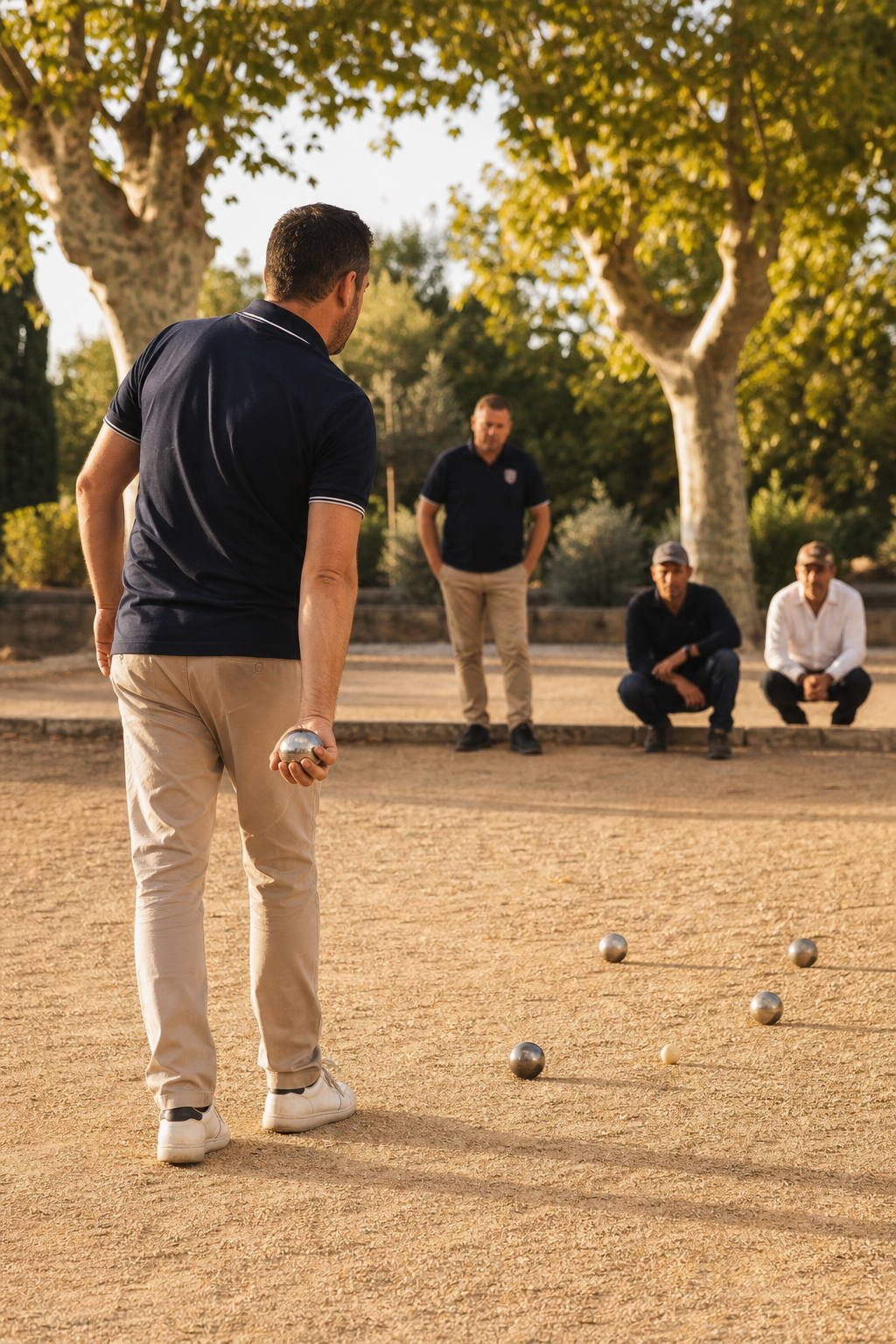
Clear thinking is collective. A pointer who calls the landing spot, a middle player who identifies the bowl to move, a shooter who confirms the target: each reduces uncertainty without making the end heavy. A strong team does not talk much; it talks accurately. Words should be short, audible and focused on the next action.
After an error, avoid an immediate diagnosis. “Too short” or “you let it go” repairs nothing while bowls remain to be played. Prefer an usable instruction: “keep the right side,” “they have only one bowl left,” “let’s give ourselves an answer.” This way of communicating protects confidence. It also helps prevent the patterns described in self-sabotage in pétanque.
5. Welcome pressure without obeying it
Pressure is not a flaw to erase. It signals that the end matters, that partners are watching and that the score is tightening. The problem begins when the player interprets that feeling as an emergency. They rush their routine, change their action or seek proof of worth instead of playing their bowl.
A simple routine is enough: look at the jack, choose the area, breathe once, state the intention, play. This sequence does not guarantee the result, but it creates a repeatable anchor. Experienced players may look calmer because they return to this routine rather than bargain with every emotion. You can add to this approach with the champions’ game references, without trying to copy their delivery.
6. Turn this quality into a training habit
Work on it with scenarios rather than simple series of shots. For example, place an opponent bowl near the jack, give your team two bowls and ask first for a decision, then a ten-second explanation. Change the slope, distance and fictional score. The aim is not to find one answer; it is to learn to justify a choice from the ground.
After three or four ends, note only two things: the information forgotten and the phrase that helped the team. This very short debrief turns mistakes into training material. Over time, you will recognise sooner when you need to slow down and save your energy for the delivery. The rare quality becomes a visible skill: observe, choose, communicate, start again.
Play five ends with one rule: before each bowl, a partner must state the objective in fewer than eight words.
Frequently asked questions Frequently asked questions about clear thinking in pétanque
Can you become clearer-minded even if you get angry easily?
Yes. Start with a very short routine and a factual sentence about the end. Clear thinking grows when the player returns to a precise action rather than to self-judgment.
Should you always play the safety point?
No. Shooting remains an excellent option when the target is clear and its benefit is proportionate. The essential thing is to compare the consequences of both choices.
How do you help a partner who has just missed?
Give information for the next bowl: bowls remaining, area to protect or collective objective. Keep technical analysis for after the end.
What phrase should you use before playing under pressure?
Choose a neutral, brief phrase, for example: “I play the landing spot, not the score.” It must bring attention back to an action you can control.
How long does it take to build this habit?
A few regular sessions are enough to feel a difference. The aim is not to stop feeling pressure, but to keep making a readable decision when it arrives.