Actualités · 22 August 2026
Ce que les meilleurs joueurs de pétanque font différemment sans jamais en parler
Les meilleurs joueurs soignent des détails invisibles : lecture, intention, débrief et communication. Une méthode concrète pour les adopter.The best players do not own a secret trick to copy. They simply do discreet things better: they observe before deciding, prepare a zone rather than a miracle and talk about the end without taking up all the space. These actions can be trained.
1.They look at what others no longer take time to see
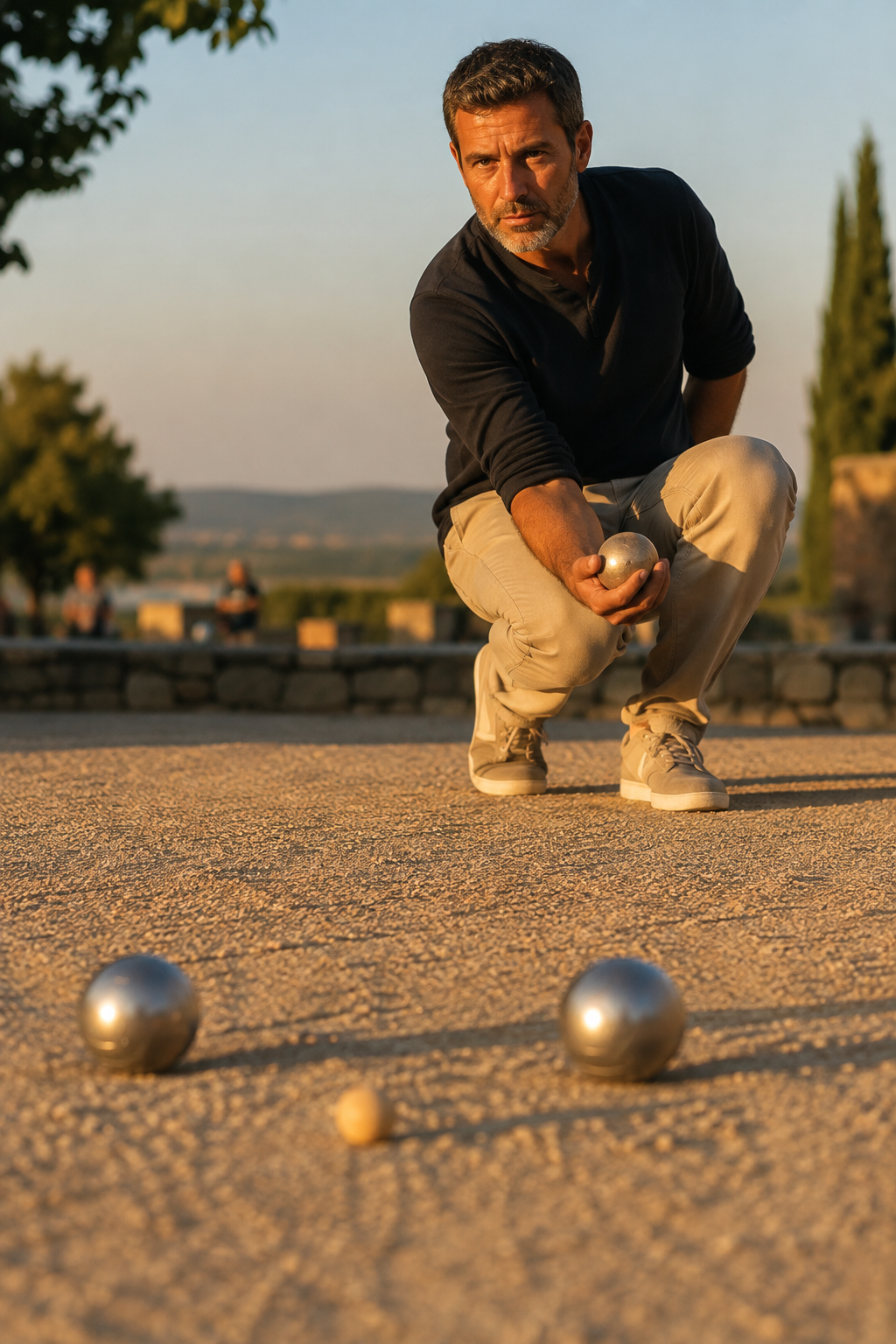
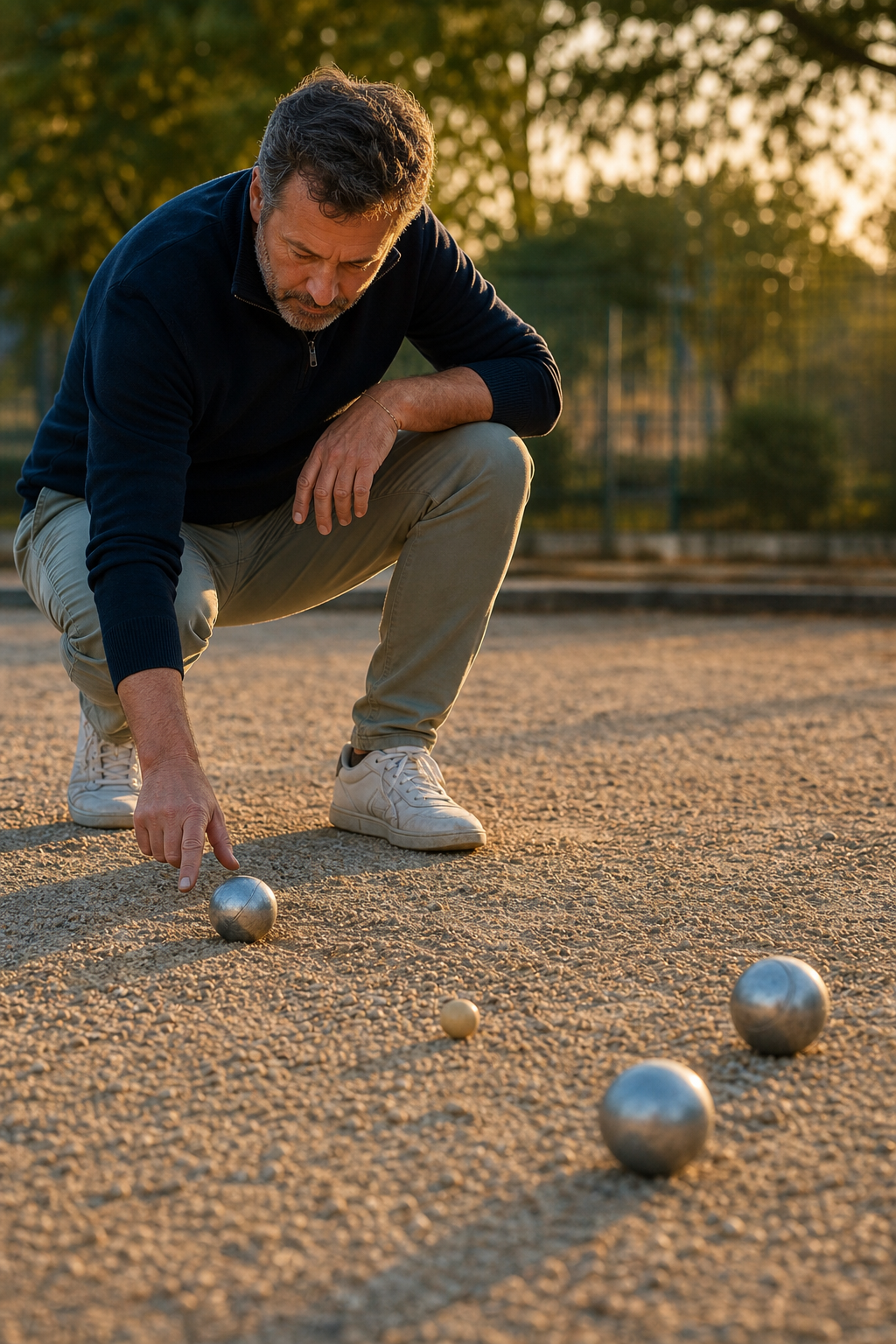
A great player does not rush because they know their movement. They watch the dust, the impact zone, the boules left, the side of the ground that carries and the room the jack leaves the opponent. These seconds look ordinary. Yet they make the difference between an executed throw and an end that is genuinely read.
This observation is not about imagining ten shots. It is about ruling out bad choices. An opposing boule in front of the jack can protect the point; a stone in the first third can make a shot risky; a smooth lane can make a point in front more reliable. The best reduce uncertainty before seeking the perfect movement.
Before taking your boule, be able to say what the ground changes in your shot. If you cannot say it, look for another ten seconds.
2.They play an intention, not a pretty picture
An experienced player does not merely say, ‘I am going to point’. They know what their point must protect: close access to the jack, put a boule in front, avoid an easy carreau, keep a defensive boule. This intention gives a zone and a playing height. It stops you throwing at the jack as if throwing at a vague idea.
At 8–8, facing a well-placed opposing boule, the fine shot may be to lay in front at twenty centimetres rather than seek the jack. At 11–12, with two boules still in hand, a clear target can justify a shot. The score gives a different value to the same technique. It is one of the foundations of pétanque tactics.
| High-level reflex | Related question | What it avoids |
|---|---|---|
| Define a zone | Where must my boule finish? | A point without intention |
| Count the boules | Who keeps an option? | Unnecessary risk |
| Watch the exit | What does a miss give away? | The spectacular but dangerous shot |
3.They even learn from a missed boule
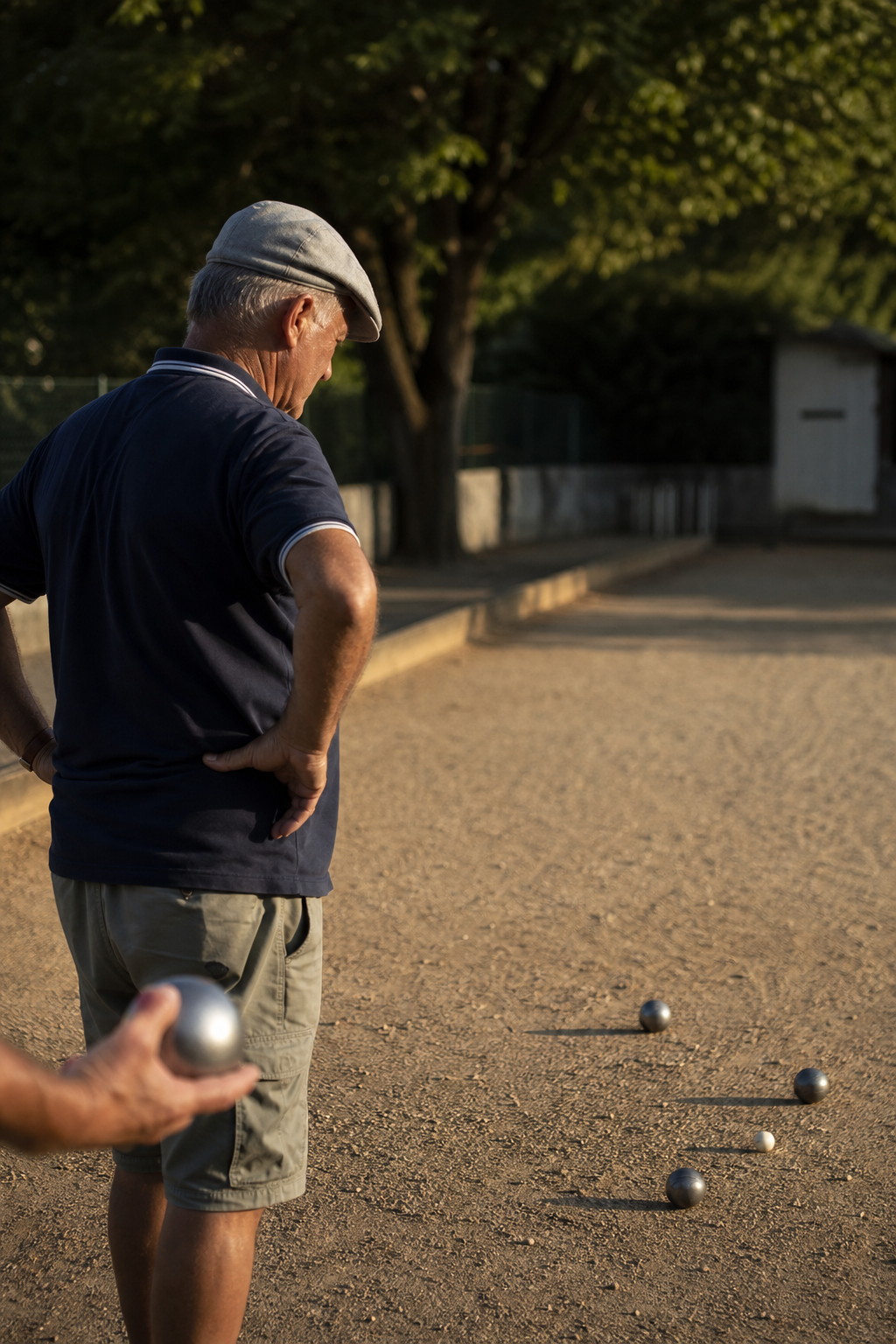
A missed boule does not become a judgment on the player. It becomes an indication. Did it go right from the start? Did it lose speed on the first bounce? Did the ground absorb the effect? A good player watches their boule until it stops, then remembers one fact for the next one. This discipline is more valuable than a general comment about the movement.
In a pointing drill, make three throws on the same line. After each throw, allow only one diagnosis: line, length or ground reaction. You are then using the method detailed in the invisible mistake in progress. One correction at a time makes progress visible.
Copying a champion’s gesture without copying their reading. A movement has meaning only because it answers a ground and a precise intention.
4.They help the other two play better
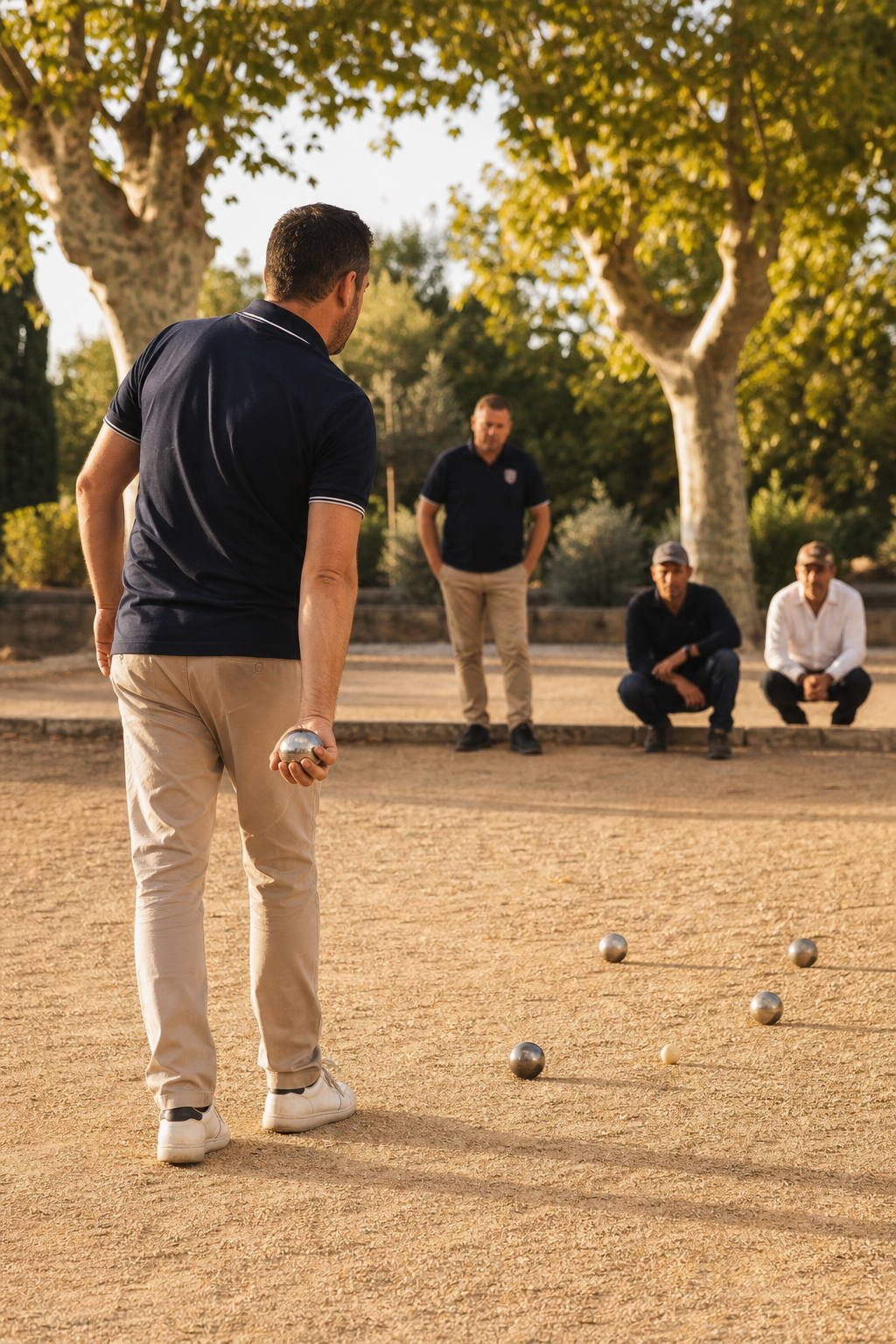
The best do not seek to be right in every end. They make the decision clearer for the team. The pointer announces the zone they see; the shooter identifies the target; the middle player brings the objective together. One short sentence is worth more than three overlapping pieces of advice. In the circle, the player must feel the team supports them, even when the shot is demanding.
After a missed shot, the right teammate does not replay the error. They say what the end still requires. This ability explains why some teams seem to understand each other without speaking. Discover how it is built in this analysis of communication. Collective level begins with precise words.
5.They train to decide, not only to throw
Repeating fifty boules is useful; repeating fifty boules in the same situation is less so. Good players create ends: 9–10, an opposing boule at the point, two boules left, ground pulling left. Everyone states their reading, the team chooses, then debriefs the decision before commenting on success. This training makes reflexes transferable to competition.
Vary the conditions: visible or hidden target, safety point, clearance shot, end of game. To enrich your work, alternate between the reference points of pointing, of shooting and the exercises for improvement. The quality of a session comes from the question it makes you work on.
6.The difference you can adopt today
In your next game, set yourself one rule: before every important boule, state an intention in seven words at most. ‘I close in front without giving the jack’ is an intention. ‘I will try to play well’ is not. After the boule, watch its path to the end and keep one piece of information.
These habits do not grant champion status overnight. They make you more lucid, more useful to partners and more able to repeat a good choice. Paquita sums it up: the best do not hide a secret; they care for the details others let slip.
Frequently asked questionsFrequently asked questions
Do all top players use the same technique?
No. Their actions differ, but they share one demand: know why they choose a shot and what they expect from its trajectory.
Must you already be very strong to work on tactics?
No. Counting boules, looking at the ground and defining a zone already improve a beginner’s game.
How can you improve alone?
Create a target, film or note your impacts, then correct only one parameter per series of boules.
Is silence always better in a team?
No. You need a brief discussion before choosing, then silence during execution so as not to overload the player.
Which Paquita advice should I remember?
Do not try to imitate the best: try to see, choose and learn as carefully as they do.